Wild Thing Pose: 7 Benefits of Camatkarasana, Step-by-Step Guide, Variations & Tips
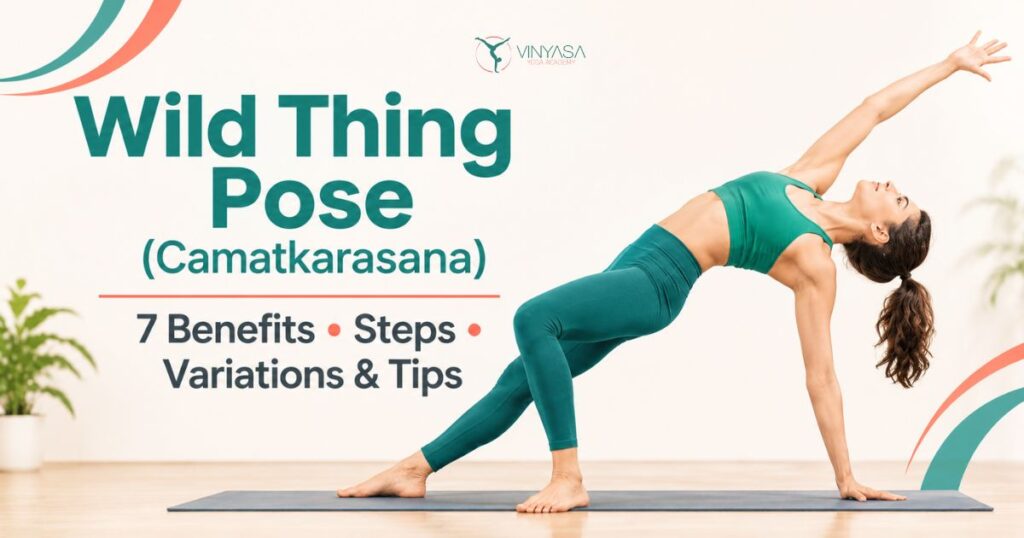
Table of Contents
- History of Wild Thing Pose
- How to do the Wild Thing Pose
- Benefits of Wild Thing Pose
- 1. Opens the Chest and Improves Posture
- 2. Improves Mobility in the Upper Back
- 3. Activates the Glutes and Lower Body
- 4. Stretches the Hip Flexors and Side Body
- 5. Improves Balance and Body Awareness
- 6. Strengthens the Muscles Supporting the Spine
- 7. Develops Core Stability
- Preparatory Poses For Wild Thing Pose
- 1. Puppy Pose
- 2. Cat-Cow Pose
- 3. Cobra Pose
- 4. Downward Facing Dog
- Wild Thing Pose Variations
- 1. Knee-to-Floor Wild Thing
- 2. Forearm Wild Thing
- 3. Supported Wild Thing With Yoga Blocks
- Common Mistakes in the Wild Thing Pose
- Conclusion
- Frequently Asked Questions
- Is Wild Thing Pose the same as Side Plank?
- How long should you hold Wild Thing Pose?
- Is Wild Thing Pose suitable for beginners?
- Is Wild Thing Pose harder than Wheel Pose?
- Which yoga style includes Wild Thing Pose?
What if one yoga pose could make you feel strong, free and wide open all at once?
Wild Thing Pose does exactly that. The moment you lift your hips, rotate your chest toward the sky and let your arm sweep overhead, something shifts. It does not just stretch your body, it changes the way you feel inside. There is a reason its Sanskrit name, Camatkarasana, translates as “ecstatic surprise”.
But here is what most people do not know. Beneath that beautiful, flowing shape, your shoulders are firing, your core is working and your spine is waking up in ways it rarely gets to in everyday life.
Whether you are a beginner or have been practising for years, this guide covers everything you need to know about Wild Thing Pose, from its history and benefits to the right technique and common mistakes to avoid.
Keep reading. This one is worth it.
History of Wild Thing Pose
Unlike many traditional yoga postures that can be traced back to older Hatha Yoga texts, Wild Thing Pose (Camatkarasana) is generally considered a modern yoga posture. The pose does not appear in ancient yogic scriptures and is believed to have emerged through the evolution of contemporary yoga practice.
Camatkarasana gained popularity through modern Vinyasa-style yoga and creative flow sequencing during the late 1990s and early 2000s. Many yoga teachers associate the pose with contemporary yoga systems, particularly Anusara Yoga, where heart-opening backbends and expressive movement became a significant part of practice. Within modern yoga communities, the pose is often linked to yoga teacher John Friend, the founder of Anusara Yoga, who helped popularise it through flowing transition-based sequences.
The Sanskrit name Camatkarasana comes from the word camatkara, which can be translated as “wonder,” “miracle,” “astonishment,” or “ecstatic surprise.” Because of this meaning, the pose is often poetically described as “the ecstatic unfolding of the enraptured heart.” This interpretation reflects the expansive chest opening, uplifting feeling and sense of freedom many practitioners experience while practising the pose.
Today, Wild Thing Pose has become one of the most recognised modern heart-opening yoga postures. It is commonly practised in Vinyasa, Power Yoga, and creative flow classes, where it is used to build strength, improve spinal mobility and encourage a sense of confidence, playfulness and self-expression.
How to do the Wild Thing Pose
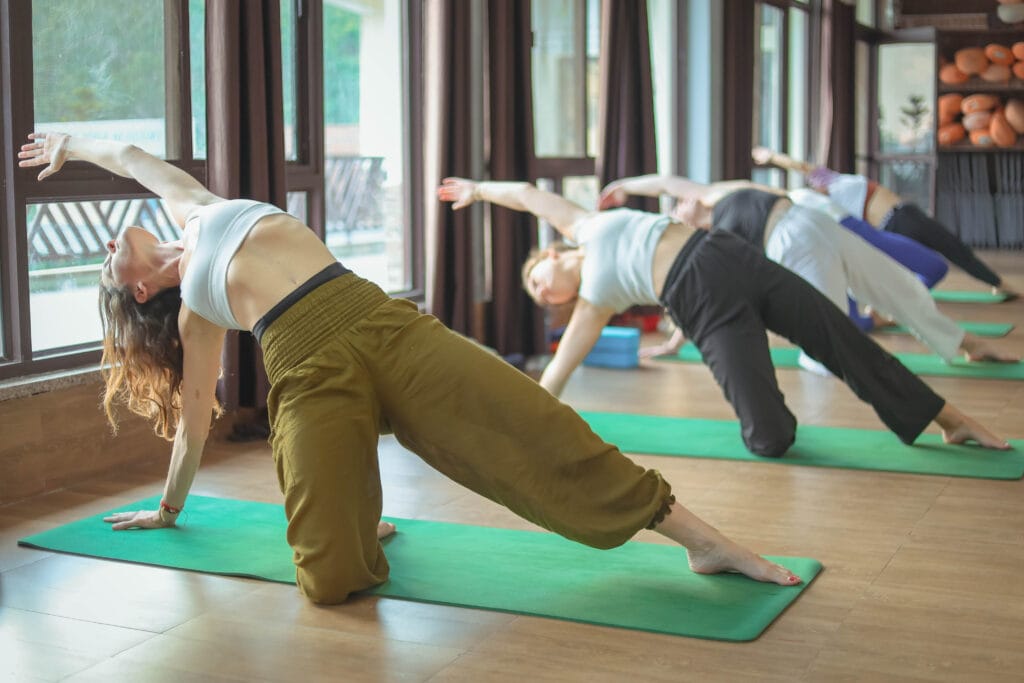
- Begin in Side Plank Pose with your left hand flat on the floor directly under your shoulder and your body balanced on the outer edge of your left foot.
- Slowly lift your right leg up, keeping it floating in the air.
- Bend your right knee and place the ball of your right foot on the floor behind you.
- Let more of your left foot sole touch the mat. Keep your left leg straight and strong, with the foot turned slightly outward.
- Push with both feet and your left hand to lift your hips up. Turn your chest and hips so they face the ceiling.
- Press firmly into your left palm and open up your chest wide.
- Raise your right arm straight up toward the sky, or sweep it over your head toward the front of the mat for a deeper stretch.
- Relax your head and neck. Let your gaze fall wherever it feels comfortable.
- To come out, pivot on your left foot and lift your right leg back to the side.
- Turn your hips and chest back toward the floor and place your right hand next to your left hand to come into Plank Pose. Or, slowly lower your hips down to the mat for a gentler exit.
Benefits of Wild Thing Pose
1. Opens the Chest and Improves Posture
If you spend most of your day sitting at a desk or looking at your phone, your chest and shoulders probably feel tight and closed off. Wild Thing Pose gives your chest, shoulders, and upper back a wonderful deep stretch that helps undo all that slouching and rounded posture. Over time, you will notice yourself sitting and standing a little taller and more openly.
2. Improves Mobility in the Upper Back
Most of us carry a lot of stiffness in the middle of our back without even realising it. This area known as the thoracic spine, tends to lock up from hours of sitting and poor posture. This pose gently encourages your upper back to extend and rotate helping loosen things up and allowing your whole spine to move more freely.
3. Activates the Glutes and Lower Body
When you lift your hips up in Wild Thing Pose, you will feel your glutes, hamstrings and the muscles around your pelvis switch on strongly. This is great news because these muscles are often underused in daily life. Strengthening them improves your lower body stability and gives your hips much better support.
4. Stretches the Hip Flexors and Side Body
This pose opens up parts of your body that rarely get enough attention. The wide, expansive shape stretches deep into your hip flexors, abdominal muscles, side waist, and front shoulders, all areas that tend to get tight and compressed from prolonged sitting. It can feel like a genuine release after a long day.
5. Improves Balance and Body Awareness
Moving into Wild Thing Pose from Side Plank is not the most straightforward move, and that is exactly what makes it so beneficial. Your body has to figure out how to manage the weight shift and rotation smoothly which over time sharpens your coordination, balance and your natural sense of where your body is moving in space.
6. Strengthens the Muscles Supporting the Spine
Wild Thing Pose looks like a simple stretch, but your back muscles are actually working hard the whole time. When you lift your hips and open your chest toward the sky, the muscles running along your spine wake up and engage to keep you stable and lifted.
7. Develops Core Stability
Do not let the backbend fool you into thinking your core gets a break here. Your obliques and deep abdominal muscles are working continuously to manage all the twisting and lifting happening in the pose. This kind of engaged core work builds solid stability and plays an important role in keeping your lower back safe and supported.
Preparatory Poses For Wild Thing Pose
Before practising the Wild Thing Pose, it is important to prepare the body with a few foundational yoga poses.
1. Puppy Pose
Puppy Pose is an excellent warm-up for Wild Thing Pose because it deeply stretches the shoulders, chest and upper back. It helps create the openness needed for the heart-opening movement in Camatkarasana.
2. Cat-Cow Pose
Cat-Cow Pose gently mobilises the spine and improves flexibility in the back. Practising this movement before Wild Thing Pose helps the spine move more comfortably into a backbend.
3. Cobra Pose
Cobra Pose introduces beginners to gentle backbending while strengthening the spine and opening the chest. It also helps improve posture and prepares the body for deeper spinal extension.
4. Downward Facing Dog
Downward Dog helps build upper body strength while stretching the spine, hamstrings and shoulders.
Wild Thing Pose Variations
1. Knee-to-Floor Wild Thing
This is the most beginner-friendly version. Instead of balancing on the outer edge of your supporting foot, you keep the lower knee on the mat for extra stability.
This takes pressure off the shoulder and wrist while still letting you explore the chest-opening and backbending actions of the pose. It works well if you are still building upper-body strength and balance.
2. Forearm Wild Thing
This variation replaces the supporting palm with the forearm, making it a great option if your wrists bother you. It cuts down strain on the wrists while still allowing the chest, shoulders, and hips to open fully.
3. Supported Wild Thing With Yoga Blocks
In this version you place a yoga block under your supporting hand. This gives you extra height making it easier to get into the pose and helping your shoulder stay in the right position. It is a good choice if you want to work on shoulder strength and opening up your chest.
Which Chakra Is Activated During Wild Thing Pose?
Wild Thing Pose activates the Heart Chakra. The deep chest and shoulder opening encourages emotional openness, confidence, compassion and positive energy flow. It may also gently stimulate the Throat Chakra and Solar Plexus Chakra but the Heart Chakra remains the main focus.
In yogic philosophy poses like Camatkarasana are linked to freedom, self-expression and emotional release. Most practitioners feel a sense of expansion, lightness and fresh energy while holding it.
Read More: Chakras and the Channels of Energy
Common Mistakes in the Wild Thing Pose
Wild Thing Pose may look easy and playful, but proper alignment and stability are essential to avoid strain and practice the pose safely.
| Common Mistake | Why It Happens | How To Fix It |
| Collapsing Into The Supporting Shoulder | Many practitioners collapse into the supporting arm instead of activating the shoulder and upper-body muscles. This creates unnecessary pressure on the shoulder joint and wrist. | Press the floor firmly away, keep the supporting arm active, and engage the shoulder muscles to distribute the weight evenly. |
| Overarching The Lower Back | Trying to create a deeper backbend without proper core support often compresses the lower spine. | Focus on lengthening the spine instead of forcing the arch. Engage the core muscles and lift through the chest gradually. |
| Weak Core Engagement | Without activating the abdominal muscles, the pose becomes unstable and places excess strain on the lower back and shoulder. | Gently draw the navel inward and engage the core throughout the pose to maintain balance and stability. |
| Overstraining The Neck | Tilting the head back excessively can create unnecessary neck tension. | Keep the neck long and relaxed. Lift the chest while maintaining a soft and controlled gaze upward. |
| Incorrect Foot Placement | Poor foot positioning can make the pose feel unstable and reduce support through the hips and legs. | Ground the foot firmly on the mat with the toes slightly turned outward to create better balance and stability. |
Note– If you want to learn the correct alignment of Wild Thing Pose and practise under the guidance of experienced yoga teachers, the 200 Hour Yoga Teacher Training in Rishikesh at Vinyasa Yoga Academy offers in-depth training in asana alignment, anatomy, breathwork and traditional yogic practices.
When Is the Best Time to practise the Wild Thing Pose?
Wild Thing Pose is best practised when your body is warm and ready for movement. It works well in both morning and evening yoga sessions, helping to energise the body, open the chest, and release stiffness in the shoulders, hips and upper back. For safety always practise it after a proper warm-up rather than with cold muscles.
Conclusion
Wild Thing Pose is more than just a visually striking posture. It builds real strength in the shoulders, core, and lower body while opening up the chest, hips, and spine in a way that few poses can match. Whether you are a beginner working with modifications or an experienced practitioner flowing through it as a transition, there is always something new to discover in this pose.
Take your time with it, respect your body’s limits, warm up well and focus on alignment over depth. With consistent practice Wild Thing Pose can become one of the most rewarding parts of your yoga routine both physically and mentally.
Frequently Asked Questions
Is Wild Thing Pose the same as Side Plank?
No, they are different. Wild Thing often starts from Side Plank, but then you rotate your chest toward the ceiling and move into a backbend. Side Plank mainly focuses on side strength and stability.
How long should you hold Wild Thing Pose?
Hold it for 3 to 5 slow breaths. If you are more experienced you can stay longer as long as your breathing stays steady and supporting shoulder remain engaged.
Is Wild Thing Pose suitable for beginners?
Although Wild thing pose is an intermediate-level pose but beginners can start with modified versions like use props to build confidence before practising the full pose.
Is Wild Thing Pose harder than Wheel Pose?
Not necessarily. Wild Thing needs more balance, coordination and shoulder stability Whereas the wheel Pose demands greater spinal flexibility and full-body strength. Both are challenging in different ways.
Which yoga style includes Wild Thing Pose?
It is most common in Vinyasa Yoga, Power Yoga and creative flow classes. It is often used as a transition from Side Plank or Three-Legged Dog into deeper backbending sequences.
This article is for general information and is not medical advice. If you have a respiratory or heart condition, are pregnant, or are unsure whether these practices suit you, please speak to your doctor before beginning.