Chair Pose (Utkatasana): How to Do It Correctly, Benefits, Variations & Tips
Table of Contents
- What Is the Origin of Utkatasana?
- How To Do Chair Pose
- Benefits of Chair Pose?
- 1. Strengthens Legs
- 2. Develops Core
- 3. Improved Posture
- 4. Improves the Back
- 5. Improves Balance and Stability
- 6. Develops Endurance
- 7. Builds the Muscles of the Front of the Thigh
- 8. Ankle Strengthening
- Variations of Chair Pose
- 1. Wall Supported Chair Pose
- 2. Chair Pose Hands at Heart Center
- 3. Chair Pose With Heel Lift
- 4. Prayer Twist Chair Pose with Deep Rotation
- Preparatory Poses of Chair Pose
- Common Mistakes in Utkatasana
- Who Should Be Careful with Chair Pose?
- 1. Lower Back Pain
- 2. Shoulder Injury
- 3. High Blood Pressure
- 4. Pregnancy
- When and How Often Should You Practise Chair Pose?
- 1. Morning Practice
- 2. During Yoga Flow
- 3. Strength Practice
- 4. Desk Break
- Conclusion
- Frequently Asked Questions
- What muscles does Chair Pose work?
- Is Chair Pose good for beginners?
- Can Chair Pose hurt the knees?
- How long should I hold Chair Pose?
- Why is Utkatasana called Fierce Pose?
What if one single yoga pose could strengthen your legs, wake up your core, fix your posture, sharpen your focus and build real mental toughness, all at the same time?
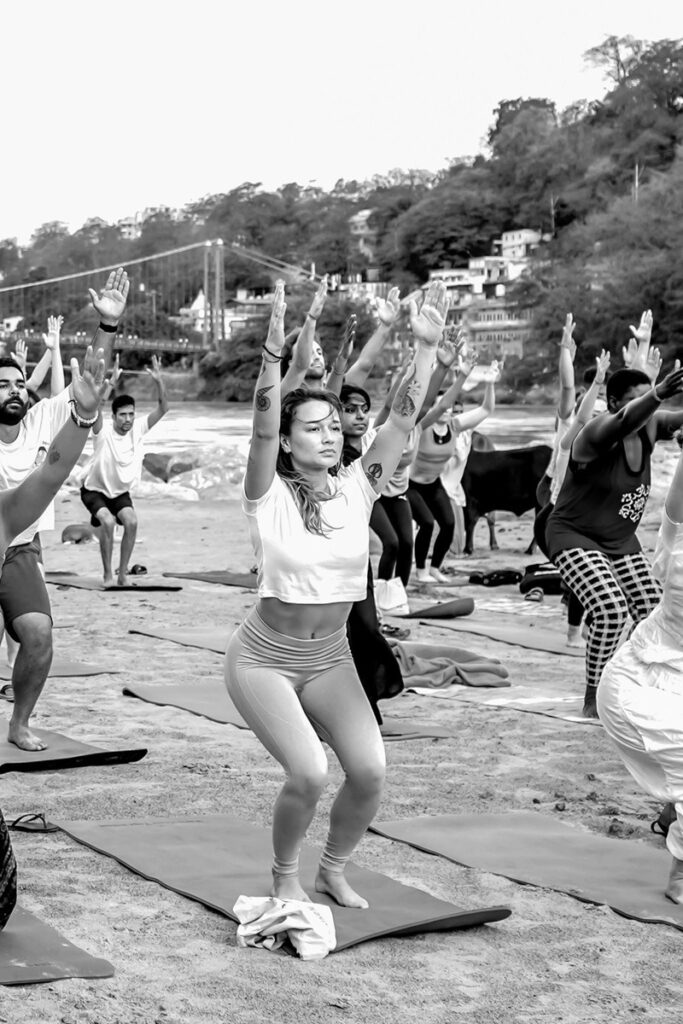
Chair Pose (Utkatasana) is exactly that pose. It looks like a simple bend of the knees, arms raised overhead but the moment you hold it, everything changes. Within seconds, your thighs start working, your core wakes up and your breath becomes sharper.
The best part? Whether you are stepping onto a yoga mat for the very first time or you have been practising for years, Chair Pose always has something new to teach you.
This guide walks you through the meaning, origin, steps, benefits, variations and precautions of Chair Pose all in a simple and practical way.
What Is the Origin of Utkatasana?
Utkatasana has an interesting history. The name comes from the Sanskrit word utkata, meaning intense, fierce, powerful, wild or above the ordinary and asana, meaning pose or posture. Together, Utkatasana is often understood as the Powerful Pose or Fierce Pose.
Traditionally, Utkatasana was not exactly the chair-like posture practised in modern yoga today. Some older references describe it as a lower squatting position, closer to sitting down on the heels. The standing Chair Pose most people recognise today is commonly linked with the evolution of modern yoga teaching and the Krishnamacharya tradition.
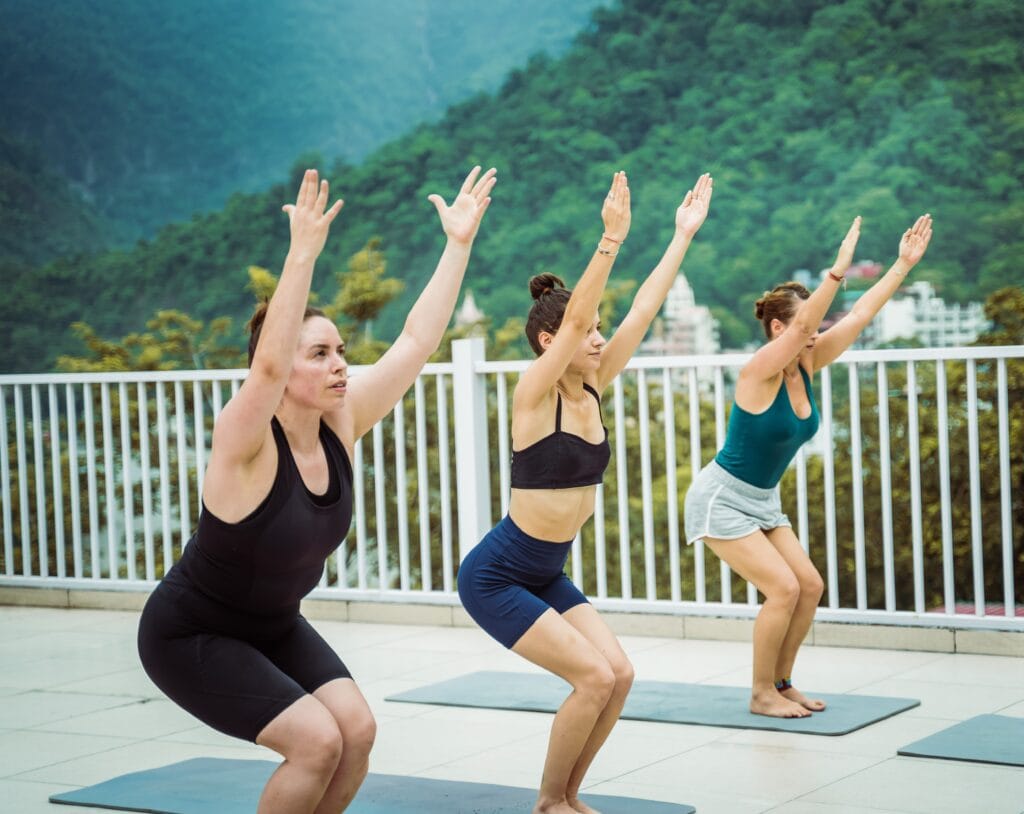
The English name “Chair Pose” comes from the body shape, which resembles sitting on an invisible chair but symbolically, it is not a relaxed seat. Utkatasana asks for strength, focus, stability and discipline, making it a posture that builds both physical and mental resilience.
How To Do Chair Pose
- Stand tall with your feet together.
- Slowly bend your knees and shift your hips back just like you are about to sit down on a chair.
- Then raise both your arms straight up overhead.
- If your shoulders are uncomfortable, no worries; just bring your hands together at your chest instead.
- Gently squeeze your core to protect and support your lower back.
- Breathe slowly throughout — don’t hold your breath. Stay here for 20 to 40 seconds.
- When you are ready to come out, take a breath in, straighten your legs, lower your arms, and return to a comfortable standing position.
Important Note: If you want to learn Chair pose with expert guidance and build a deeper understanding of proper alignment, breathing techniques and traditional yoga principles, joining the 200 Hour Yoga Teacher Training in Rishikesh at Vinyasa Yoga Academy is the perfect place to begin your journey.
Benefits of Chair Pose?
1. Strengthens Legs
Chair Pose looks easy, but you’ll feel it in your legs soon enough. When you squat down and hold, your thighs, calves and glutes all start to work hard. It’s a simple way to build lower body strength without any equipment or weights. With regular practice everyday tasks such as climbing stairs or standing for longer can start to feel easier.
2. Develops Core
Chair Pose helps strengthen the muscles of your stomach and lower back that work quietly the whole time to help you stay steady. You build up your core and provide better support for your spine. Also, a stronger core can help improve your posture and make everyday movement feel more manageable. For practitioners looking to build even deeper abdominal strength, poses like Boat Pose (Naukasana) are often practised alongside Chair Pose because they challenge the core muscles in a different way while improving balance and body control.
3. Improved Posture
Many of us sit, look at screens or lean forward for hours without knowing it. Chair Pose helps you open your chest, lengthen your spine, and stand with better alignment. This will help you sit and stand up straighter naturally with time.
4. Improves the Back
Chair Pose keeps you engaged in the muscles along your spine. This helps you build strength in your back and support better posture. A stronger back can also help reduce the stiffness that often comes with too much sitting.
5. Improves Balance and Stability
Your feet are on the ground but your body is working hard to keep its balance. Your legs, hips, ankles and core all work in conjunction so you can hold the pose. Regular practice can help to improve balance and body control.
6. Develops Endurance
Chair Pose is a series of breaths that challenge your muscles and your concentration. You might get leg fatigue initially but the more you practise, the slower your strength and endurance gains come.
7. Builds the Muscles of the Front of the Thigh
Chair Pose is a powerful exercise for the front thigh muscles known as the quadriceps. More powerful thigh muscles help to support your knees and make everyday movement feel better and easier.
8. Ankle Strengthening
Your ankles help you to maintain stability in Chair Pose. Holding the posture regularly can strengthen the ankles and help with better balance in daily activities.
Variations of Chair Pose
1. Wall Supported Chair Pose
Stand with your back against a wall and slowly bend your knees, keeping your spine supported by the wall. This is great if you’re new and still figuring out alignment. The wall takes some of the pressure off your legs and lower back so you can focus on getting the shape right.
2. Chair Pose Hands at Heart Center
Do not lift your arms up, just press your palms together against your chest. This variation takes some of the load off your shoulders whilst still maintaining your alignment and engagement.
3. Chair Pose With Heel Lift
Once you feel steady in the basic pose, slowly lift your heels off the floor. Sounds small, but it makes a big difference. Your calves, ankles, and feet all have to work harder, and your balance gets a real challenge.
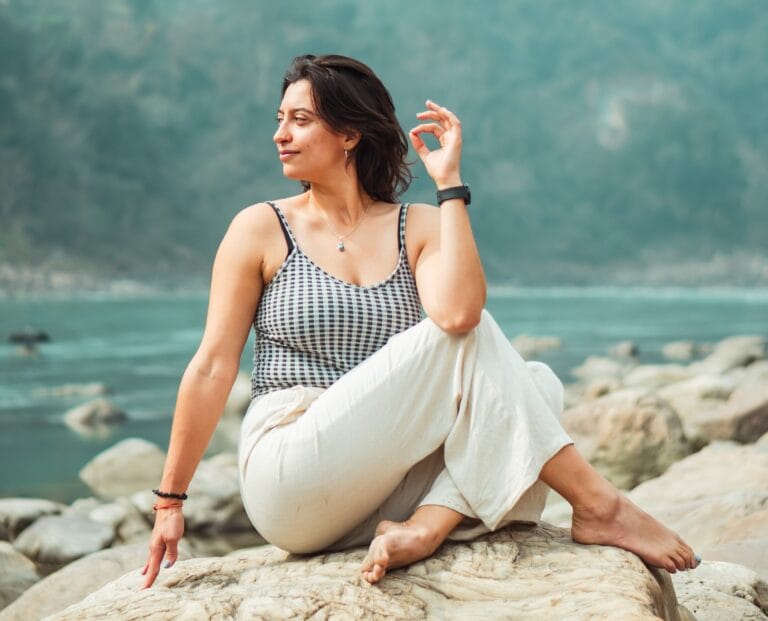
4. Prayer Twist Chair Pose with Deep Rotation
This is a step beyond the regular twist. You hook your elbow over the outside of your opposite knee and press your palms together at your chest, creating a much deeper rotation. It demands strong core control, open hips, good spinal flexibility, and serious balance — all at the same time.
Preparatory Poses of Chair Pose
| Pose Name | Purpose |
| Mountain Pose | Builds posture, balance, and awareness before entering Chair Pose. |
| Cat-Cow Pose | Warms up the spine and prepares the back. |
| Low Lunge | Opens the hips and prepares the legs. |
| Standing Forward Bend | Stretches the hamstrings and releases the lower back. |
| Downward-Facing Dog | Strengthens the arms and stretches the legs. |
Common Mistakes in Utkatasana
Chair Pose is simple but can be less effective and put more pressure on the body when there are small mistakes. Here are some common mistakes to avoid:
- Knock Knees Inward: To protect your joints and stay better aligned, keep your knees pointing in the same direction as your toes.
- Leaning Too Far Forward: Don’t let your chest go too low. Keep your spine long and chest up.
- Excessively Curved Lower Back: It can be a strain to overarching. Gently turn on the core to help the spine.
- Weight on the Toes: Instead of leaning forward, try to keep your weight evenly on both feet.
- Holding Your Breath: Breathe slow and steady to maintain your balance and control through the pose.
Who Should Be Careful with Chair Pose?
Chair Pose is great but it’s not a one-size-fits-all pose. Some people need to take it slow or make small adjustments to stay safe.
1. Lower Back Pain
Feeling strain in your lower back? Simply don’t go as low, and make sure your core stays tight. That extra core engagement takes pressure off the back.
2. Shoulder Injury
Raising arms straight overhead can be uncomfortable if your shoulders are injured. No problem — just bring your hands together at your chest instead. The pose still works perfectly.
3. High Blood Pressure
Holding your arms up for a long time may not feel great if you have high blood pressure. Try a gentler version and check with a yoga teacher or doctor before making it a regular part of your practice.
4. Pregnancy
Chair Pose can still be done during pregnancy, but don’t do it alone without guidance. A prenatal yoga teacher can show you a safer version — usually with feet wider apart and a wall nearby for balance.
When and How Often Should You Practise Chair Pose?
1. Morning Practice
Chair Pose is a brilliant way to start your day. It warms up the body, wakes up your legs and core and gets energy moving through your spine.
2. During Yoga Flow
It slots naturally into standing sequences and Sun Salutation variations. It keeps the energy flowing and the body working.
3. Strength Practice
Want to build stronger thighs, glutes and core? Use Chair Pose as a focused strengthening exercise — hold it a little longer and feel the burn.
4. Desk Break
Been sitting at your desk for hours? Stand up and do a gentle Chair Pose. It reactivates your legs, resets your posture and clears your head in under a minute.
Conclusion
Chair Pose can look like a simple sitting shape but is one of the most powerful standing poses in yoga. It builds the legs, works the core, improves posture, builds stamina and trains the mind to stay steady under effort. Utkatasana teaches us that strength doesn’t always need to be loud. Sometimes it is found in stillness and patience and the ability to breathe calmly when the body is working hard.
Frequently Asked Questions
What muscles does Chair Pose work?
It works quite a lot at once – your thighs, glutes, calves, ankles, core, lower back and shoulders all stay active while you hold the pose.
Is Chair Pose good for beginners?
Absolutely. Just don’t bend too deep in the beginning. A small knee bend, feet a little wider or a wall behind you makes it very beginner friendly.
Can Chair Pose hurt the knees?
Only if done with poor alignment. Always make sure your knees point in the same direction as your toes and avoid going too low too soon. Keep it controlled and it’s completely safe.
How long should I hold Chair Pose?
If you are just starting out, 15 to 20 seconds is perfectly fine. As you get more comfortable gradually increase up to 30 to 60 seconds.
Why is Utkatasana called Fierce Pose?
Because the Sanskrit word utkata literally means intense and powerful . Once you hold the pose for a while you will completely understand why it earned that name.
This article is for general information and is not medical advice. If you have a respiratory or heart condition, are pregnant, or are unsure whether these practices suit you, please speak to your doctor before beginning.