







Anjaneyasana (Low Lunge Pose): Benefits, Steps, and Everything You Need to Know
Table of Contents
- What Is Anjaneyasana?
- The Sanskrit Meaning and Mythology Behind the Pose
- How to Do Anjaneyasana: Step-by-Step Instructions
- Step 1: Start in Downward Facing Dog (Adho Mukha Svanasana)
- Step 2: Step One Foot Forward
- Step 3: Lower Your Back Knee
- Step 4: Square Your Hips
- Step 5: Lift Your Arms
- Step 6: Hold and Breathe
- Step 7: Come Out Safely
- Anjaneyasana Health Benefits
- 1. Opens and Releases Tight Hip Flexors
- 2. Builds Strength in the Legs and Glutes
- 3. Expands the Chest and Shoulders
- 4. Relieves Lower Back Pain and Sciatica
- 5. Improves Balance and Core Awareness
- 6. Builds Stamina and Endurance
- 7. Calms the Mind and Reduces Stress
- 8. Supports Digestive Health
- What Muscles Does Anjaneyasana Work?
- Anjaneyasana Variations and Modifications
- For Beginners: Use a Blanket Under the Knee
- Low Lunge with Hands on the Knee
- Anjaneyasana with a Backbend
- Crescent Moon Variation (Arms Up)
- Twisted Low Lunge
- Quick Summary: Anjaneyasana at a Glance
- Who Should Be Careful with Anjaneyasana?
- Common Mistakes to Avoid
- Expert Tips to Get the Most Out of Anjaneyasana
- When and How Often Should You Practice Anjaneyasana?
- Final Thoughts
- Frequently Asked Questions About Anjaneyasana
- Q1. Is Anjaneyasana good for beginners?
- Q2. How long should I hold the low lunge pose?
- Q3. Can I do Anjaneyasana every day?
- Q4. What is the difference between low lunge and high lunge?
- Q5. Does Anjaneyasana help with back pain?
- Related Reading
If you have ever felt tightness in your hips after a long day of sitting, or soreness in your lower back after a workout, there is one yoga pose that can genuinely change things for you, Anjaneyasana, also known as the Low Lunge pose.
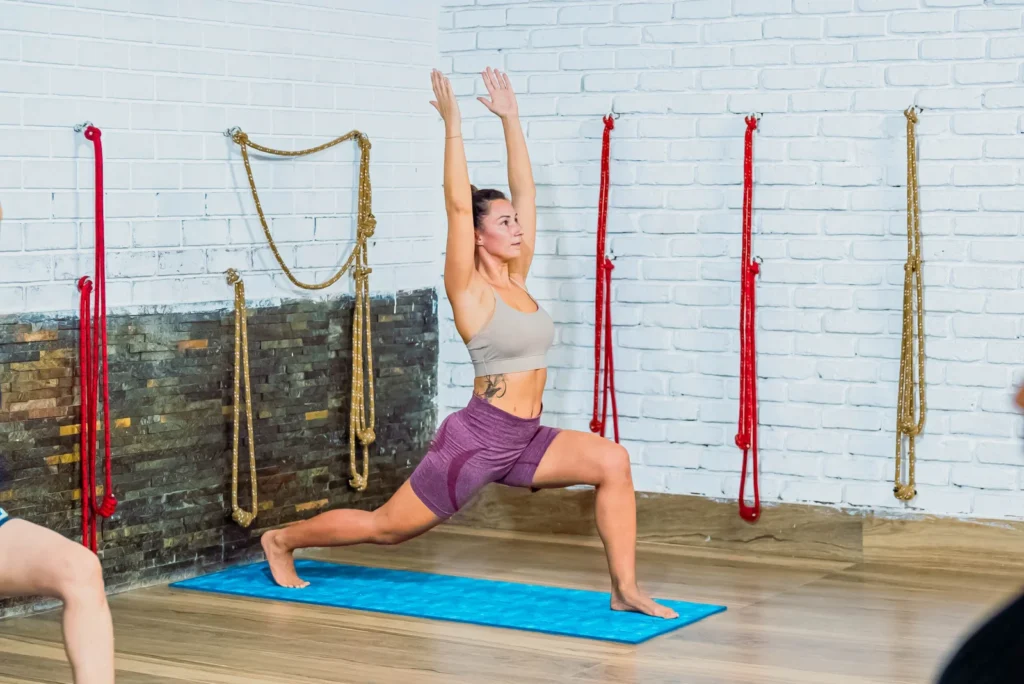
It looks simple. One knee on the ground, the other foot forward, arms reaching up. But do not let that simplicity fool you. Anjaneyasana is one of those poses that quietly does a lot of work, opening tight hip flexors, building leg strength, improving balance, and even calming a busy mind.
In this guide, we break down everything about the Anjaneyasana pose, what it is, where it comes from, how to do it correctly step by step, who can benefit from it, and what to watch out for. Whether you are a complete beginner or someone who has been practising yoga for years, this article is written for you.
What Is Anjaneyasana?
Anjaneyasana (pronounced: ahn-jah-nay-AHS-ah-nah) is a Sanskrit name that translates to the pose of Anjaneya, another name for Hanuman, the monkey god from Hindu mythology. Hanuman is known for his devotion, strength, and the famous leap he took across the ocean to Lanka. The pose mirrors this spirit of reaching forward with power and grace.
In modern yoga practice, Anjaneyasana is commonly called the Low Lunge pose. It is a foundational pose found in most Vinyasa, Hatha, and Ashtanga yoga sequences. It is also a key part of the Sun Salutation B flow.
The low lunge stretch targets the hip flexors, quadriceps, groin, chest, and shoulders, making it one of the most useful full-body stretches you can add to your routine.
The Sanskrit Meaning and Mythology Behind the Pose
Anjaneya refers to the son of Anjana, and that is none other than Lord Hanuman. The pose is said to honour the moment when Hanuman leapt from India all the way to Lanka in the service of Lord Rama. That leap — powerful, fearless, and full of devotion — is what this pose embodies.
When you stretch your arms up and open your chest in Anjaneyasana, you are not just doing a physical exercise. You are connecting with an intention — the willingness to move forward, to stretch beyond your comfort zone, and to act with purpose.
This is part of what makes yoga more than just fitness. The stories and meanings behind postures like the Anjaneyasana pose give your practice depth and direction.
How to Do Anjaneyasana: Step-by-Step Instructions
Before you begin, make sure you have a yoga mat. You may also want a folded blanket under the back knee for extra cushioning, especially if you are a beginner.
Step 1: Start in Downward Facing Dog (Adho Mukha Svanasana)
Begin on your hands and knees. Tuck your toes and lift your hips up and back to form an inverted V shape. Spread your fingers wide and press firmly into the mat.
Step 2: Step One Foot Forward
On an exhale, step your right foot forward between your hands. Place your foot flat on the mat with the toes pointing forward. Your right knee should be directly above your right ankle — not caving inward.
Step 3: Lower Your Back Knee
Gently lower your left knee to the mat. Slide your left foot back until you feel a good stretch along the front of your left hip and thigh. Keep the top of your left foot flat on the mat.
Step 4: Square Your Hips
This is the part most beginners skip — and it matters. Try to keep both hip bones facing forward. Imagine two headlights on your hips pointing straight ahead. This square position is what really opens the hip flexors and makes the low lunge stretch effective.
Step 5: Lift Your Arms
On an inhale, lift your chest away from your thigh and sweep both arms up alongside your ears. If your shoulders are tight, you can interlace your fingers above your head and push your palms upward. Keep your lower belly gently drawn in.
Step 6: Hold and Breathe
Hold the pose for 5 to 8 breaths. With every inhale, lengthen your spine upward. With every exhale, sink your hips a little deeper toward the mat. Keep your gaze forward or softly upward.
Step 7: Come Out Safely
On an exhale, lower your hands back to the mat and step back into Downward Facing Dog. Repeat on the other side by stepping the left foot forward.
Also Read: AcroYoga Explained – Meaning, Benefits, Techniques & Popular Partner Poses
Anjaneyasana Health Benefits
Here is the truth: the Anjaneyasana benefits go far beyond just stretching your legs. Let us go through them one by one.
1. Opens and Releases Tight Hip Flexors
The hip flexors, especially the psoas muscle, are often chronically tight in people who sit for long hours. Anjaneyasana directly targets this area. The deep low lunge stretch lengthens the psoas and iliacus, which can reduce lower back pain, improve posture, and make walking and running feel easier.
2. Builds Strength in the Legs and Glutes
While it is primarily a stretch, holding the Anjaneyasana pose actively engages your quadriceps, hamstrings, and gluteus muscles. Over time, this builds real functional strength that supports everyday movement and athletic performance.
3. Expands the Chest and Shoulders
When you lift your arms in the pose, you open the front of the chest and stretch the shoulders. This is especially helpful for anyone who works at a desk or spends time hunched over a phone. Regular practice can improve your breathing capacity as the lungs get more room to expand.
4. Relieves Lower Back Pain and Sciatica
Tight hip flexors are one of the main causes of lower back pain. By releasing this tension, the Anjaneyasana pose helps reduce pressure on the lumbar spine. Many yoga teachers also recommend it as a gentle way to ease sciatic discomfort — though always consult a doctor if your pain is severe.
5. Improves Balance and Core Awareness
Staying steady in a low lunge yoga pose requires your core to engage. The stabilising muscles around your hips, abdomen, and spine all work together to keep you balanced. With regular practice, you will notice improved overall balance and better body awareness.
6. Builds Stamina and Endurance
Holding the pose for multiple breaths builds endurance in your thighs and lower body. Athletes — especially runners and cyclists — can benefit greatly from this as it mimics the demands placed on the legs during training.
7. Calms the Mind and Reduces Stress
Like most yoga poses, the Anjaneyasana pose asks you to focus on your breath, alignment, and body sensations. This mindful attention naturally quiets the mental chatter and activates the parasympathetic nervous system — the rest-and-digest mode that helps reduce stress and anxiety.
8. Supports Digestive Health
The gentle compression and extension involved in deep low lunge variations can stimulate the abdominal organs and aid digestion. Some practitioners also report reduced bloating and improved gut motility with regular practice.
What Muscles Does Anjaneyasana Work?
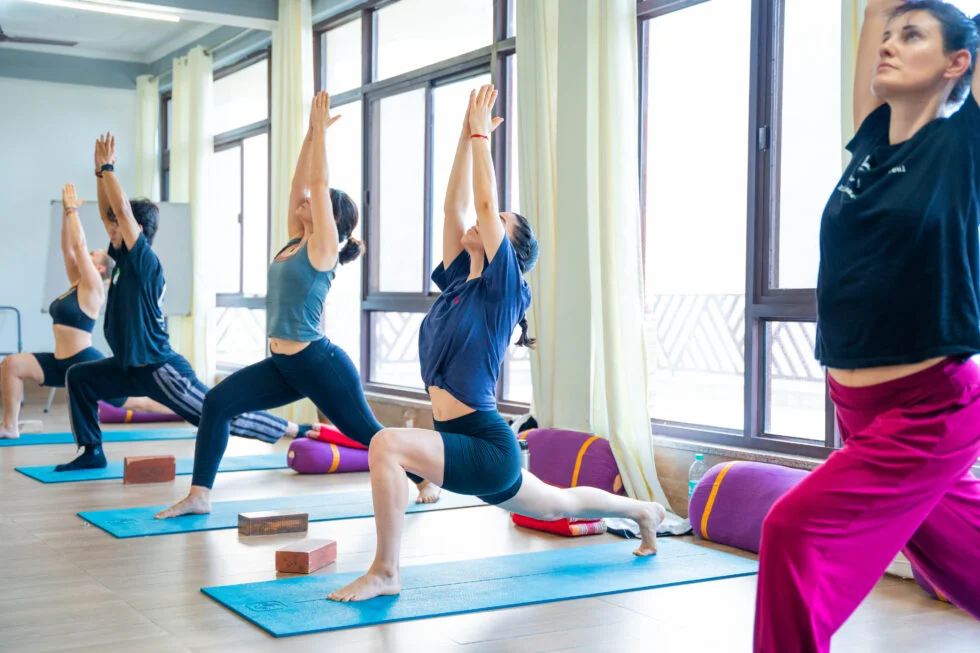
Understanding which muscles are involved helps you practise more consciously. The Anjaneyasana pose works primarily:
- Hip Flexors (Psoas and Iliacus) — stretched in the back leg
- Quadriceps — strengthened and stretched in both legs
- Gluteus Maximus and Medius — engaged for stability
- Hamstrings — gently lengthened in the front leg
- Core Muscles (Transversus Abdominis) — active for balance
- Chest and Shoulder Muscles (Pectoralis Major, Deltoids) — opened as arms lift
- Spinal Extensors — engaged to keep the back upright
Anjaneyasana Variations and Modifications
The beauty of this pose is how adaptable it is. Whether you are stiff, a beginner, or an advanced practitioner, there is a version that works for you.
For Beginners: Use a Blanket Under the Knee
If you feel pressure on your back knee, fold a blanket and place it underneath. This small change makes a big difference in comfort and allows you to hold the pose longer.
Low Lunge with Hands on the Knee
Instead of lifting the arms, place both hands on your front knee. This is a gentler variation that still provides a good hip flexor stretch without demanding shoulder flexibility or strong balance.
Anjaneyasana with a Backbend
For more experienced practitioners, you can deepen into a mild backbend from the pose — tilting the torso slightly back and gazing toward your thumbs. Only go as far as your spine is comfortable. Avoid crunching into the lower back.
Crescent Moon Variation (Arms Up)
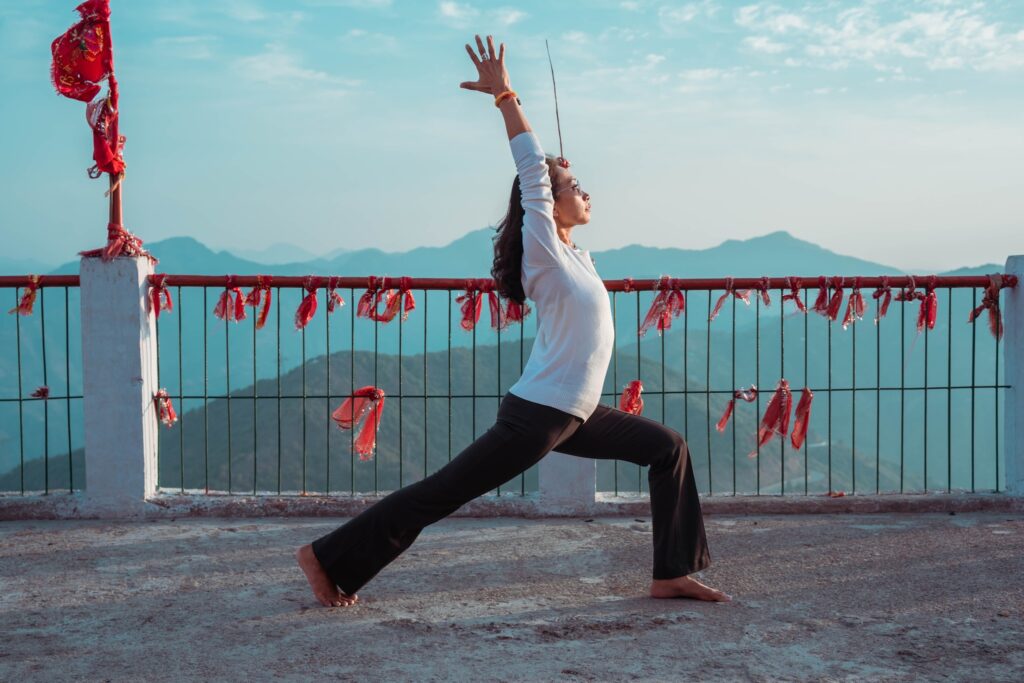
This is the full classical version of the Anjaneyasana pose — arms stretched high, palms together or fingers interlaced. It builds the most heat and provides the deepest stretch.
Twisted Low Lunge
From the low lunge position, bring your hands to the heart in a prayer position and twist your torso toward the front leg. This variation adds a spinal rotation and further opens the chest and thoracic spine.
Quick Summary: Anjaneyasana at a Glance
| Feature | Details |
|---|---|
| Sanskrit Name | Anjaneyasana |
| Also Known As | Low Lunge, Low Crescent Lunge, Equestrian Pose |
| Level | Beginner to Intermediate |
| Main Muscles Worked | Hip flexors, quadriceps, glutes, hamstrings, core |
| Key Benefits | Hip opening, strength, balance, backbend, chest opening |
| Duration | 5–10 breaths per side |
| Best Time to Practice | Morning, pre/post workout, after sitting |
| Avoid If | Knee injury, hip injury, acute back issues |
Who Should Be Careful with Anjaneyasana?
While the low lunge yoga pose is generally safe for most people, there are certain conditions where caution is needed:
- Knee injuries: If you have had a knee surgery or have chronic knee pain, use padding and avoid deep lunge positions until you consult a physiotherapist.
- Lower back problems: Lean slightly forward rather than arching deeply into the back if your lumbar spine is inflamed or injured.
- Hip injuries or hip replacement: Avoid the pose without medical clearance.
- High blood pressure: Raising the arms above the head can temporarily raise blood pressure — keep the arms lower if needed.
- Pregnancy: Especially in the second and third trimesters, widen your stance and avoid deep twists in any variation.
Always listen to your body. If something does not feel right, ease out of the pose. Yoga is not about pushing through pain.
Common Mistakes to Avoid
- Front knee going past the ankle: This puts too much pressure on the knee joint. Make sure the knee stays stacked directly over the ankle.
- Collapsing into the lower back: A lot of beginners arch deeply through the lumbar spine instead of the upper back. Think “lengthen first, then arch.” Keep the tailbone tucked slightly down.
- Holding the breath: This is a stretch — it needs breath. Slow, steady inhales and exhales help the muscles release and deepen into the pose naturally.
- Hips not squared: If one hip is higher or rotated out, you won’t get the full benefit of the stretch. Take a moment to square them before lifting your arms.
Expert Tips to Get the Most Out of Anjaneyasana
- Align the knee over the ankle — your front knee should not go past your toes. This protects the knee joint.
- Keep the hips square — this is the most common mistake. Many people let their hips open sideways. Try to keep both hip points facing forward.
- Engage the core — do not dump into your lower back. Draw the navel gently in and up.
- Breathe through the stretch — do not hold your breath. Deep, slow breaths help your muscles release more deeply into the low lunge stretch.
- Start with 30 seconds — if you are new, hold for 30 seconds on each side. Gradually build up to 60 to 90 seconds as your body opens up.
- Do it after sitting — Anjaneyasana is perfect right after a long work session. Just 2 minutes on each side can completely reset your hips.
When and How Often Should You Practice Anjaneyasana?
The low lunge pose can be done anytime, but here are some ideal moments to include it:
- In the morning: A few rounds of Anjaneyasana after waking up counteract the stiffness from sleep and set your body up for the day.
- After sitting for long periods: If you work at a desk, taking a 2-minute low lunge break every hour can do wonders for your lower back and hip health.
- Before a workout: It’s a fantastic warm-up pose that prepares the hips, thighs, and spine for intense movement.
- After a run or workout: It helps cool down tight muscles and speed up recovery.
- As part of Sun Salutations: Anjaneyasana naturally fits into Surya Namaskar sequences and flows beautifully between Downward Dog and standing postures.
Start with holding the pose for 5 breaths on each side, once a day. Over time, work up to longer holds and multiple rounds.
Final Thoughts
Anjaneyasana is proof that you do not need a complicated, advanced pose to get powerful results. This humble low lunge stretch, practised mindfully and consistently, can transform how your body feels from the hips to the shoulders.
It opens what modern life closes. It stretches what sitting tightens. And it asks you to breathe, to be present, and to reach forward, physically and mentally.
At Vinyasa Yoga Academy, we teach the Anjaneyasana pose, along with the deeper philosophy and alignment behind every posture, as part of our Yoga Teacher Training Courses in Rishikesh and Bali. Whether you want to deepen your personal practice or become a certified yoga teacher, our experienced teachers guide you every step of the way.
Frequently Asked Questions About Anjaneyasana
Q1. Is Anjaneyasana good for beginners?
Ans: Yes, absolutely. Anjaneyasana is one of the best beginner-friendly yoga poses. With simple modifications like using a blanket under the knee or keeping hands on the front thigh instead of raising them, anyone can practise it safely from day one.
Q2. How long should I hold the low lunge pose?
Ans: For flexibility: hold for 60 to 90 seconds on each side. For flow: hold for 5 to 8 slow breaths. For strength building: pulse gently in and out for 10 to 15 reps before holding.
Q3. Can I do Anjaneyasana every day?
Ans: Yes. In fact, daily practice is encouraged, especially if you sit a lot. The hip flexors respond well to consistent stretching, and you will notice improved flexibility and reduced back tension within a few weeks.
Q4. What is the difference between low lunge and high lunge?
Ans: In the low lunge, the back knee is on the ground. In the high lunge (also called the Crescent pose), the back knee lifts off the ground. High lunge is more demanding on the legs and core, while the low lunge stretch is more accessible and focuses more on hip flexor release.
Q5. Does Anjaneyasana help with back pain?
Ans: Yes, for many people it does. Tight hip flexors are a common contributing factor to lower back pain. By lengthening and releasing these muscles, Anjaneyasana can reduce the pull on the lumbar spine and ease discomfort. However, if you have a herniated disc or serious spinal injury, please consult your doctor first.
Related Reading
- Easy Pose (Sukhasana) — rest after deep hip openers
This article is for general information and is not medical advice. If you have a respiratory or heart condition, are pregnant, or are unsure whether these practices suit you, please speak to your doctor before beginning.