







Padmasana (Lotus Pose): A Complete Guide to Benefits, Technique & Safe Practice
Table of Contents
- History and Meaning of Padmasana
- How to Do Padmasana
- The Anatomy of Padmasana
- Benefits of Padmasana
- Preparing Your Body: The Hip-Opening Poses You Actually Need
- Variations of Padamasana
- 1. Ardha Padmasana (Half Lotus)
- 2. Sukhasana (Easy Pose)
- What Common Mistakes Should You Avoid in Padmasana?
- Mudras and Bandhas: Adding Depth to Your Lotus Practice
- Who Should Not Practise Padmasana
- Bringing Padmasana Into Daily Life
- Final Thought
- Frequently Asked Questions
- 1. Why is Padmasana called Lotus Pose?
- 2. Why is Padmasana used for meditation?
- 3. Why do my knees hurt during Padmasana?
- 4. How long should you hold Padmasana?
Most people know the Lotus Pose as a symbol of peace and meditation, but Padmasana has a lot more to offer than just looking calm and still. It can help you sit straighter, focus better, and support a healthy mind and body. This classic yoga pose plays an important role in both physical and mental well-being.
In this guide, we will look at what Padmasana means, where it comes from, its benefits, how to do it step by step, its different variations, safety tips, and helpful advice for practice.
History and Meaning of Padmasana
Padmasana is a Sanskrit compound word—”Padma” meaning “lotus flower” and “asana” meaning “seat” or “posture.” Translated directly, it simply means the Lotus Seat.
Padmasana is a yoga posture that has been practised for centuries, passed down through generations of teachers, practitioners, and spiritual traditions long before modern yoga studios and meditation apps became part of daily life.
Ancient spiritual traditions across the Indian subcontinent recognised the value of sitting still, sitting tall, and turning the attention inward. Over time, people closely connected this seated posture with meditation, breathwork, concentration, and spiritual practice. Classical yogic texts, including the Hatha Yoga Pradipika, describe Padmasana as an important seated posture for meditation and yogic discipline.
What makes Padmasana particularly interesting is how widely it appears across different spiritual paths. In Hindu, Buddhist, and Jain traditions alike, deities and sages are depicted seated in lotus pose, representing clarity, stillness, and an awakened presence.
Years later, Padmasana remains one of the most globally recognised meditation postures in the world.
How to Do Padmasana
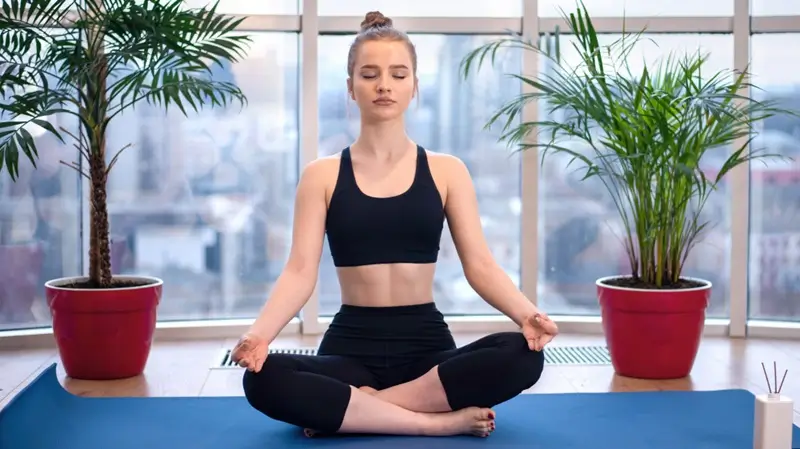
- Sit comfortably on your yoga mat with both legs stretched out in front of you. Place your hands beside your hips and sit nice and tall. Relax your shoulders and take a few slow breaths.
- Then slowly bend your right knee and bring your foot closer to your body. Hold your right knee and ankle gently with your hands. Move the leg softly from side to side to help loosen the hip.
- Slowly turn your right thigh outward from the hip. Bring your right foot onto your left thigh with the sole facing upward. Let the knee lower naturally. Do not push it down.
- Bend your left knee and turn the thigh outward. Both feet should rest comfortably on opposite thighs.
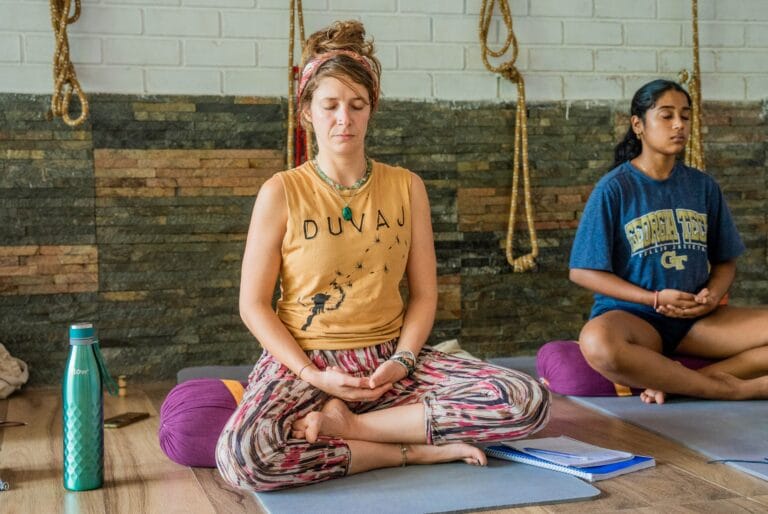
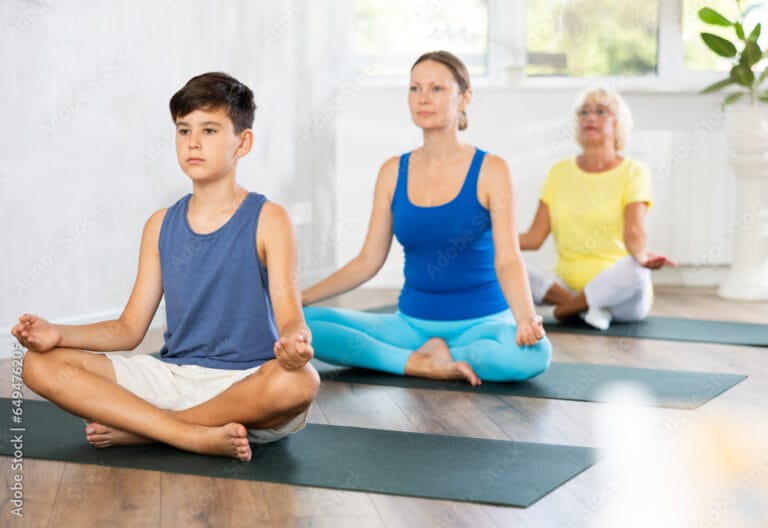
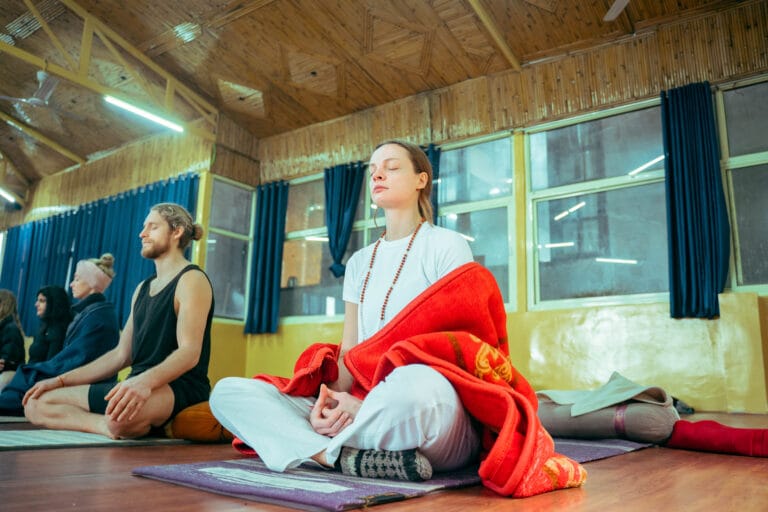
- Press your sitting bones into the mat. Keep your spine long, shoulders relaxed, and chest open.
- Rest your hands on your knees with your palms facing upward. If you like, gently touch your thumb and index finger together in Gyan Mudra.
- Close your eyes and take slow breaths.
- When you are done, slowly lift the top foot off first, then release the bottom leg. Stretch both legs out in front of you and gently shake them.
Important: If you feel pain in your knees or hips, come out of the pose slowly.
The Anatomy of Padmasana
Padmasana is not just a way of sitting. It is a careful position where your muscles, joints, and spine all work together to give your body a strong base. Here is what is happening in your body when you sit in this pose
- Hips: The hip joints rotate externally to allow the legs to fold upward. The deeper your hip flexibility, the more accessible and comfortable the pose becomes.
- Knees: The knee joints are placed under a significant degree of rotation. This is why preparation and warming up are non-negotiable.
- Ankles: They bear the weight of the opposite thigh, so ankle mobility matters too.
- Spine: Stays long, neutral, and upright, which keeps the chest open and the breath flowing freely.
- Core: Subtly engaged to support the uprightness of the torso.
When you cross your legs in this posture, blood flow is directed toward the abdomen, spine, and pelvic area, and many practitioners believe this helps manage the flow of vital energy throughout the body.
Benefits of Padmasana
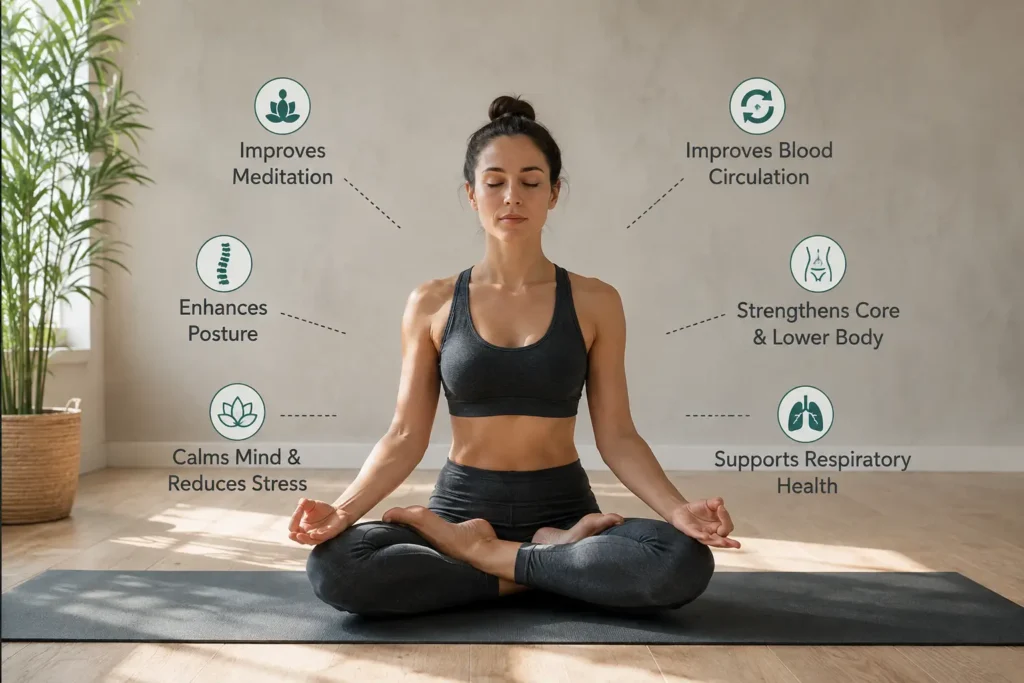
Padmasana is a beautiful sitting pose that is good for both your body and mind. If you practice it regularly and carefully, here is what it can do for you:
- Supports Better Posture: This pose gently pushes your spine upward and opens your chest outward. So without even trying, you start sitting straighter and taller.
- Opens the Hips: Regularly practicing this pose slowly makes your hips more flexible. It may take time, but your hip muscles and joints will thank you for it.
- Improves Focus: When you sit in this pose, your body becomes steady and still. This steadiness helps your mind stop wandering and makes it easier to concentrate.
- Calms the Mind: Padmasana is the favourite pose for meditation because it brings a natural sense of peace and relaxation. Just sitting in it makes you feel more settled inside.
- Supports Deep Breathing: A tall spine means more space for your lungs. This makes your breathing deeper, slower, and smoother, which feels really good.
- Builds Body Awareness: This pose quietly teaches you to listen to your body. You start understanding the difference between a healthy stretch and actual pain or strain.
- Helps Reduce Stress: When you sit in Padmasana and breathe slowly, your body starts to relax deeply. It is one of the simplest ways to calm your nerves and reduce stress.
Preparing Your Body: The Hip-Opening Poses You Actually Need
Most people cannot walk straight into full Padmasana, and there is absolutely nothing wrong with that. The hips simply need time and specific attention. These four poses are the most effective preparation.
- Eka Pada Rajakapotasana (Pigeon Pose) goes deep into the outer hip and the glutes—the area that most resists the rotation Padmasana requires. From Downward Dog, bring one knee forward behind the corresponding wrist and let the hip sink toward the floor. This is one of the most effective hip openers in all of yoga.
- Baddha Konasana (Butterfly Pose) is your best daily companion. Sitting tall with the soles of your feet together and knees dropping open, this pose mimics the external rotation demand of Padmasana and stretches the inner thighs. Stay here for two to five minutes every day and you will feel the hips change over weeks.
- Janu Sirsasana (Head-to-Knee Pose) lets you work one hip at a time, with one leg bent in external rotation while you fold forward over the extended leg. It creates external rotation safely and without any weight on the knee.
Variations of Padamasana
1. Ardha Padmasana (Half Lotus)
It is the most intelligent modification for most practitioners. One foot rests high on the opposite thigh; the other foot simply tucks under the opposite knee on the floor. One hip opens deeply while the other stays comfortable, and the spine can be completely upright without strain.
Tip: Always switch sides, right leg on top for five minutes, then left leg on top, so both hips develop evenly and stay balanced.
2. Sukhasana (Easy Pose)
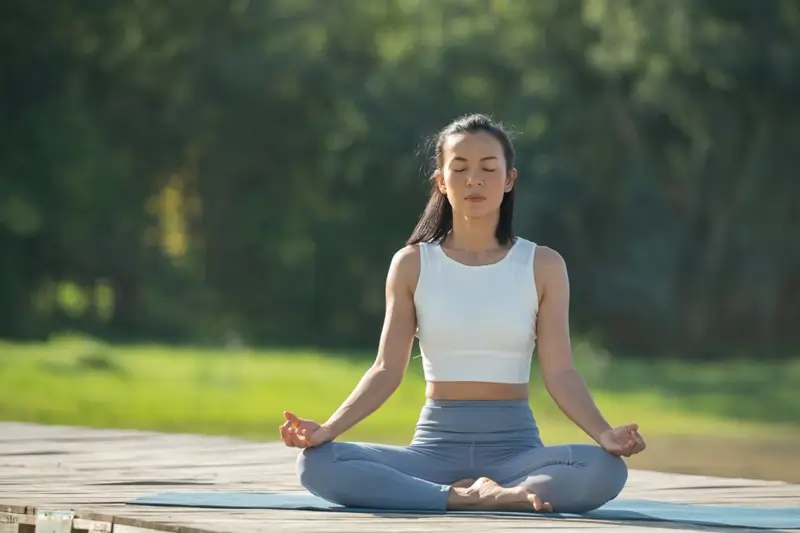
Sukhasana is a gentle cross-legged seat where you cross your lower legs and let each foot rest naturally on the floor beneath the opposite knee.
Modification: Sit on a folded blanket or firm cushion to raise your hips above the level of your knees. This small lift encourages the pelvis to tilt forward and relieves strain on the lower back, making it the preferred choice for longer meditation sessions, especially when the hips feel tight.
What Common Mistakes Should You Avoid in Padmasana?
| Mistake | Better Practice |
| Forcing the knees down | Let the knees relax naturally with time |
| Pulling the feet aggressively | Move from the hips, not the knees |
| Rounding the spine | Sit on a cushion and keep the chest lifted |
| Ignoring knee pain | Stop immediately and choose a simpler variation |
| Practising without a warm-up | Prepare with hip-opening poses first |
| Holding too long | Start with short holds and increase slowly |
Mudras and Bandhas: Adding Depth to Your Lotus Practice
Padmasana becomes a complete practice when traditional hand gestures and energy locks are added.
- Gyan Mudra (thumb touches index finger, palms face up) is the gesture of knowledge and wisdom. Chin Mudra is identical in hand position but with the palms facing down and is associated with drawing energy inward. Dhyana Mudra—left hand in the lap, palm up; right hand resting on top—is specifically the mudra of meditation, creating a closed circuit of energy within the body.
- For those working with more advanced techniques, Mula Bandha (a gentle engagement of the pelvic floor) seals energy at the base of the spine, while Jalandhara Bandha (a slight lowering of the chin toward the chest) lengthens the back of the neck and regulates the energetic flow upward through the cervical spine. These two bandhas combined with Padmasana and deep pranayama form the foundation of many classical meditation practices.
Read More: Beginner’s Introduction to Yoga Mudras: Types, Purpose, Function & More
Who Should Not Practise Padmasana
Recognising that this posture is not suitable for everyone is part of practicing intelligently. Avoid Padmasana if you have any of the following:
- Knee Injuries — Any current or recent knee injury, including meniscus tears, ligament damage, or post-surgical recovery.
- Chronic Ankle Instability — This is also a clear contraindication for the pose.
- Sciatica or Tight Piriformis Muscles — The pose may make symptoms worse rather than relieve them.
- Pregnancy (Later Trimesters) — Pregnant women should limit seated floor poses generally and consult a qualified prenatal yoga teacher before attempting Padmasana.
Bringing Padmasana Into Daily Life
The hip flexibility required for Padmasana does not develop in a yoga class alone — it develops in how you live. Sitting on the floor instead of the sofa while reading or watching television, even in a simple cross-legged position, adds passive hip-opening time to your day. If you work at a desk, the seated Figure 4 stretch—one ankle crossed over the opposite knee—opens the outer hip throughout the workday without leaving your chair.
The real practice of Padmasana is not the final locked shape. It is the daily commitment to sitting still, breathing fully, and turning your attention inward even for five minutes. That is where the pose lives. The shape is just the container.
Final Thought
Padmasana is where the body stops performing, and the soul starts listening. It reveals where your hips are tight, where your mind resists, and where you are still learning to trust the process. The one who breathes calmly in half-lotus—unhurried, fully present—has already won the deeper battle that most never even notice they are fighting.
Show up daily, sit with intention, and let the pose unfold on its own terms. The full lotus will come not when you force it but when you are finally ready to receive it.
Come join us at Vinyasa Yoga Academy, where experienced teachers will guide you, refine your form, and support you every step of the way. Our 200 Hour Yoga Teacher Training in Rishikesh is the perfect next step, where you will learn anatomy and yoga philosophy in a truly transformative way.
Frequently Asked Questions
1. Why is Padmasana called Lotus Pose?
It gets this name because when you fold your legs into this position, they look like the petals of a lotus flower that is fully bloomed.
2. Why is Padmasana used for meditation?
Because it is one of the most comfortable and steady ways to sit without moving. When your body feels calm, it becomes much easier to focus your mind and pay attention to your breathing during meditation.
3. Why do my knees hurt during Padmasana?
This mostly happens because your hips are still tight or you are pushing your legs into the position too fast. Never force this pose.
4. How long should you hold Padmasana?
If you are a beginner, even 30 to 60 seconds is good enough. As you keep practising and your body starts feeling more comfortable, you can slowly increase the time at your own pace.
This article is for general information and is not medical advice. If you have a respiratory or heart condition, are pregnant, or are unsure whether these practices suit you, please speak to your doctor before beginning.