Meditation Asanas: 7 Poses for Inner Calm and Focus

Table of Contents
- What Is a Meditative Asana, Really? Origin And Background
- Why the Body Position In Meditation Matters More Than You Think?
- The Reason Behind
- 7 Meditative Asanas: Names and What They Actually Mean
- 1. Sukhasana | Easy Pose
- 2. Siddhasana | The Accomplished Pose / Adept Pose
- 3. Padmasana | Lotus Pose
- 4. Vajrasana | Thunderbolt Pose
- 5. Swastikasana | Auspicious Pose
- 6. Ardha Padmasana | Half Lotus
- 7. Bhadrasana | Gracious Pose
- Meditative Asanas Benefits Worth Knowing
- 1. They Train the Nervous System, Not Just the Body
- 2. They Reduce the Metabolic Load of Sitting
- 3. They Form a Feedback Loop Between Posture and Breath
- 4. They Support Longer, Uninterrupted Practice
- How to Choose the Right Meditative Asana for You
- A Closing Note On Meditative Asanas
- Frequently Asked Questions About Meditation Asanas
- What is the difference between a meditative asana and a yoga asana?
- Can I meditate in Savasana instead of a sitting posture?
- Is Sukhasana enough for meditation, or do I need to work toward Padmasana?
- For how long should I sit in a meditative asana?
- What is the best time of day to practise meditative asanas?
- Can children practice meditative asanas?
Meditation Asanas: Mind Over Matter, Pose Over Pain
A practical, honest take on the meditative asanas — what they are, why they work, and which one is actually right for you
Most people, when they decide to meditate, sit down on a mat and immediately start thinking about whether their back will ache after five minutes. Somewhere between adjusting the posture and worrying about it, the meditation itself gets lost.
This is not a sign that you are bad at meditating. It is a sign that nobody properly introduced you to meditative yoga asanas. When you are sitting in the right posture for your body, meditation does not feel like an effort.
In the classical yoga tradition, a meditative asana is more than a cross-legged position. It is a very specific arrangement of the body that’s been refined over centuries to do one particular thing, i.e., make stillness easy.
Posture (Asana) should be stable and comfortable (Sthira Sukham Asanam).
– Patanjali, The Yoga Sutras
What Is a Meditative Asana, Really? Origin And Background
The word ‘asana‘ comes from the Sanskrit root ‘as,’ which simply means ‘to sit.’ Sage Patanjali, in the Yoga Sutras, defined ‘asana‘ in just a few words as ‘sthira sukham asanam‘, or a posture that is steady and comfortable.
That is it! Steady and comfortable.
Meditative asanas, specifically, are the sitting postures or positions whose entire form is aimed at supporting a long, unmoving sitting. They are not about stretching muscles, taking turns, or building strength. They are about creating the right physical conditions, with the help of postures, for the mind to go quiet.
You probably wouldn’t know that the ancient texts did not even separate meditation asanas from other asanas. The Hatha Yoga Pradipika lists 84 asanas, all under one category. New-age yogis made a distinction between meditative and other asanas by grouping poses according to their purpose.
What the texts did say, clearly, was which poses were best for sitting in meditation. The Goraksha Sataka, written around the 10th century, only described two asanas in detail, Siddhasana and Padmasana. This tells us that even a thousand years ago, experienced yogis knew that for meditation, you do not need dozens of poses. You need the right few.
Why the Body Position In Meditation Matters More Than You Think?
You might wonder that if meditation is about the mind, why does the body’s position matter so much? The answer is that the mind and body are not separate systems running on parallel tracks. They are in constant communication with each other.
The condition of your body directly shapes the state of your nervous system, and your nervous system is the environment/ground in which your mind operates.
The Reason Behind
The Vagus Nerve is the main nerve of the parasympathetic nervous system, the one that tells your body it is safe, calm, and at rest. It runs through the cervical spine.
When your spine is upright and your neck is in natural alignment, that nerve signal travels smoothly. When you slouch or bend forward or hunch over, the signal gets disrupted. You make it harder for your own body to calm down.
Meditative asanas were designed specifically for these purposes, such as maintaining a straight spine and an open chest. Or, a slightly elevated pelvis that lets the lumbar (lower back) curve fall naturally. These are the functional conditions that support the nervous system’s restful state.
The second thing a meditative asana does is reduce competition for the body’s attention. When you are uncomfortable, the body keeps sending signals to the brain. You constantly think about adjusting, shifting, and moving. That stream of questioning, judging, and thinking occupies the mind. A stable, comfortable posture quiets that traffic.
7 Meditative Asanas: Names and What They Actually Mean
Here is a clean, honest list of seven meditative asanas, including their names and a short description of each. Most of them look simple. But the depth in each one comes from learning to be still within them.
When you stay completely still in Dhyana Asanas, the restless waves of the mind blissfully dissolve into an ocean of eternal peace.
– Guru Yogi Vishnu Panigrahi, Founder VYA
1. Sukhasana | Easy Pose
Best for: Beginners, those with hip or knee stiffness, and older practitioners.
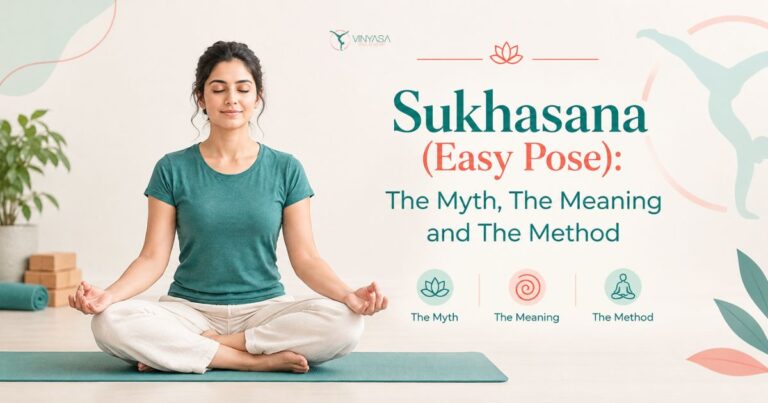
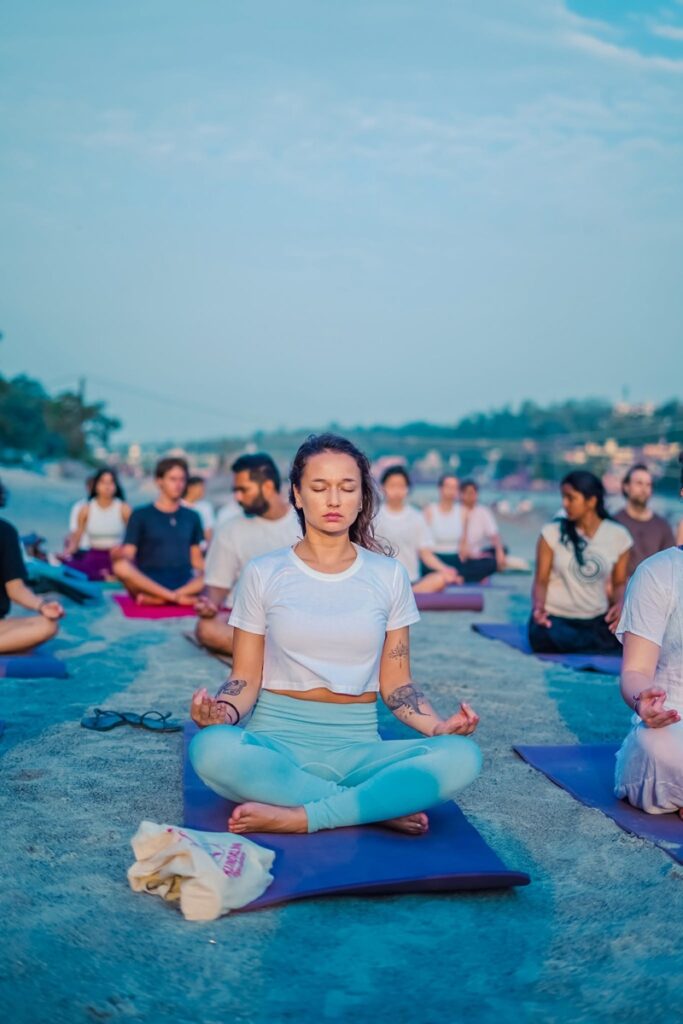
Easy Pose or Sukhasana is the most accessible of all meditative asanas.
You sit on the floor, cross your legs comfortably ahead of you, rest your hands on your knees, and just keep your spine upright. The name Sukhasana literally means ‘ease’ in Sanskrit.
However, what most people do not realise about Sukhasana is that easy does not mean lazy. The uprightness of the spine still matters here a lot. Sitting on a folded blanket or a meditation cushion that tilts your pelvis slightly forward can make Sukhasana far more comfortable if you’re aiming for longer sits.
2. Siddhasana | The Accomplished Pose / Adept Pose
Best for: Intermediate practitioners, those combining meditation with pranayama (or breathwork).
If any meditative asana deserves the title of being ‘most historically significant,’ it is Siddhasana.
The Hatha Yoga Pradipika called the Accomplished Pose the king of all asanas and stated that once Siddhasana is mastered, no other asana is necessary (yes!). That is bold, but it is enough to show how deeply this yoga pose is respected.
In Siddhasana, you place one heel at the perineum region, i.e., below the muscles at the bottom of the pelvis, and the other foot on top. The knees rest on the floor, and the spine is raised upwards. The pose is said to work with the energy channels (yoga chakras) in the lower pelvic area, which is why it has always been considered particularly effective for pranayama and meditation together.
The word ‘Siddhasana‘ means ‘accomplished‘ or ‘perfected.’ A Siddha is someone who has achieved mastery. There is a quiet aspiration built into the very name of this sitting asana for meditation.
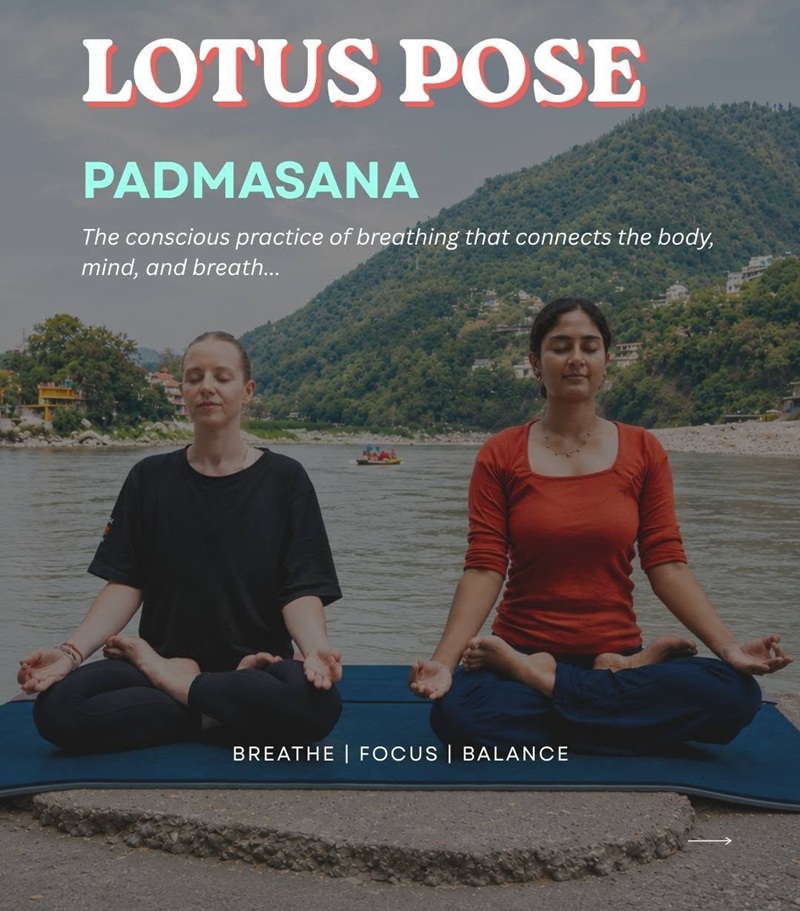
3. Padmasana | Lotus Pose
Best for: Practitioners with flexible, open hips; long-term meditators.
Padmasana is perhaps one of the most recognised meditative yoga asanas in the world.
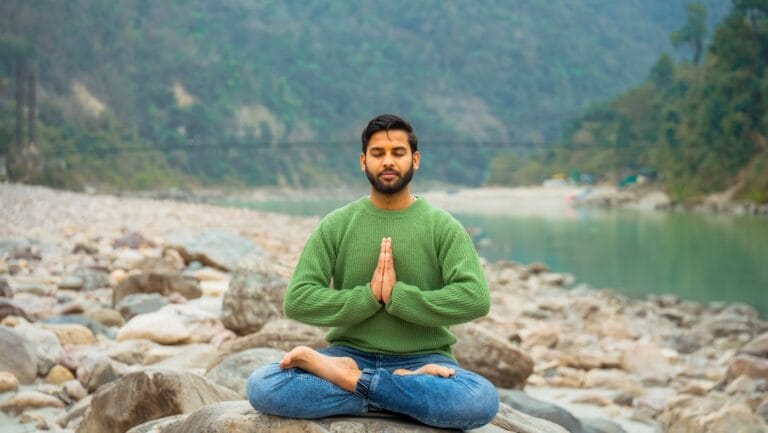
What matters in Padmasana is not the pleasing shape but the evenness and steadiness it creates only when the body is ready for it. The crossed legs, with each foot resting on the opposite thigh, create a stable, grounded base for your body’s dhyana. The posture denotes the shape of a lotus floating on water.
It is worth knowing that Padmasana or Lotus Pose requires genuine hip flexibility. Forcing the knees down without the hips being open enough is a good way to injure your knees.
Lord Buddha is most commonly depicted in Padmasana. The lotus itself is a symbol used in yoga, Hinduism, and Buddhist traditions alike. Something that grows from mud but blooms clean. The posture brings this meaning into the body.
4. Vajrasana | Thunderbolt Pose
Best for: Anyone with tight hips, post-meal sitting, or those with lower back sensitivity.
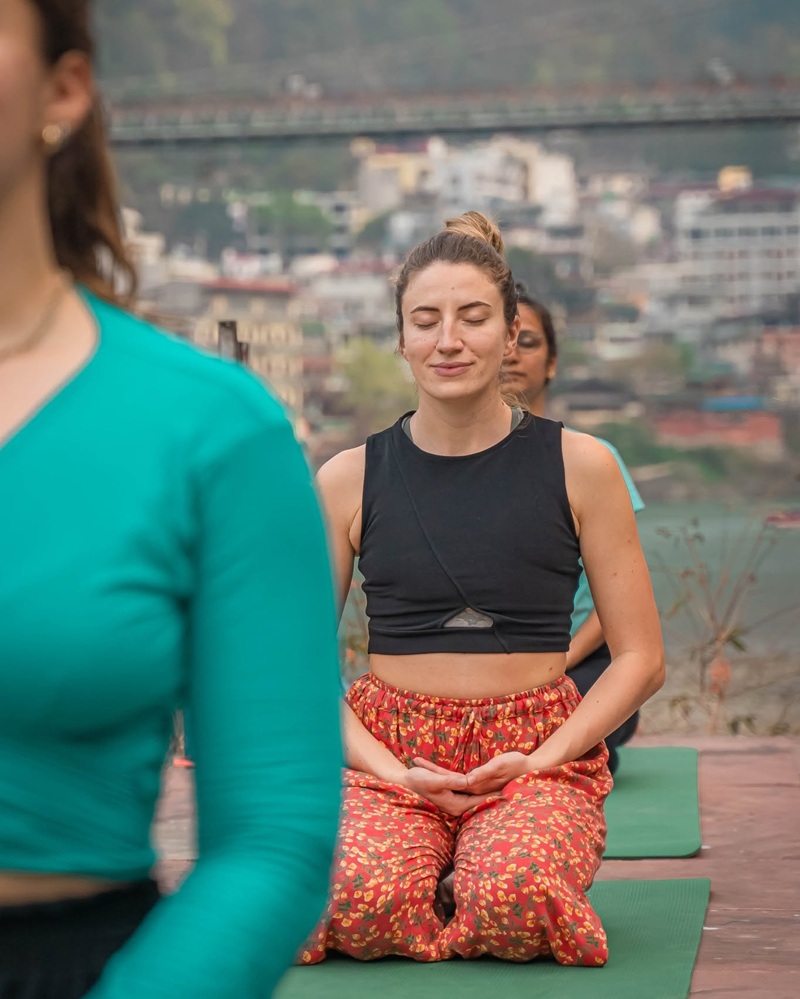
Vajrasana is the kneeling yoga pose for meditation.
‘Vajra‘ means ‘thunderbolt‘ in Sanskrit, but it also refers to the Vajra nadi, a subtle energy channel in the body that is said to be activated by this posture. You sit back on your heels, with knees together and spine tall.
It is the only major meditative asana that can be practiced immediately after eating, making it widely used in certain traditions as a post-meal sitting asana. Physiologically, sitting in Vajrasana (Thunderbolt Pose) after a meal supports digestion by increasing blood circulation to the digestive organs.
For people whose hips or knees make cross-legged sitting difficult, Vajrasana is often a more accessible entry point into meditative sitting asanas. A folded blanket placed between the thighs and calves can help reduce access pressure on the knees considerably.
5. Swastikasana | Auspicious Pose
Best for: Those who find Padmasana too intense and want a more controlled posture than Sukhasana.
Swastikasana (Auspicious Pose) is actually the very first asana described in the Hatha Yoga Pradipika.
The name comes from ‘Swastika‘, an ancient symbol of auspiciousness and balance in the Indian tradition. In this pose, you fold each foot between the thigh and calf of the opposite leg. The feet in this pose go hidden, making the Auspicious pose yoga look symmetrical and contained.
The posture is considered especially grounding, with the energy of the body turning inward rather than extending outward. It is frequently used in Vedic ceremonies because of this particular quality.
6. Ardha Padmasana | Half Lotus
Best for: Practitioners building toward Padmasana, those who need more stability than what Sukhasana provides.
You can consider Ardha Padmasana, or the Half Lotus pose, as the middle ground between Sukhasana and Padmasana.
In it, one foot rests on the opposite thigh while the other one tucks under the opposite knee. It is more grounded than a simple cross-legged sit and lighter on the hips than full lotus.
Many practitioners find they can sit in Ardha Padmasana for much longer than Padmasana without discomfort, which, from a meditation standpoint, is absolutely what matters.
7. Bhadrasana | Gracious Pose
Best for: Those who prefer a more open, accommodating sitting posture.
In Bhadrasana, the soles of the feet are joined together with the heels pulled close to the body. It is somewhat similar to what modern yoga calls Baddha Konasana. The pose opens the hips gently while keeping the spine long.
In some classical texts, Bhadrasana is listed alongside Siddhasana and Padmasana as one of the primary sitting asanas for meditation. It is more commonly used in mantra chanting and certain kinds of devotional meditation where a softer, more perceptive quality of sitting is ideal.
Meditative Asanas Benefits Worth Knowing
The benefits of meditative asanas are often listed as if they were some advertisements in bullet points. The reality we observe every day on the mat is far more interesting, nuanced, and not commonly spoken.
Here is what Meditation Asanas really do:
1. They Train the Nervous System, Not Just the Body
Sitting still is a skill. Most modern people have a nervous system that is habituated to high movement, stimulation, and change.
Every time you sit in a meditative asana and remain steady, you are training your nervous system to tolerate and be comfortable with quietness. Over time, the practice changes how you respond to stress and discomfort outside of meditation as well.
2. They Reduce the Metabolic Load of Sitting
In meditative asanas, blood circulation to the legs is partially reduced. You may observe this sensitivity, as well, as a mild tingling or heaviness in your legs.
The blood that would normally be distributed to the lower limbs becomes available to the core and the brain. It is the cause and effect of why these yoga asanas for meditation support mental clarity during meditation.
3. They Form a Feedback Loop Between Posture and Breath
A naturally upright spine allows the diaphragm to move freely. When the diaphragm moves freely, the breath naturally deepens and slows.
A slower, deeper breath activates the parasympathetic nervous system (rest state). This is not something you consciously do, it happens as a consequence of sitting well.
4. They Support Longer, Uninterrupted Practice
Probably the most practical meditative asana benefit is that a proper posture simply allows you to sit for longer without your body becoming a distraction or a disturbance.
In meditation, continuity matters. The longer you can remain in one spot without diverting, the deeper the practice tends to go in terms of results.
At Vinyasa Yoga Academy, our approach to meditative asanas fuses classical Hatha traditions with modern mechanics. Having trained thousands of yoga teachers globally, our E-RYT certified teachers observe that most practitioners fail to find peace in meditation because they force their bodies into it.
True mastery of a meditative posture isn’t about time or flexibility. It’s about body-mind alignment and the ability to draw the nervous system into a parasympathetic state.
How to Choose the Right Meditative Asana for You
Forget what looks right. Forget what the photos in yoga books show. Ask your body a single question, “Can I stay here without being reminded that I am here?”
Most practitioners split into one of three categories. All three are valid starting points:
- Those who sit well in cross-legged positions (Sukhasana through Padmasana),
- Those whose bodies prefer the kneeling position (Vajrasana), and
- Those who need a chair or a wall for support, at least initially.
Sitting in Sukhasana for even ten minutes felt like torture because I had tight hips, and my lower back cried out. Our teachers taught us how to correctly use props and micro-adjust our pelvis. Learning the actual anatomy behind a stable meditative seat transformed my daily practice from a physical struggle into pure mental calm.
– 300-hr YTTC Student, Vinyasa Yoga Academy
Let’s find some functional checkpoints when finding your seat for meditation:
Checkpoint 1
Your knees should ideally be at or below the level of your hips. If they are higher, your pelvis tilts backward, your lower back flattens, and it will probably ache within minutes. Use a cushion or a folded blanket to raise the hips. Then it becomes easy.
Checkpoint 2
Your spine should be upright without strain. If you feel yourself working hard to hold your back straight, your foundation (pelvis position) needs adjustment. Not the upper back.
Checkpoint 3
Your hands can rest on your knees or in your lap. There is no single correct hand position for meditation. You can use whatever keeps your shoulders relaxed and stops your arms from pulling the posture forward.
Test any posture for ten minutes before deciding if it suits you. A bit of discomfort in the first two minutes is normal as the body takes time to settle. Pain that arrives and stays is information worth listening to.
A Closing Note On Meditative Asanas
Every tradition that has ever seriously engaged with meditation, be it yoga, Buddhism, Zen, Vipassana, Sufism, or modern Christianity, eventually arrived at a sitting posture. Not because sitting is the only way to be present, but because an upright, grounded, still body makes conscious presence easier.
Meditative asanas are not about achieving a shape. They are about preparing a home for the mind to return to. A good meditation seat is like a good chair at a writing desk. You notice it hardly, as it does its job so well.
Start by sitting in a posture that your body accepts today. Learn what the posture is asking of you. And over time, that seat you take every day will become less of something you do forcefully and more of somewhere you be intentionally.
True comfort in meditation comes from a deep understanding of how your body moves and holds energy. If you are ready to move beyond generic advice and master the principles of posture and alignment, consider Yoga Teacher Training in Rishikesh at Vinyasa Yoga Academy. The academy offers Yoga Alliance-certified 100, 200, 300, and 500 Hour YTTCs, along with short-term retreats that help you deepen your understanding of yoga and meditation. Explore the available programs today!
Frequently Asked Questions About Meditation Asanas
What is the difference between a meditative asana and a yoga asana?
All meditative asanas are yoga asanas, but not all yoga asanas are meditative asanas. A yoga asana is any intentional body posture used in the practice of yoga. A meditative asana is a specific type of (sitting) posture designed to support stillness, a straight spine, and sustained self-focus during meditation.
Can I meditate in Savasana instead of a sitting posture?
Savasana (the Corpse Pose) is a relaxation asana, not a meditative one. Lying down in Savasana is a way of transitioning the nervous system into rest and sometimes sleep. In most classical traditions, meditation is practiced sitting upright precisely to keep the mind awake while the body relaxes.
Is Sukhasana enough for meditation, or do I need to work toward Padmasana?
If you can sit in Sukhasana for fifteen to thirty minutes without your body taking your attention away, then Sukhasana is enough. Padmasana requires more hip flexibility and offers a somewhat more grounded base, but if Sukhasana already gives you that stillness, there is no practical reason to force the hips into the Lotus Pose.
For how long should I sit in a meditative asana?
Start with what feels manageable, workable, and sustainable (even five or ten minutes). Build duration gradually over weeks and months. A daily twenty-minute sit, practiced steadily for a year, will change you more than occasional lengthy sessions.
What is the best time of day to practise meditative asanas?
Early morning, specifically the time called Brahma muhurta, i.e., approximately ninety minutes before sunrise, is considered ideal in classical yogic texts. At that time, the mind is relatively uncluttered from the day’s experiences, and the atmosphere is calm. However, the best time for you is simply the time you can dedicate to meditation every day.
Can children practice meditative asanas?
Yes, they surely can. Children’s bodies are naturally flexible, and many children find sitting yoga asanas comfortable with no or minor adjustments. For younger children, the priority should be on comfort, self-focus, and breath awareness rather than on perfect posture or longer sitting.
This article is for general information and is not medical advice. If you have a respiratory or heart condition, are pregnant, or are unsure whether these practices suit you, please speak to your doctor before beginning.