







Paschimottanasana (Seated Forward Bend): Benefits, Technique and Why You Should Practise It
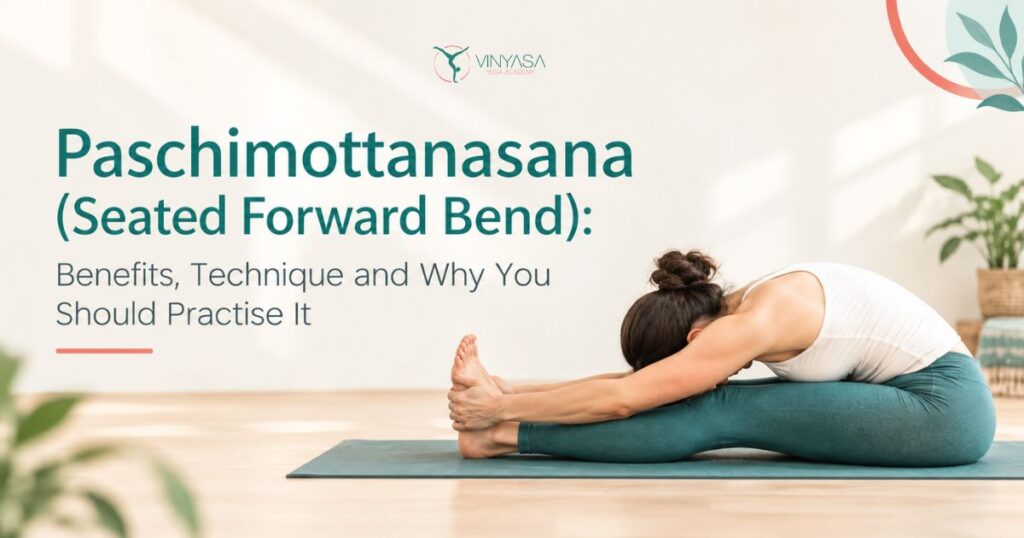
Table of Contents
- What Is Paschimottanasana (Seated Forward Bend)?
- Anatomy of Seated Forward Bend
- How to Practise Paschimottanasana
- Benefits of Paschimottanasana
- 1. Eases Lower Back Discomfort
- 2. Increases Flexibility of the Spine
- 3. Gradually Improves Your Posture
- 4. Stimulates and Supports Digestive Health
- 5. Relieves Bloating and Digestive Sluggishness
- 6. Activates the Parasympathetic Nervous System
- 7. Slows and Deepens the Breath Naturally
- 8. Promotes Deeper and More Restful Sleep
- Variations of Paschimottanasana
- 1. Wide-Legged Forward Fold (Upavistha Konasana)
- 2. One-Legged Forward Fold (Janu Sirsasana)
- 3. Yoga Strap Variation
- Common Mistakes to Avoid During Paschimottanasana
- Best Time to Practise Paschimottanasana
- Final Thought
- Frequently Asked Questions About Paschimottanasana
- Is Paschimottanasana good for beginners?
- Is it normal to feel tight hamstrings in Paschimottanasana?
- Can I bend my knees during a seated forward fold bend?
- Does Paschimottanasana help with digestion?
Long hours sitting at a desk. Endless screen time. Stress that follows you from morning to night. Modern lifestyles create stiffness in the body and noise in the mind, often without us even realising it. Paschimottanasana, or Seated Forward Bend, offers a simple yet powerful solution. While it may look like a basic forward fold, regular practice can create meaningful changes for both physical comfort and mental well-being.
In this guide, you will discover everything about Paschimottanasana benefits, technique, common mistakes, variations and why this classical yoga pose continues to remain relevant today.
What Is Paschimottanasana (Seated Forward Bend)?
Paschimottanasana is one of the most widely practised poses in Hatha yoga. Its name is rooted in Sanskrit—”Paschima” translates to “west“, which in yogic tradition symbolises the entire backside of the human body. “Uttana“ means “intense stretch“, and “Asana“ simply means “pose“ or “seat“.
Put it all together, and the name itself tells the whole story: an intense, deliberate stretch along the entire back of your body, from the soles of your feet all the way up through your calves, hamstrings, spine, shoulders and neck.
In modern yoga classes around the world, it is simply called the Seated Forward Bend, approachable, grounding, and deeply restorative.
Anatomy of Seated Forward Bend
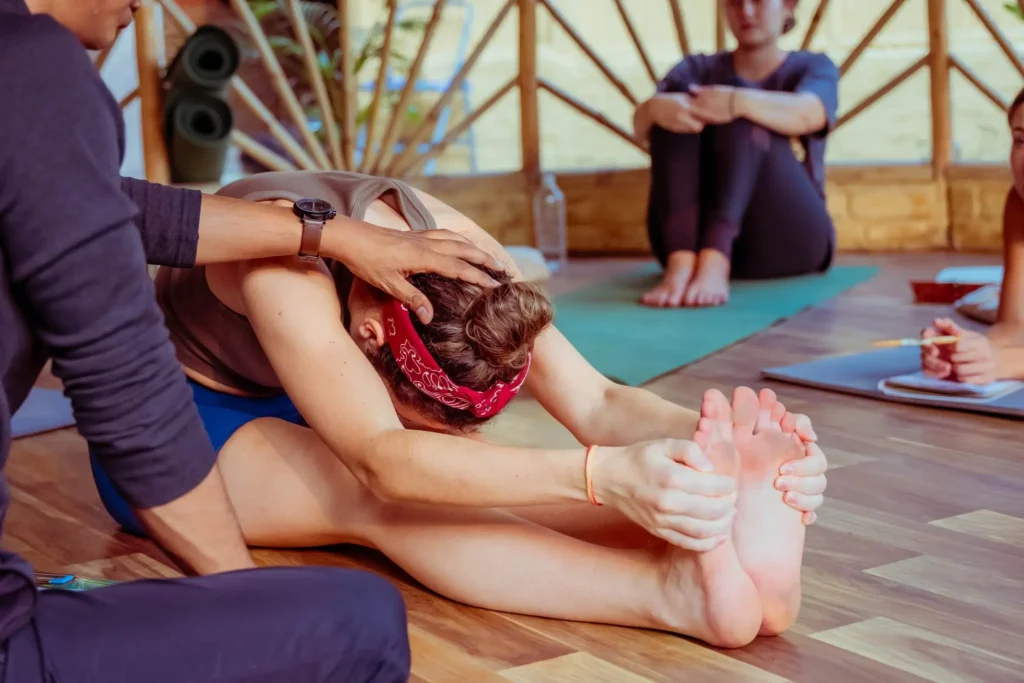
Paschimottanasana works mainly on the back side of the body while also building control and stability.
| Area | What Happens |
| Muscles Stretched | The hamstrings, calves, glutes and lower back gently stretch as you fold forward. This helps release tightness and improves flexibility over time. |
| Muscles Activated | The core, hip flexors and thighs stay lightly active to support the body and prevent collapsing into the pose. |
| Joint Involvement | The hips create the forward fold, the knees stay soft but steady, and the spine lengthens with each breath. |
How to Practise Paschimottanasana
Before You Begin
Find a quiet spot, unroll your mat and sit down. Take one slow, deep breath. That single breath is your cue to leave the outside world behind and begin.
- Sit tall on the floor with both legs stretched out in front of you, side by side. Imagine a gentle string pulling the crown of your head toward the ceiling. Flex your feet softly back toward you, like you’re pressing them against an invisible wall.
- Take a slow, full inhale and sweep both arms up overhead. Feel your spine lift and lengthen with the breath like a flower stem reaching for sunlight before it gently bends.
- As you exhale, hinge forward from your hips, not your waist. Let your chest lead the way, keeping your back as long and open as possible. Think of it less as bending down and more as reaching forward.
- Rest your hands on your ankles or feet.
- Hold here for 20 to 60 seconds. With every exhale, imagine your body getting a little heavier, a little softer, sinking just a few millimetres deeper.
Benefits of Paschimottanasana
1. Eases Lower Back Discomfort
Chronic lower back tightness is one of the most common complaints in the modern world. The seated forward bend gently decompresses the lumbar spine, creating space between the vertebrae and releasing the muscles that have been gripping all day. Many practitioners describe the feeling as deeply releasing, like finally unclenching a fist you had been holding tight for hours.
2. Increases Flexibility of the Spine
Your spine was designed for movement, forward, backwards, sideways and in rotation. Yet most daily activities barely ask it to bend at all. Paschimottanasana moves the entire length of the spine through a forward flexion, systematically building spinal flexibility over weeks and months of regular practice.
3. Gradually Improves Your Posture
Rounded shoulders, a forward head position, and a collapsed chest are all signs of tight posterior muscles. The seated forward bend lengthens precisely those muscles across the entire back of the body, which in turn allows you to stand and sit more naturally upright. Better posture becomes less of an effort and more of your new normal.
4. Stimulates and Supports Digestive Health
When your torso folds over your legs, your abdominal organs, stomach, intestines, liver, and kidneys receive a rhythmic compression with every breath. This gentle pressure encourages better blood circulation to your digestive system and acts like a natural internal stimulation. Regular practice can support a healthier, more comfortable digestive experience overall.
5. Relieves Bloating and Digestive Sluggishness
That uncomfortable heaviness after a long, stressful day or an irregular meal? Paschimottanasana can help. The combination of abdominal compression and slow, deep breathing creates ideal conditions for your gut to release gas, improve motility and return to a state of comfortable ease. If digestive discomfort is something you regularly experience, exploring other yoga poses for bloating and gas relief can further support digestive comfort alongside your practice.
6. Activates the Parasympathetic Nervous System
This is perhaps one of the most scientifically relevant benefits of the seated forward bend. Folding inward with a long, relaxed breath directly activates your parasympathetic nervous system, the branch of your nervous system responsible for rest, recovery and digestion. Within just a few breaths, the body begins to shift out of stress mode and into genuine restoration.
7. Slows and Deepens the Breath Naturally
Most of us breathe far too shallowly without realising it: quick, tight, restricted breaths that never fully fill the lungs. Paschimottanasana naturally encourages the opposite. The stillness of the pose draws your awareness to each breath, gently prompting each inhale to expand a little fuller and each exhale to release a little longer.
8. Promotes Deeper and More Restful Sleep
Tension in the body and racing thoughts in the mind are the two biggest enemies of good sleep. Because Paschimottanasana addresses both simultaneously, releasing physical tightness while calming mental activity, it makes an excellent addition to a bedtime yoga routine. Even five minutes of this pose in the evening can meaningfully shift your body into sleep-ready mode.
Variations of Paschimottanasana
Wherever you are in your practice, whether you are just beginning or have been on the mat for years, there is a version of this pose made perfectly for you.
1. Wide-Legged Forward Fold (Upavistha Konasana)
Separate your legs into a wide V shape before folding forward. This shifts the stretch into the inner thighs and groin, offering a beautifully different release while keeping the same calming quality.
2. One-Legged Forward Fold (Janu Sirsasana)
Bend one knee, placing the sole of that foot against your inner thigh, and fold over the straight leg. A wonderful option if one side of your body needs more attention than the other.
3. Yoga Strap Variation
Loop a strap around the soles of your feet and hold both ends. This allows you to sit tall, fold with a long spine and go exactly as deep as your body is ready for, without any pulling or forcing.
Common Mistakes to Avoid During Paschimottanasana
| Mistake | Why It Happens | Solutions |
| Rounding the Lower Back Instead of Folding From the Hips | Bending from the waist instead of the hips puts pressure on the lower back and barely stretches the hamstrings at all. | Sit on a folded blanket, keep a slight bend in the knees, and focus on lengthening the spine before you fold forward. Length always comes before depth. |
| Pulling Too Hard on the Feet | Forcing yourself deeper by pushing on the feet causes the muscles to tighten, which is the exact opposite of what you want. | Hold the feet, ankles, or shins with a relaxed grip. Let each exhale gently carry you deeper. A yoga strap works beautifully here too. |
| Holding the Breath | When the stretch feels intense, most people unconsciously stop breathing. This keeps the body tense and guarded. | Keep breathing slowly throughout. Long, steady exhales are what signal your body to soften and release. |
| Locking the Knees | Rigid, locked knees strain the joints and make the hamstrings grip tighter. | Keep a soft micro-bend in the knees. Just enough to protect the joint and let the muscles relax. |
Note: Mastering the precise alignment, breathwork, and deeper mechanics behind poses like Paschimottanasana is exactly what dedicated yoga practitioners explore during the 200 Hour Yoga Teacher Training in Rishikesh at Vinyasa Yoga Academy, where traditional yogic wisdom meets modern anatomical understanding to build both confidence and skill in practice.
Best Time to Practise Paschimottanasana
There is no single perfect time; this pose fits beautifully into many different moments of your day.
- In the morning, it gently wakes up stiff muscles and grounds you with quiet calm before the day begins.
- In the evening, it helps to melt away everything the day has piled onto your body and mind.
- After meals, wait at least 1–2 hours so your body has time to digest before you fold forward.
- During a full yoga session, save this pose for near the end when your body is warm, open and ready for a deeper, more comfortable stretch.
Final Thought
There is something quietly extraordinary about a pose trusted and practised for over six centuries. Paschimottanasana has earned every bit of that trust, not through complexity, not through difficulty, but through the simple and consistent magic of what it delivers each time you show up for it.
It does not ask for perfection. It asks for five minutes, a little stillness and the willingness to fold forward and breathe. That is it. So whether it is tomorrow morning, tonight before bed or even right now, unroll your mat, sit down, take one slow breath and begin.
Frequently Asked Questions About Paschimottanasana
Is Paschimottanasana good for beginners?
Absolutely! Just take it slow, don’t force the stretch, and bend your knees a little – you will be just fine.
Is it normal to feel tight hamstrings in Paschimottanasana?
Very normal! Especially if you sit a lot. Be patient; they’ll loosen up over time.
Can I bend my knees during a seated forward fold bend?
Yes, you can bend your knees, as it protects your lower back and makes the pose more comfortable.
Does Paschimottanasana help with digestion?
It can! The gentle belly compression boosts blood flow to your digestive organs, like a little internal massage.