
Is Orange Juice Healthy? Benefits, Nutrition and Side Effects

Table of Contents
- What Is Orange Juice and Why Do People Drink It Every Day?
- Orange Juice Nutrition: What Is in One Glass?
- Orange Juice Calories and Sugar Content
- Vitamin C in Orange Juice
- Potassium, Folate and Other Nutrients
- Health Benefits of Orange Juice: What Research Shows
- 1. It Helps You Meet Your Vitamin C Needs
- 2. It May Support Blood Pressure and Heart Health
- 3. It Helps Your Body Absorb Iron from Plant Foods
- 4. It May Lower the Chance of Kidney Stones Coming Back
- What About Immunity and Skin?
- What Happens When You Drink Orange Juice Every Day?
- Orange Juice Side Effects and Disadvantages of Drinking Too Much
- 1. Extra Sugar and Calories
- 2. Acid and Tooth Enamel
- 3. Heartburn and Acid Reflux
- 4. Blood Sugar and Diabetes
- 5. Kidney Disease and Potassium
- 6. Some Medicines
- Too Much Vitamin C?
- Is Orange Juice Good for Weight Loss?
- Fresh vs Packaged Orange Juice
- What Is the Best Time to Drink Orange Juice?
- With Breakfast or a Meal
- Orange Juice on an Empty Stomach
- Before Bed
- How Much Orange Juice Should You Drink Daily?
- How to Choose and Drink Orange Juice
- The Bottom Line
- Frequently Asked Questions
- Does a glass of orange juice count as fruit?
- Is orange juice from concentrate less healthy?
- Is orange juice safe during pregnancy?
- Can orange juice count as water?
- Does orange juice cleanse the liver or help digestion?
Is orange juice good for you? Yes, in small amounts. A glass of 100% juice gives you plenty of vitamin C, some potassium and folate, and no added sugar but it also has about 112 calories and 21 grams of sugar per cup, and almost no fibre. That is why health groups ask people to keep the portion small.
This guide explains what is in a glass, what research says about the benefits, who should be careful, and how much is sensible to drink.
Quick answers
- Is it healthy? Yes, if it is 100% juice with no added sugar and you drink a small glass.
- How much? UK advice is 150 ml a day. US guidance for teens and adults is no more than about 8 oz (240 ml).
- What is better? A whole orange, because it still has its fibre.
- Who should be careful? People with diabetes, frequent heartburn, kidney disease with high potassium, young children, and people who take certain medicines.
What Is Orange Juice and Why Do People Drink It Every Day?
Orange juice is the liquid squeezed from oranges. Some people search for it as “juice orange”, but both words mean the same thing. You can press it at home, buy it fresh from a juice stall, or pick up a carton from the shop.
People drink it because it tastes good, is easy to pour at breakfast, and is a quick source of vitamin C. It also counts as fruit. The Dietary Guidelines for Americans 2020–2025 allow up to half of your daily fruit to come from 100% juice. In the UK, a 150 ml glass counts as one of your five a day, but only one, even if you drink more.
There is a reason for these limits. Juicing removes most of the fibre and releases the sugar inside the fruit. Health bodies call this “free sugar”, and they ask us to limit it.
Orange Juice Nutrition: What Is in One Glass?
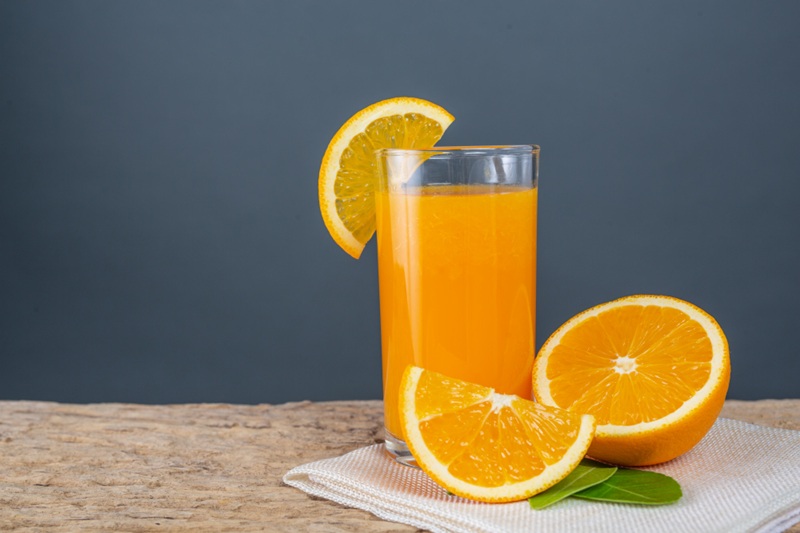
The table below shows the nutritional value of orange juice for one cup (about 240 ml) of raw juice, based on USDA FoodData Central.
| Nutrient | One Cup | Good To Know |
| Calories | 112 kcal | A 150 ml glass has about 70 kcal |
| Carbohydrates | 25.8 g | Mostly sugar |
| Sugars | About 21 g | All natural, none added |
| Fibre | 0.5 g | A whole orange has about 3 g |
| Protein | 1.7 g | Very low |
| Fat | 0.5 g | Very low, no cholesterol |
| Vitamin C | 124 mg | Adults need 75–90 mg a day |
| Potassium | 496 mg | About 11% of the Daily Value |
| Folate | 74 mcg | About 19% of the Daily Value |
| Calcium | 27 mg | Low, unless the pack says “fortified” |
Numbers change from brand to brand, so check the label on packed juice.
Orange Juice Calories and Sugar Content
One cup has about 112 calories. The orange juice sugar content is about 21 g per cup, close to five teaspoons.
None of it is added sugar. But once oranges are juiced, that sugar counts as free sugar. UK advice is to keep free sugars under about 30 g a day, and the World Health Organization suggests staying under 10% of daily calories. A 150 ml glass has roughly 12 to 13 g.
Vitamin C in Orange Juice
One cup gives about 124 mg of vitamin C. The US National Institutes of Health sets the daily need at 90 mg for men and 75 mg for women. Smokers need 35 mg more. So one glass covers a full day for most adults.
Your body takes up vitamin C from juice as well as it does from supplements. It does not store much, so you need a regular supply. Vitamin C helps the body make collagen, supports immune cells and helps you absorb iron from plant foods.
Potassium, Folate and Other Nutrients
Potassium helps nerves, muscles and blood pressure control. Folate helps the body make new cells and matters most before and during pregnancy. Some brands add calcium and vitamin D, so check the label if you want those.
Health Benefits of Orange Juice: What Research Shows
The health benefits of orange juice are real, but they are modest. Most orange juice benefits come from vitamin C, potassium, folate and plant compounds called flavanones, such as hesperidin.
Keep one thing in mind. Many studies are small or short, and some were paid for by juice industry groups. One study alone should not convince you.
1. It Helps You Meet Your Vitamin C Needs
This is the clearest of the benefits of orange juice. One small glass can cover your day’s vitamin C. Severe deficiency is rare today, but many people still eat too few fruits and vegetables.
2. It May Support Blood Pressure and Heart Health
A 2021 evidence review in the journal Nutrients looked at 100% fruit juice. At moderate amounts (75–224 ml a day), juice did not raise the risk of obesity, type 2 diabetes or heart disease. In short to medium studies, even up to 500 ml a day improved blood vessel function and lowered blood pressure.
Note that 500 ml is more than most health guides suggest. Juice is not a treatment for high blood pressure. If you take blood pressure medicine, keep taking it.
3. It Helps Your Body Absorb Iron from Plant Foods
Vitamin C improves the absorption of iron from plant foods such as lentils, beans and cereals with added nutrients. A small glass with a meal can help a little. It does not treat anaemia. If you think you are low in iron, see a doctor.
4. It May Lower the Chance of Kidney Stones Coming Back
Orange juice contains citrate, which can stop some kidney stones from forming. In a small study of 13 volunteers at UT Southwestern Medical Center, orange juice raised citrate in the urine and lowered stone-forming crystals better than lemonade. The volunteers drank far more than a normal glass, and the study was small. Treat this as early evidence. If you get stones, ask your doctor what is right for you.

What About Immunity and Skin?
Vitamin C is needed by immune cells and by the skin for making collagen but the claims often go too far.
A Cochrane review of 29 trials with 11,306 people found that regular vitamin C (200 mg or more a day, mostly as supplements) did not reduce how many colds ordinary people caught. It shortened colds a little: by about 8% in adults and 14% in children. So orange juice is not a shield against colds.
For skin, there is no solid proof that drinking juice gives a glow or reverses ageing. A balanced diet, sun protection and enough sleep matter more.
What Happens When You Drink Orange Juice Every Day?
Is orange juice good for you if you have it daily? For most healthy adults, one small glass of 100% juice with a meal fits well. The benefits of drinking orange juice daily are a steady supply of vitamin C, some potassium and folate, and an easy way to add fruit.
Bigger glasses change the picture. Two cups a day add about 220 calories and over 40 g of sugar.
A 2024 analysis of 42 studies, led by Harvard T.H. Chan School of Public Health researchers and published in JAMA Pediatrics, linked each extra daily serving of 100% juice to a small rise in body mass index (0.03 in children and 0.02 in adults). The rise is tiny, and the study shows a link, not proof of cause. Taken together, the research points one way: small amounts are fine, and large amounts are the problem.
Orange Juice Side Effects and Disadvantages of Drinking Too Much
The main disadvantages of drinking orange juice come from sugar, acid and big portions. Most people who stick to a small glass do not have problems.
1. Extra Sugar and Calories
Juice is easy to drink fast and does not fill you up like whole fruit. It is also easy to pour a second glass. Those extra calories and sugars add up over weeks.
2. Acid and Tooth Enamel
Orange juice is acidic, and its sugar feeds mouth bacteria. The American Dental Association lists fruit juices among drinks that can wear down tooth enamel. NHS advice is to drink juice with meals, because you make more saliva when you eat, and saliva helps protect teeth. Rinsing your mouth with water afterwards also helps. Do not sip juice slowly through the day.
3. Heartburn and Acid Reflux
Citrus juice can trigger heartburn in some people. If it does for you, cut back or skip it. If you get reflux often, talk to your doctor.
4. Blood Sugar and Diabetes
The American Diabetes Association says people with diabetes who drink juice should keep to small portions of about 4 oz (120 ml) or less, and choose 100% juice with no added sugar. The ADA also notes that dietitians usually prefer whole fruit, because a drink raises blood sugar faster. Ask your doctor or dietitian, and check how your own blood sugar reacts.
5. Kidney Disease and Potassium
Most people with chronic kidney disease do not need to avoid citrus because of potassium. But if your blood tests show high potassium, or you are on haemodialysis, your kidney dietitian may limit high-potassium foods. One cup of juice has about 496 mg. Follow your dietitian’s advice.
6. Some Medicines
Orange juice can lower how much of certain medicines your body absorbs. Studies show this with fexofenadine (an allergy medicine), atenolol (a beta blocker for blood pressure), celiprolol and ciprofloxacin. In one study, the effect on fexofenadine lasted more than 2 hours but less than 4. A gap of about 4 hours is often advised.
The safe habit is to take medicine with water, unless the label says otherwise. Ask your pharmacist about your own medicines. Grapefruit juice affects many more medicines than orange juice does, and it is a different fruit.
Too Much Vitamin C?
The upper limit for adults is 2,000 mg a day, set by the US National Academies. You would need more than 16 cups of juice to reach it. Stomach cramps and diarrhoea from vitamin C mostly happen with high-dose supplements, not juice.
Is Orange Juice Good for Weight Loss?
No. There is no proof that orange juice helps you lose weight. Orange juice calories add up quickly, and a drink does not make you feel as full as food.
Harvard’s Walter Willett has pointed out that one glass can hold about three oranges’ worth of fruit, drunk in a minute or two. A whole orange has about 3 g of fibre. A cup of juice has about 0.5 g.
If you are trying to lose weight, eat the whole fruit. If you still want juice, use a small glass in place of a fizzy drink or a sweet drink, not on top of them. For more food ideas, see our guide to vegetarian foods for weight loss.
Fresh vs Packaged Orange Juice
Fresh orange juice benefits include a little more vitamin C, especially in the first hours after squeezing. A 2024 study in the International Journal of Food Sciences and Nutrition compared fresh juice with popular 100% juices from the UK, Germany, France and Spain. Fresh juice kept about 33% more vitamin C at the end of its shelf life but the packed juices still supplied most of a day’s vitamin C, and flavanone levels were similar.
Other points to compare:
- Safety: Packed juice is usually pasteurised, which means heated to kill germs. The US FDA says this makes juice safer. The American Academy of Pediatrics strongly discourages unpasteurised juice for children.
- Pulp: Pulp adds plant compounds but not much fibre.
- Added Sugar: Cartons labelled “drink”, “nectar” or “cocktail” often have added sugar and less real juice. They are not the same as 100% juice.
- From Concentrate: This is fine if it says 100% juice with no added sugar.
The best choice is clean, freshly squeezed juice from oranges you washed. A pasteurised 100% juice is also a good choice. Orange juice nutrition depends more on what is in the pack than on whether it is fresh.
What Is the Best Time to Drink Orange Juice?
No time of day is proven best. A good rule is to drink it with a meal.
With Breakfast or a Meal
Food slows how fast the sugar reaches your blood, and the extra saliva helps protect your teeth. This also stops you sipping juice for hours.
Orange Juice on an Empty Stomach
For most people this is not harmful but there is no proof that it “cleanses” the body or heals the gut. The acid can bother people with reflux or a sensitive stomach. Sugar can also rise faster without food, which matters for people with diabetes.
Before Bed
Juice before bed gives you no extra benefit. Acid and sugar stay on your teeth overnight, and lying down can bring on reflux. The American Dental Association suggests not eating for 3 hours before bedtime if you have reflux.

How Much Orange Juice Should You Drink Daily?
For most adults, one small glass of about 150 ml is a sensible limit. The most you should drink is about one cup (240 ml). UK advice is 150 ml a day for juice and smoothies combined. US guidance is no more than about 8 oz for teens and adults.
Here are the American Academy of Pediatrics limits for children (2017 policy):
- Under 1 year: no juice, unless a doctor advises it
- 1–3 years: up to 4 oz (about 120 ml)
- 4–6 years: 4 to 6 oz (up to about 180 ml)
- 7–18 years: up to 8 oz (240 ml)
Do not give toddlers juice in a bottle or sippy cup they carry all day, and do not give it at bedtime. If you want a bigger glass, mix half juice and half water to cut the sugar.
How to Choose and Drink Orange Juice
- Read the label. Look for “100% juice” and “no added sugar”.
- Choose extra pulp if you like it.
- Measure your glass. Whether you squeeze it yourself or buy a carton of juice orange, many packs hold 200–300 ml, more than one serving.
- Drink it with food, then rinse your mouth with water.
- Keep fresh juice cold and drink it soon after squeezing.
- Eat whole oranges often too, for the fibre.
- Take medicines with water.
The Bottom Line
Orange juice is neither a health food nor junk. It is rich in vitamin C and gives some potassium and folate, but it has sugar and almost no fibre. Most orange juice side effects come from drinking too much, too often. Choose 100% juice, keep to a small glass with a meal and eat whole oranges too. If you have diabetes, kidney disease, frequent reflux or take regular medicines, check with your doctor or dietitian first.
Read More: 8 Yoga Poses for Bloating and Gas Relief
Frequently Asked Questions
Does a glass of orange juice count as fruit?
Partly. In the UK it counts as one of your five a day, but never more than one, however much you drink. In the US, juice can make up to half of your daily fruit. Whole fruit should cover the rest.
Is orange juice from concentrate less healthy?
Not by much. Concentrate has water removed and added back later. The American Academy of Pediatrics says 100% fresh or reconstituted juice can be part of a healthy diet. Check that no sugar is added. Frozen concentrate must be diluted as the pack says, because undiluted it is far stronger.
Is orange juice safe during pregnancy?
A small glass of pasteurised 100% juice is generally fine and gives folate and vitamin C. Avoid unpasteurised juice, because it can carry germs. Ask your doctor if you have gestational diabetes.
Can orange juice count as water?
Orange juice is about 88% water, so it adds fluid but it also adds sugar and calories. Water is the better everyday drink for thirst.
Does orange juice cleanse the liver or help digestion?
There is no good evidence for this. Too much sugar from drinks is a concern for people with fatty liver disease, so ask your doctor about juice if you have it.
This article is for general information and is not medical advice. If you have a respiratory or heart condition, are pregnant, or are unsure whether these practices suit you, please speak to your doctor before beginning.