








Vakrasana (Half Spinal Twist Pose) – Benefits and How To Do It Correctly
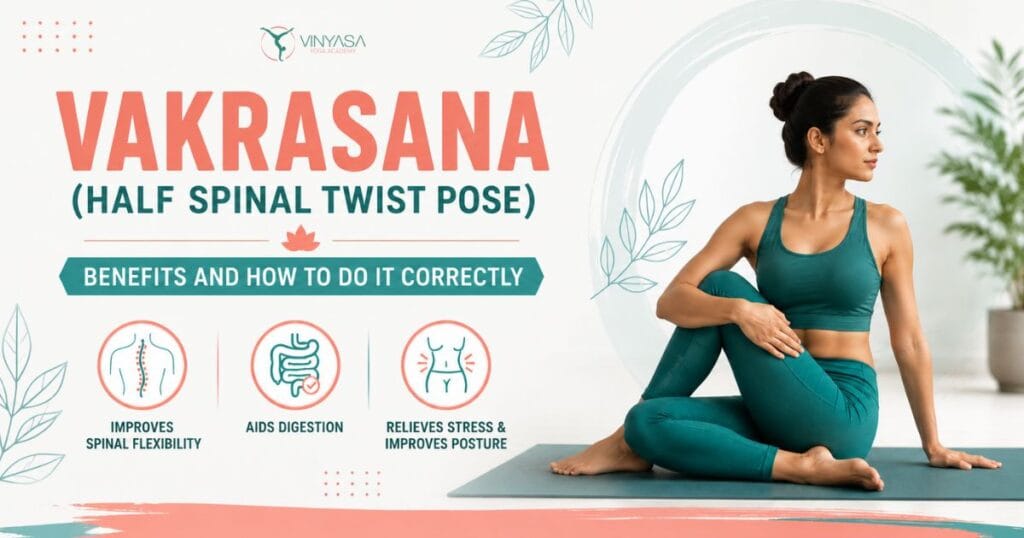
Table of Contents
- Historical and Yogic Background of Vakrasana
- How to Do Vakrasana?
- Benefits of Vakrasana (Half Spinal Twist Pose)
- 1. Improves Spinal Flexibility
- 2. Stimulates Digestion
- 3. Relieves Constipation
- 4. Eases Back Stiffness
- 5. Corrects Posture
- 6. Relieves Stress
- Variations of Vakarasana
- Common Mistakes to Avoid in Vakrasana
- Who Should Be Careful with Vakrasana?
- When and How Often Should You Practise Vakrasana?
- Final Thought
- Frequently Asked Questions
- How long should I hold Vakrasana?
- Can I do Vakrasana every day?
- Is Vakrasana good for gas and bloating?
- Can seniors practice Vakrasana?
- I feel tightness on one side. Is that normal?
- Related Reading
You wake up; your spine feels stiff and your digestion has been sluggish all week. Sound familiar? What if one single seated yoga pose could gently address all three of these issues in just a few mindful minutes?
For anyone looking for a simple yet deeply powerful yoga pose that twists and revives the spine, stimulates the digestive organs, and offers a quiet reset for both body and mind, Vakrasana, the Half Spinal Twist Pose, is worth knowing about.
This guide walks through its meaning, step-by-step instructions, variations from beginner to advanced and the real benefits this pose can bring to everyday life. All it takes is a few minutes, a yoga mat and a little mindful breathing.
Historical and Yogic Background of Vakrasana
Seated twisting poses like Vakrasana have been part of classical yoga for centuries. They were traditionally used to gently cleanse, awaken and refresh the spine and abdominal organs. The twisting movement was valued for boosting digestion, improving posture, and releasing the stiffness that builds up in the back and waist over time.
Vakrasana is also closely connected to deeper classical twists like Ardha Matsyendrasana, one of the most celebrated spinal twists in traditional yoga. While Ardha Matsyendrasana is challenging, Vakrasana offers a simpler and approachable variation that helps the body gradually open up and prepare for deeper rotations.
Even today, Vakrasana holds an important place in many traditional yoga schools, and for good reason, because it beautifully combines spinal mobility, mindful breathing and digestive benefits all in one simple seated pose.
How to Do Vakrasana?
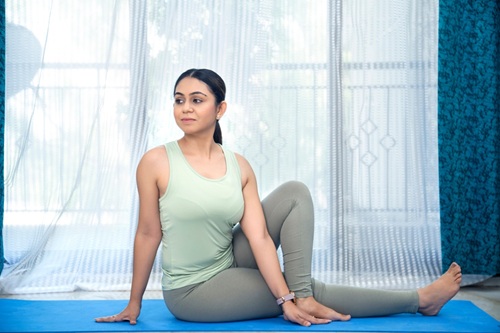
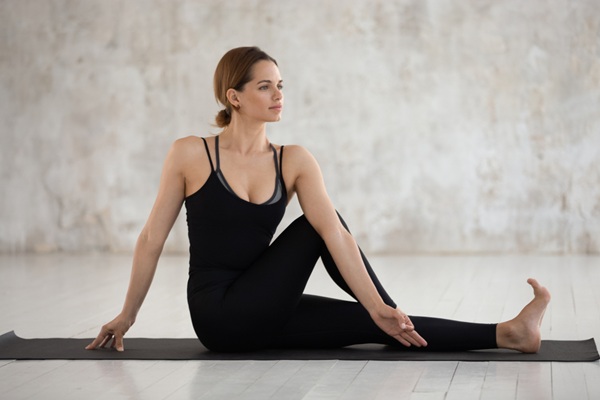
- Sit on your yoga mat with both legs stretched straight in front of you. Keep your spine tall, palms resting flat beside your hips. Breathe here for a moment and simply settle in.
- Gently bend your right knee and place the foot flat on the floor beside your left knee, with your right knee pointing up. Let your left leg stay relaxed and extended.
- Place your right hand behind you on the floor, fingers pointing away from the body. This is your anchor; it keeps you stable and supported throughout the twist.
- Bring your left arm to the outside of your right knee, elbow against the knee, arm wrapped around it, or hand simply resting on top. Whatever feels comfortable works perfectly.
- Take a slow, deep breath in and feel your spine lengthen upward.
- As you breathe out, gently rotate your shoulders, chest and gaze to the right. Let the twist travel from the base of the spine upward, slow and never forced.
- Stay here and breathe steadily. Every inhale lengthens the spine. Every exhale deepens the twist, not by pushing but just by letting go. Hold for 20 to 30 seconds.
- Inhale slowly and unwind back to the centre – no rushing, no jerking. Release the leg, return to Dandasana and pause for one quiet breath before switching sides.
- Bend the left knee now and repeat the entire sequence, twisting gently to the left. Always give both sides equal time; your body loves balance.
Important Note: If you want to learn Vakrasana with expert guidance and build a deeper understanding of proper alignment, breathing techniques, and traditional yoga principles, joining the 200 Hour Yoga Teacher Training in Rishikesh at Vinyasa Yoga Academy is the perfect place to begin your journey.
Benefits of Vakrasana (Half Spinal Twist Pose)
Regular, mindful practice of Vakrasana offers a wide range of physical and mental benefits. Here are the most significant ones:
1. Improves Spinal Flexibility
The controlled rotational movement of the Vakrasana (Twisted Pose) stretches the paraspinal muscles and deep spinal ligaments, gradually restoring the spinal elasticity that years of sitting quietly erode. When you practise this Half Spinal Twist Pose regularly, you begin to notice that turning your body feels easier, getting up from a chair feels lighter, and your overall movement feels freer. Remember, a spine that moves well is a spine that ages well.
2. Stimulates Digestion
The squeeze-and-release action on the abdominal organs in Vakrasana works like a gentle internal massage, stoking what traditional yoga calls ‘agni’, the digestive fire and supporting overall digestive health. Each time you twist in this Half Spinal Twist Pose, fresh oxygenated blood rushes back into the digestive organs, waking them up and helping them function more efficiently.
3. Relieves Constipation
Vakrasana gently massages the abdominal area, which can support healthy digestion and more regular bowel movements. The twisting movement helps stimulate the digestive organs and may reduce feelings of bloating after meals. Combined with a healthy lifestyle, regular practice can make a real difference in how comfortable and light you feel day to day.
4. Eases Back Stiffness
Vakrasana brings fresh blood flow to the lumbar spine, mobilises stiff spinal joints, and stretches chronically tight back muscles, all without putting any harmful compression load on the spine itself. This is what makes the Half Spinal Twist Pose one of the safest and most effective natural remedies for lower back tension and everyday back stiffness. People who sit at a desk for hours often report that even a few minutes of Vakrasana (Twisted Pose) in the morning creates a meaningful shift in how their back feels throughout the entire day.
5. Corrects Posture
By actively engaging the erector spinae and multifidus muscles during the twist, Vakrasana trains the back to hold itself upright and naturally aligned, gradually making good posture feel effortless rather than forced. The Half Spinal Twist Pose also counteracts the forward rounding of the shoulders and the collapse of the chest that prolonged sitting creates over time. With consistent Vakrasana (Twisted Pose) practice, many people find they sit taller, stand straighter, and feel far less back fatigue by the end of the day.
6. Relieves Stress
Every movement in Vakrasana is guided by slow, conscious breathing, gently signalling the nervous system to shift from “fight or flight” to “rest and digest”, dissolving the physical signs of stress such as tight shoulders, a clenched jaw, and shallow breathing. The breath-led nature of the Half Spinal Twist Pose is not incidental; it is at the very heart of why this pose feels so calming and restorative. Even just five minutes of mindful Vakrasana (Twisted Pose) at the end of a stressful day can noticeably soften the tension the body has been holding all day.
Variations of Vakarasana
Whether you are just starting out or looking to go deeper, there is a version of Vakrasana for every level. Here are the most important ones:
| Variation | Level | How Is It Done | Best For |
| Kati Vakrasana (Standing Spinal Twist) | Intermediate | Standing position, upper body rotates side to side, arms swing freely. | Quick desk break, spine warm-up, waist tension relief |
| Ardha Matsyendrasana (Half Lord of the Fishes Pose) | Advanced | Deeper foot placement, more intense full spinal twist | Maximum spinal rotation, advanced practitioners |
| Supta Vakrasana (Reclined Spinal Twist) | Beginner | Done lying down, knees fall to one side while shoulders stay grounded. | Bedtime relaxation, digestive issues, lower back tension |
| Ardha Vakrasana (Half Twist Variation) | Intermediate | The bent foot crosses further across the opposite leg for a deeper rotation. | Building spinal flexibility and body awareness |
Common Mistakes to Avoid in Vakrasana
- Rounding the Back: The twist should come naturally from your hips and spine, not by rounding or forcing your shoulders forward. Keep the spine tall and the chest open throughout.
- Forcing the Twist: This pose rewards patience, not force. Never use the arm as a crank to push yourself deeper than your body is ready for. Let the breath do the work.
- Twisting From the Shoulders Only: The rotation should begin at the base of the spine and travel upward, not start at the shoulders and stop there.
- Holding the Breath: Slow, steady breathing is what allows the body to release into the twist. Don’t forget to breathe consciously throughout.
- Neglecting the Other Side: Always practice both sides equally. Skipping one side creates a muscular imbalance over time.
Who Should Be Careful with Vakrasana?
Vakrasana is gentle and accessible for most people, but certain conditions call for extra care.
- Spinal Injuries or Recent Surgery: It is not advisable to practice Vakrasana in case of spinal injury or recent surgery. Also, this practice should be avoided if there is acute pain in the shoulders or knees.
- Spondylitis or Neck Issues: Turning the entire neck during Vakrasana may make the muscles around the neck sore for someone suffering from weak neck muscles or upper spine issues. Hence, if someone has a spondylitis issue, this pose should be approached with great caution or avoided.
- Pregnancy: In the first trimester, Vakrasana is generally safe with care. In the second and third trimesters, avoid deep abdominal compression consult a prenatal yoga specialist for appropriate alternatives.
- Herniated or Slipped Disc: Anyone with a slipped disc should practice only under the guidance of a qualified yoga therapist or medical professional.
When and How Often Should You Practise Vakrasana?
- Morning Reset (Before Breakfast): Practising Vakrasana first thing in the morning stimulates digestive fire, loosens an overnight-stiffened spine, and brings clarity and alertness to the mind, setting a calm tone for the entire day.
- Desk Break (Every 90 Minutes of Sitting): A 60-second seated spinal twist every 90 minutes counteracts the compression that prolonged sitting builds in the lumbar spine, restores rotational mobility, and gives your focus a genuine reset.
- Evening Wind-Down (Before Bed): Holding Vakrasana for 1–2 minutes in the evening, paired with slow, deep breathing, gently activates the parasympathetic nervous system, the body’s natural rest mode, making it a powerful stress-relief ritual before sleep.
How Often?
For best results, practise Vakrasana daily. Even 3–5 minutes per day consistently will produce noticeable improvements in spinal flexibility, digestive comfort, and stress levels within 4–6 weeks.
Final Thought
Most of us spend years ignoring our spine, until it starts demanding attention through pain, stiffness, and discomfort. Vakrasana is your chance to get ahead of that, one gentle twist at a time.
This simple Half Spinal Twist Pose is not about being flexible or looking perfect. It is about something far more real, a spine that moves freely, a digestive system that works smoothly and a mind that finally gets to breathe.
The best part? You need nothing except a yoga mat and a few quiet minutes.
So roll out your mat. Sit tall. Bend one knee. Take a breath and twist. Your body will thank you for it, today, tomorrow and for years to come.
Frequently Asked Questions
How long should I hold Vakrasana?
Start with 3–5 slow breaths on each side. As your body opens up, you can extend to 8–10 breaths.
Can I do Vakrasana every day?
Yes, with regular practice Vakrasana is safe and beneficial for most healthy individuals.
Is Vakrasana good for gas and bloating?
Many practitioners find that the abdominal compression in this yoga pose for digestion can help move trapped gas and ease bloating, though individual results vary.
Can seniors practice Vakrasana?
Yes, Vakrasana is one of the most age-inclusive yoga poses. Seniors can practice with props and at a gentle intensity.
I feel tightness on one side. Is that normal?
Completely. Most of us are asymmetrical. Practice both sides equally and with patience. The tighter side will gradually open.
Related Reading
- Half Prayer Twist (Parsvakonasana) — deeper variation