








Rishikesh & Mussoorie: A Spiritual Travel Guide to Ganga Aarti, Ashrams, Meditation Caves & Silent Mountain Trails
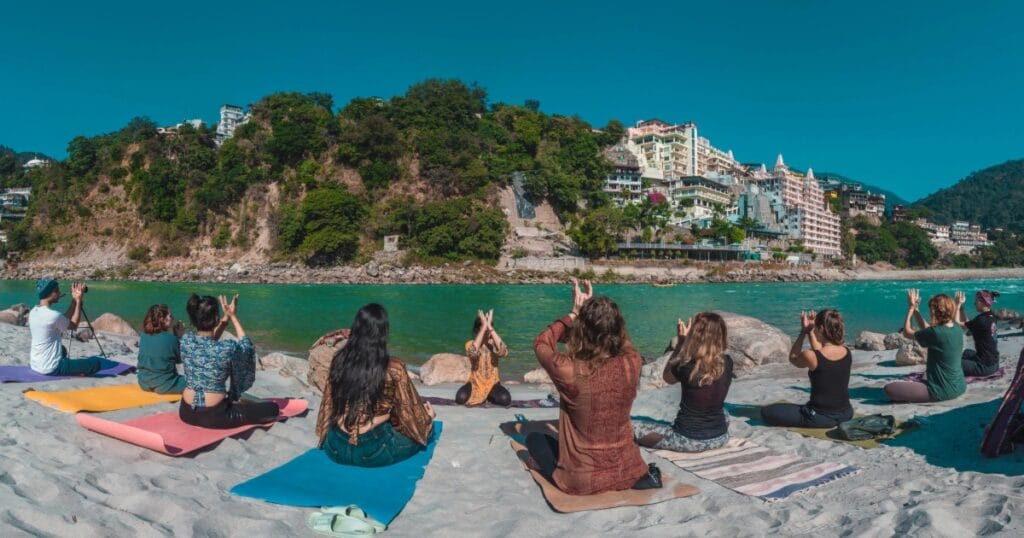
Table of Contents
- Who is the sattvik traveller?
- Why Rishikesh & Mussoorie Work Together for a Sattvik Circuit
- Rishikesh: Four Sattvik Experiences for Depth, Not Sightseeing
- What Is the Ganga Aarti in Rishikesh and When Does It Happen?
- Silent Meditation at Vashishta Gufa — Where to Meditate Quietly Away from Tourists
- Sattvic Thali Trail: Where to Eat Vegetarian Sattvic Food in Rishikesh
- Sunrise at Kunjapuri Devi Temple
- Is Rishikesh Good for a First-Time Spiritual Retreat for Foreign Travellers?
- Mussoorie: Four Peaceful Places Beyond Mall Road
- Are There Quiet Spiritual Spots in Mussoorie Besides Mall Road?
- Tibetan Buddhist Temple, Charleville
- Santura Mata Mandir: The Temple That Demands Presence
- Cloud’s End: What Is Cloud’s End Mussoorie Known For?
- Dhanaulti Eco Park: A Cedar-Forest Meditation Sit
- Sample 4-Day Sattvik Itinerary: Rishikesh + Mussoorie
- Practical Notes for International Travellers
- Frequently Asked Questions
- What is the Ganga Aarti in Rishikesh and when does it happen?
- Is Rishikesh good for a first-time spiritual retreat?
- Where can I meditate quietly in Rishikesh away from tourists?
- Are there quiet spiritual spots in Mussoorie besides Mall Road?
- What is Cloud’s End Mussoorie known for?
- Ready for the Next Step?
Written by Manish, associated with Vinyasa Yoga Academy in Rishikesh — with 15+ years guiding international travellers through Rishikesh’s ashram and meditation circuit.
If you’re flying into India specifically to slow down — not to check off monuments — Rishikesh and Mussoorie are the two towns built for that. This guide is written for the sattvik traveller: someone who values stillness over stimulation, who eats simply, wakes early, and wants a spiritual travel itinerary in Rishikesh that goes deeper than a rafting-and-selfie day trip. It’s built specifically for first-time visitors from outside India, so alongside the sacred sites, meditation caves, and mountain trails, you’ll find the practical layer most guides skip — visas, currency, dress code, and safety — so you can focus on the actual experience once you land.
Who is the sattvik traveller?
You’d rather sleep in an ashram guesthouse than a resort. You eat pure vegetarian food, ideally without onion or garlic. You begin your day before sunrise. Temple rituals, forest walks, and river-side meditation mean more to you than nightlife or shopping. If that’s you, keep reading — this is a Rishikesh yoga retreat and Mussoorie itinerary built around exactly that.
| Quick facts for foreign travellers | Details |
| Nearest airport | Dehradun (Jolly Grant, DED) — 40–60 min taxi to Rishikesh |
| Nearest major rail hub | Haridwar Junction, then ~45 min by road to Rishikesh |
| Visa | Most nationalities can apply for an Indian e-Visa online before arrival — check current eligibility on the official government portal before booking flights |
| Currency | Indian Rupee (INR). Carry cash — ashram donations, local dhabas, and hilltop temples are mostly cash-only. ATMs are common in Rishikesh town, sparser in Mussoorie’s outer areas. Indicative daily spend for a sattvik traveller (ashram stay, simple meals, local transport): roughly US$25–40 / £20–32 / €23–37 per day |
| Best season | October to March for clear skies, cool air, and the best Himalayan views from Kunjapuri and Cloud’s End |
| Language | Hindi is the local language; English is widely spoken in ashrams, yoga schools, and tourist areas |
Why Rishikesh & Mussoorie Work Together for a Sattvik Circuit
Rishikesh sits where the Ganges meets the Himalayan foothills — globally known as the Yoga Capital of the World, and one of the few places on earth where spiritual practice isn’t an imported concept but the town’s actual identity. Mussoorie, a few hours uphill, offers a different register of the same stillness: colonial-era quiet, pine forest trails, and hilltop temples at over 2,000 metres, where the air itself feels lighter and the pace slower. Together they form a complete circuit — river and mountain, devotion and contemplation — and most travellers on a Rishikesh yoga retreat extend naturally into a few days in Mussoorie once the ashram schedule winds down.
Rishikesh: Four Sattvik Experiences for Depth, Not Sightseeing
Rishikesh has no shortage of bungee jumps, cafe strips, and river-rafting operators — none of which matter here. The four experiences below are chosen for one reason: they reward stillness rather than adrenaline, and they’re the ones repeat visitors on a genuine spiritual travel Rishikesh itinerary come back for.
What Is the Ganga Aarti in Rishikesh and When Does It Happen?
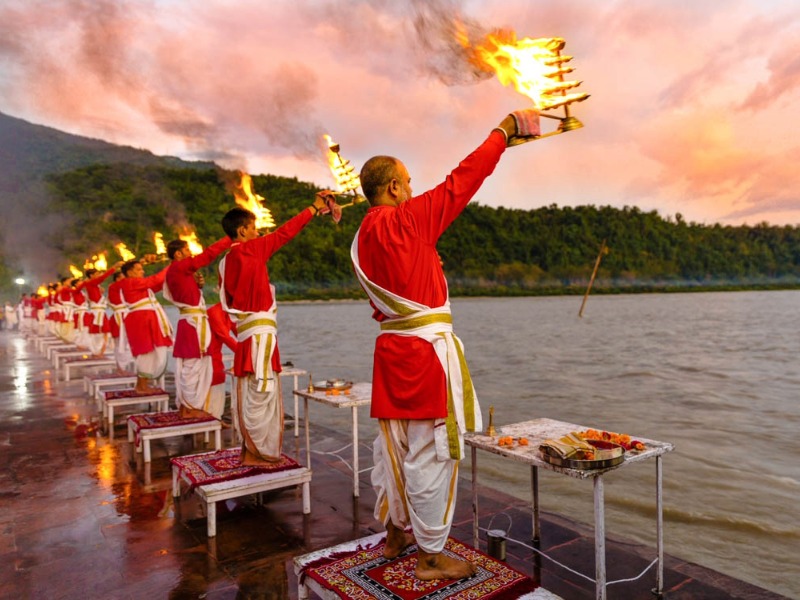
The Ganga Aarti is a nightly fire ritual performed on the riverbank in devotion to the Ganges — hundreds of oil lamps lit in unison, Vedic chants carried across the water, and a crowd that’s as much local families as travellers. At Parmarth Niketan, the largest and most photographed version, young ashram students in saffron lead the ceremony as the sun drops behind the Shivalik hills.
Timing follows the sunset, so it shifts with the season: roughly 5:30–6:30 PM through the winter months (October–March) and 6:00–7:00 PM in summer (April–September). It’s free, open to all faiths and nationalities, and needs no booking — just arrive on the ghat 30–45 minutes early for a seat close to the water rather than the standing area at the back.
Foreigner tip: Dress modestly (shoulders and knees covered), remove your shoes before stepping onto the ghat mats, and keep phones away after the first couple of minutes — this is a living ritual, not a photo backdrop, and the ashram community notices the difference.
Silent Meditation at Vashishta Gufa — Where to Meditate Quietly Away from Tourists
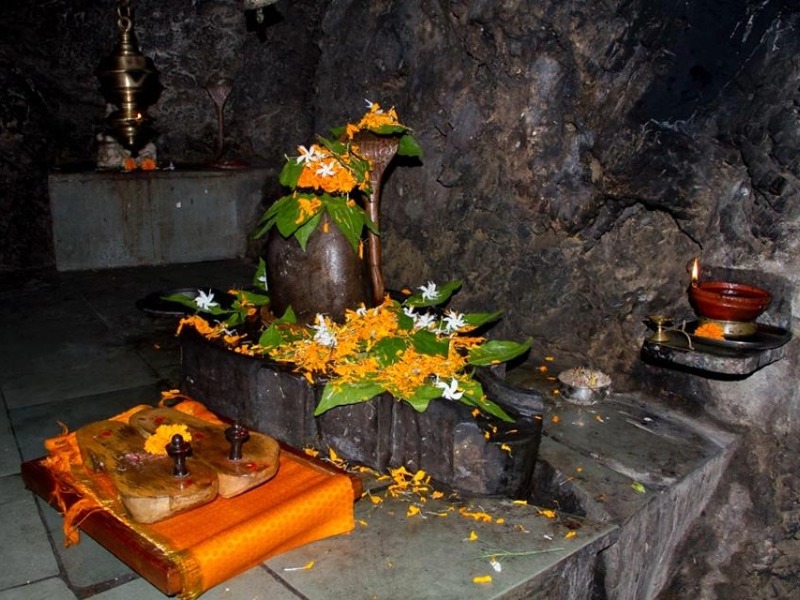
About 22–25 km upstream from Rishikesh on the Badrinath road, Vashishta Gufa is the cave where the sage Vashishtha — one of the seven great rishis of Vedic tradition — is said to have meditated for years. It’s small, naturally cool, and genuinely silent; many visitors describe an effortless drop into stillness within minutes of sitting down, helped by the sound of the Ganga flowing just out of sight.
The cave keeps fixed visiting hours — roughly 9 AM to 12 PM and 3 PM to 6 PM, closed over midday — so this isn’t a pre-dawn spot; arrive right at the 9 AM opening for the quietest sitting before day-trip traffic builds. The drive from Rishikesh takes about 40–50 minutes.
Foreigner tip: Carry only a small mat or shawl — no food, no conversation on entry. A local taxi or scooter rental (with an international driving permit) both work well for the drive; shared jeeps also run this route from Ram Jhula.
Sattvic Thali Trail: Where to Eat Vegetarian Sattvic Food in Rishikesh
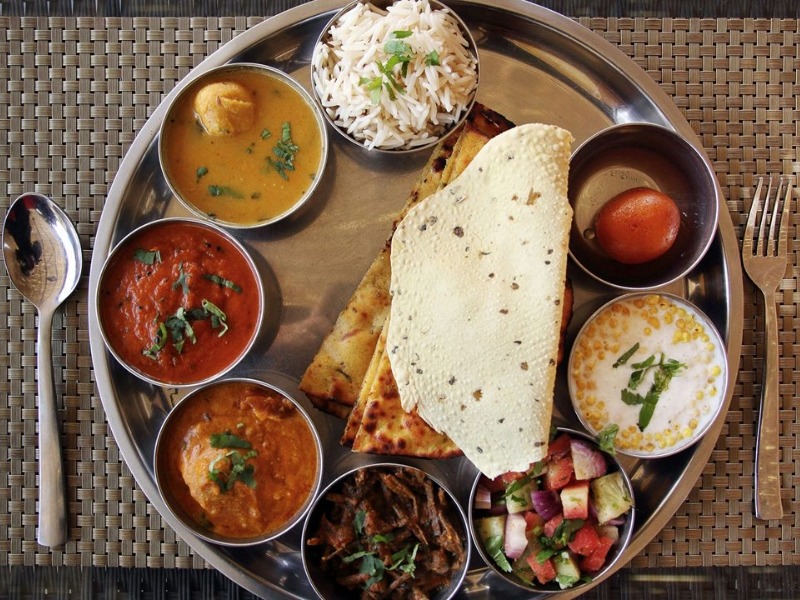
Sattvic food — no onion, garlic, meat, or heavy spice — is the default at almost every ashram kitchen in town, and most first-time foreign visitors adjust within two or three days. The ashram langar at Parmarth Niketan serves simple, fresh vegetarian meals eaten in community and often in silence. Chotiwala, on the ghats near Swarg Ashram, has served pure pahadi vegetarian thalis since 1958. For a cafe-style option with familiar comforts, Little Buddha Cafe and Pure Soul both run clean, conscious menus popular with the international yoga-school crowd.
Foreigner tip: Stick to bottled or filtered water, and eat at busy places with high turnover — the general rule of thumb for anywhere in India applies here too. Avoid street food from stalls with visibly low footfall in your first few days while your system adjusts.
Sunrise at Kunjapuri Devi Temple
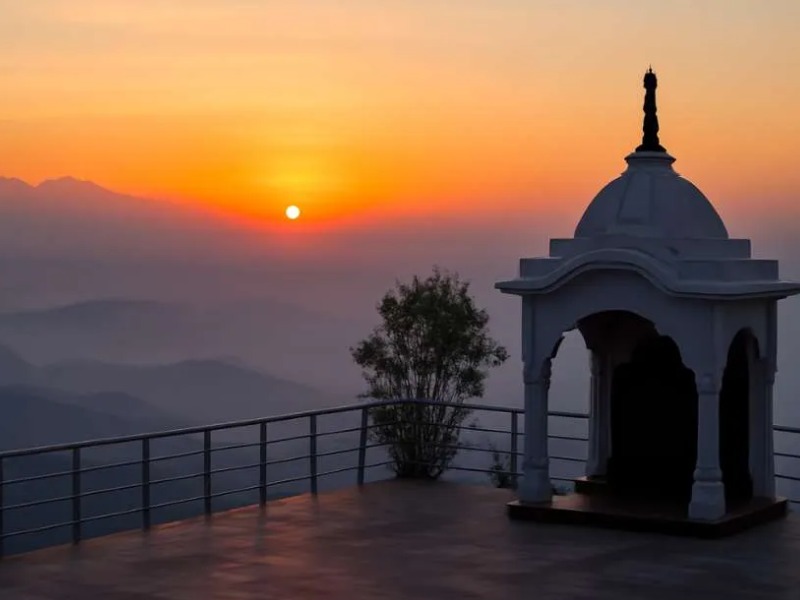
Kunjapuri Devi Temple sits at roughly 1,645–1,676 metres in the Garhwal Himalayas, about 25–30 km from Rishikesh, and is one of the 52 Shakti Peethas of Indian mythology. The pre-dawn drive through dark mountain roads, followed by a short uphill climb, sets up a natural rhythm of effort and surrender — and at the top, sunrise over the snow-capped Gangotri, Kedarnath, and Chaukhamba peaks needs no religious framework to move you.
Practical note: Sunrise falls around 5:15–5:45 AM in summer and 6:30–7:00 AM in winter, so leave Rishikesh about 90 minutes before whichever applies. Dress in layers — it’s noticeably colder at altitude than in town — and skip music in the car; let the mountain darkness do its work.
Is Rishikesh Good for a First-Time Spiritual Retreat for Foreign Travellers?
Yes, and it’s one of the more established towns in North India for exactly this. The ashram and retreat ecosystem is built around structured daily schedules, shared or private accommodation, and a steady flow of international students rather than a nightlife-driven crowd — which makes it genuinely welcoming to solo travellers, including solo women, doing their first spiritual trip.
Common-sense precautions still apply everywhere: book a registered ashram or Yoga Alliance-affiliated school, confirm private or women’s dormitory accommodation in advance, and stick to the well-lit Ram Jhula and Laxman Jhula areas after dark. No prior yoga or meditation experience is required for a short retreat or ashram stay — that’s usually only a prerequisite for the longer 200 hour Yoga Teacher Trainings, and even those vary by school.
Mussoorie: Four Peaceful Places Beyond Mall Road
Mussoorie’s reputation is Mall Road shopping, Kempty Falls crowds, and honeymoon hotels — none of which apply to the sattvik traveller. A short drive or walk from all of that sits a completely different Mussoorie: Tibetan temples, sacred hilltops, misty deodar forest, and a quiet that thickens the further west you go.
Are There Quiet Spiritual Spots in Mussoorie Besides Mall Road?
Yes — the Tibetan Buddhist Temple at Charleville, the hilltop Santura Mata Mandir near Kempty, and the forest walk at Cloud’s End all sit within a 20–35 minute drive of Mall Road, yet see a fraction of its foot traffic. All three work well as a single quiet morning or afternoon loop for a Mussoorie spiritual travel day.
Tibetan Buddhist Temple, Charleville
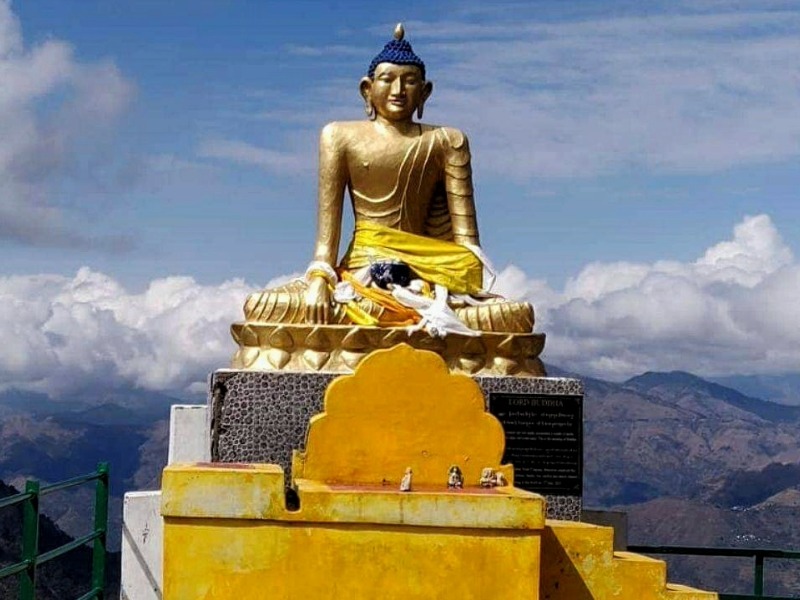
Roughly 3 km from the main Mussoorie market, this temple complex holds a golden seated Buddha, rows of prayer wheels, and a constant, faint scent of incense. The walk in — a gentle 400-metre path through pine trees — is a meditation in itself, and weekday mornings see almost no visitors, which is rare for a temple this photogenic.
Foreigner tip: Wear non-slip footwear for the uphill path, and keep voices low throughout — the atmosphere here is self-regulating in a way that makes noise feel genuinely out of place.
Santura Mata Mandir: The Temple That Demands Presence
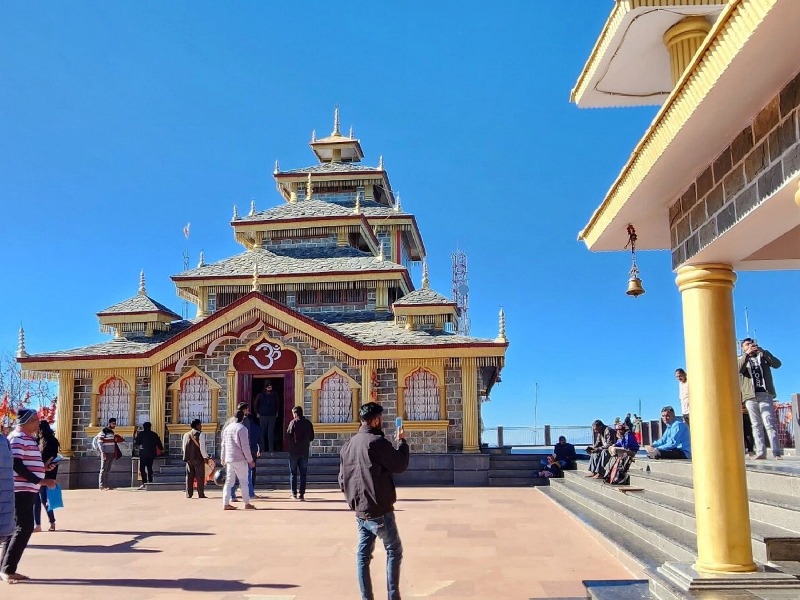
A Shakti temple dedicated to Santura Devi on a hilltop near Kempty Falls, reached by a short 5–7 minute uphill path. What sets it apart is a strict no-photography rule — in an age when most sacred spaces are experienced through a phone screen, this one simply won’t let you. Leave the phone in the car; the 15 minutes of unrecorded presence here tends to feel different from anything else on the trip.
Cloud’s End: What Is Cloud’s End Mussoorie Known For?
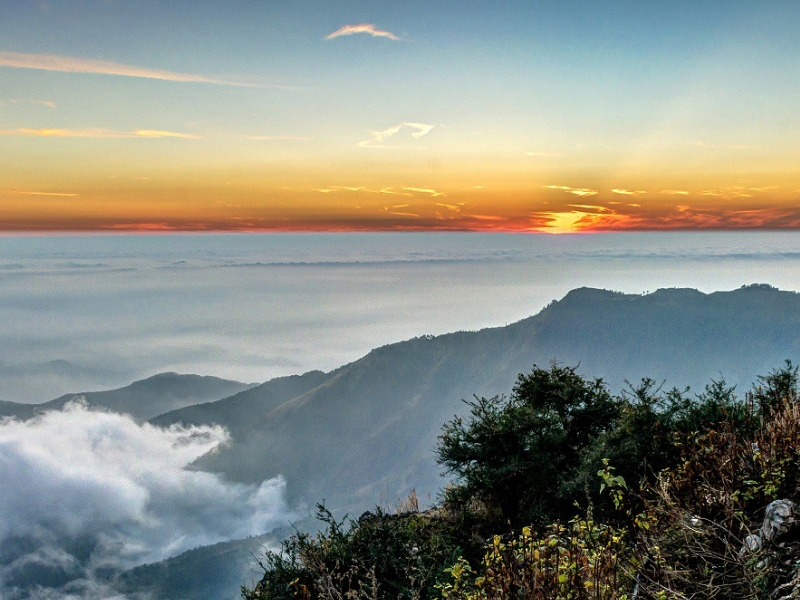
Cloud’s End marks the literal western edge of Mussoorie, about 6–7 km from Library Chowk (roughly 20–35 minutes by road), where the motorable road runs out and dense deodar and oak forest takes over. It’s known for an 1838 heritage bungalow — one of the town’s oldest colonial buildings, now a heritage stay — and for being the quiet gateway into the Benog Wildlife Sanctuary. Early morning here, before mist burns off and day-trippers arrive, is as close to forest bathing as this region offers: no shops, no hawkers, only birdsong and your own footsteps.
Foreigner tip: Start before 7 AM to have the forest largely to yourself. Carry water rather than food — a light morning fast heightens the walk — and hire a local driver for the narrow final stretch rather than walking it alone.
Dhanaulti Eco Park: A Cedar-Forest Meditation Sit
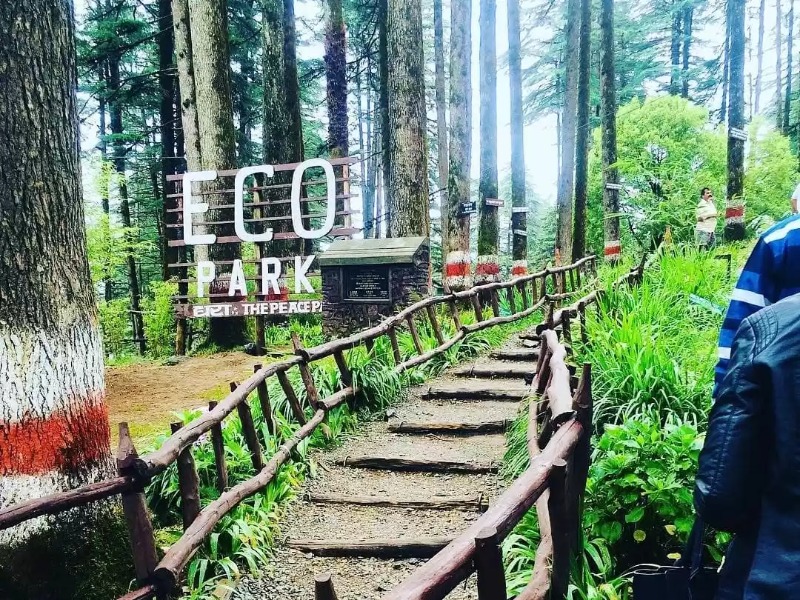
About 30 km from Mussoorie on the Chamba road, Dhanaulti Eco Park is best treated with minimal agenda: find a bench among the native Himalayan cedars, sit, and stay. The stillness here is distinctive — a high-altitude quiet that feels restorative rather than merely empty. Bring simple sattvic snacks (chikki, fruit, roasted nuts), leave any reading material behind, and give the trees a full uninterrupted hour — this is a genuine dhanaulti meditation spot, not a drive-through viewpoint.
Sample 4-Day Sattvik Itinerary: Rishikesh + Mussoorie
| Day | Focus | Key activities |
| Day 1 | Arrival in Rishikesh — Surrender | Arrive by noon, rest. Evening Ganga Aarti at Parmarth Niketan. Sattvic dinner at the ashram langar. Sleep by 9:30 PM. |
| Day 2 | Rishikesh — Depth | Pre-dawn drive to Kunjapuri for sunrise. Return for yoga/pranayama. Midday visit to Vashishta Gufa. Sattvic thali lunch. Free afternoon by the river. |
| Day 3 | Rishikesh to Mussoorie — Transition | Morning quiet reflection. Post-breakfast drive to Mussoorie (3–4 hrs). Settle in. Evening walk to the Tibetan Buddhist Temple. |
| Day 4 | Mussoorie — Stillness | Cloud’s End forest walk at sunrise. Late morning at Santura Mata Mandir. Afternoon drive to Dhanaulti Eco Park. Return to Mussoorie; depart next morning. |
For a slower trip: Travelling solo and outside peak season (April–June, Diwali week)? An off-season Mussoorie retreat solo works well on this same route with an extra day added between Day 2 and Day 3 purely for rest — the ashrams and hilltop temples are markedly quieter from July through September and again in January.
Practical Notes for International Travellers
- Visa & entry: Apply for an Indian e-Visa online well before travel; processing and eligibility rules change, so confirm current requirements on the official portal rather than a travel blog.
- Money: Carry cash for ashram donations, hilltop temple offerings, and local dhabas — card acceptance is patchy outside main-street Rishikesh. ATMs are reliable in Ram Jhula, Tapovan, and Mussoorie’s Mall Road. Budget for roughly US$25–40 / £20–32 / €23–37 a day if you’re keeping to ashram stays, simple sattvic meals, and shared taxis; mid-range guesthouses and private cars push this closer to US$50–70 a day.
- Dress code: Loose, modest, natural-fibre clothing (cotton or wool) — shoulders and knees covered at ghats, temples, and ashrams. Shoes come off before entering most sacred spaces.
- Solo & women travellers: Rishikesh’s ashram ecosystem is genuinely set up for solo and female travellers — confirm women’s dorm or private-room options ahead of booking, and stick to well-lit main areas (Ram Jhula, Laxman Jhula, Mall Road) after dark.
- Altitude & health: Mussoorie and Kunjapuri sit at 1,600–2,000+ metres — nothing extreme, but pace yourself on the uphill walks if you’ve just landed from sea level, and carry water.
- Connectivity: Wi-Fi is often limited by design in ashrams, not by poor infrastructure — part of the intended digital detox. A local SIM (available at Dehradun airport or in Rishikesh with passport/visa copies) covers everything else.
- Ashram stay for beginners: No prior yoga or meditation experience is needed for a short retreat or ashram stay — most residential centres in Rishikesh are built for complete beginners arriving from anywhere in the world.
- Best season: October to March for clear skies and cool, energising air in both towns; March and September are good shoulder-season alternatives with fewer crowds.
Frequently Asked Questions
What is the Ganga Aarti in Rishikesh and when does it happen?
The Ganga Aarti is a nightly fire-and-chant ritual offered to the River Ganges, held at sunset on the riverbank. Timing shifts seasonally — roughly 5:30–6:30 PM in winter and 6:00–7:00 PM in summer. It’s free, open to everyone regardless of faith or nationality, and needs no booking; arrive 30–45 minutes early for a good seat.
Is Rishikesh good for a first-time spiritual retreat?
Yes. Most ashrams and short retreats are designed for complete beginners, with structured daily schedules, sattvic meals, and a large international student community. Choose a registered ashram or Yoga Alliance-affiliated school and confirm accommodation details before you arrive.
Where can I meditate quietly in Rishikesh away from tourists?
Vashishta Gufa, about 22–25 km upstream from Rishikesh, is the clearest answer — a naturally silent meditation cave open 9 AM–12 PM and 3–6 PM, well away from the crowded ghats in town. Arrive right at opening for the quietest sitting.
Are there quiet spiritual spots in Mussoorie besides Mall Road?
Yes — the Tibetan Buddhist Temple at Charleville, the no-photography Santura Mata Mandir near Kempty Falls, and the forest walk at Cloud’s End all sit a short drive from Mall Road and see far fewer visitors.
What is Cloud’s End Mussoorie known for?
Cloud’s End marks the western end of Mussoorie’s motorable road, about 6–7 km from Library Chowk. It’s known for an 1838 heritage bungalow and as the quiet gateway into the deodar and oak forest of the Benog Wildlife Sanctuary.
Ready for the Next Step?
If a few days of this rhythm feels like it’s not enough, the natural extension is a 200 hour Yoga Teacher Training or a longer 7–14 day deep retreat in Rishikesh — both built around the same structure you’ll have already experienced: pre-dawn practice, sattvic meals, and the Ganga Aarti closing every day. Explore our Rishikesh retreat and YTTC options to plan the next step.
This article is for general information and is not medical advice. If you have a respiratory or heart condition, are pregnant, or are unsure whether these practices suit you, please speak to your doctor before beginning.