Happy Baby Pose Benefits: Bring Yourself Back To Being A Baby
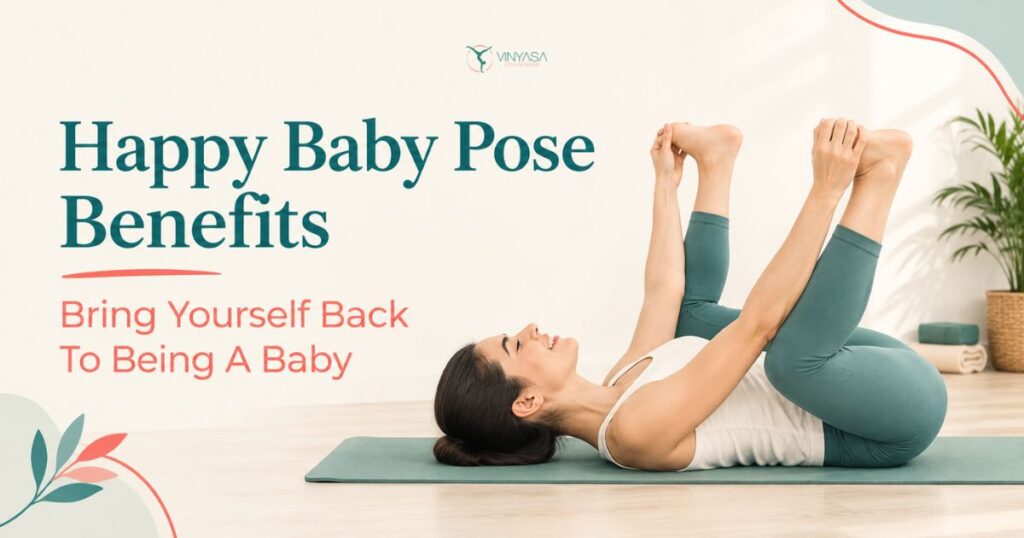
Table of Contents
- What Exactly Is Happy Baby Pose?
- Happy Baby Pose vs. Child’s Pose: What’s The Difference?
- Quick Comparison
- When to Choose Which?
- How to Do Happy Baby Pose: Step-by-Step
- What Ayurveda Says About Ananda Balasana?
- Five Real Anatomical Benefits of Happy Baby Pose
- 1. It Directly Targets the Sacroiliac Joint (Tailbone / Pelvis)
- 2. It Activates the Parasympathetic Nervous System (Rest Response)
- 3. It Lengthens the Inner Thigh Muscles and Inner Groins (Inner Thighs)
- 4. It Decompresses the Lumbar Vertebrae (Lower Back)
- 5. It Releases Psoas Tension in a Unique Way (Hips)
- When to Use Happy Baby Pose in Your Practice?
- What If You Cannot Reach Your Feet?
- Common Mistakes and How to Avoid Them?
- Contraindications & Who Should Be Careful With Happy Baby?
- Final Words
- Frequently Asked Questions About the Happy Baby Pose
- How long should I hold Happy Child Pose?
- Can I practice Happy Child Pose every day?
- What is the difference between Happy Child Pose and Child’s Pose?
- Can I do the Happy Baby Pose in bed?
- Why does Happy Child Pose feel emotional sometimes?
- Can the Happy Child Pose help with anxiety and sleep problems?
“In the stillness of Ananda Balasana, we do not create joy. We uncover it.”
– Guru Yogi Vishnu Panigrahi
We know the picture you may have, just as you hear the name of this asana, would be of a laughing or smiling child, or maybe you in this pose but that’s not it!
This is a yoga asana that asks for no extraordinary strength or alignment. It just asks you to lie down, let your knees fall open, and breathe. Children do this naturally. Watch a baby lying on the floor and you will almost always find them pulling their feet to the sky and swaying them gently, unbothered by the world.
Happy Baby Pose brings that same ease back to you, no matter how long it has been since you last felt it. If you had ever held it for even thirty seconds, you’d know exactly why it earned its name.
What Exactly Is Happy Baby Pose?
Happy Baby Pose, or Happy Child Pose, is a floor-based, supine posture in yoga (you lie on your back). It is sometimes called the Extended Happy Baby Pose or the Full Happy Baby, though they are not much different technically. The Sanskrit name most commonly linked to this family of asanas is Ananda Balasana, which translates directly to ‘Blissful Child Pose.’
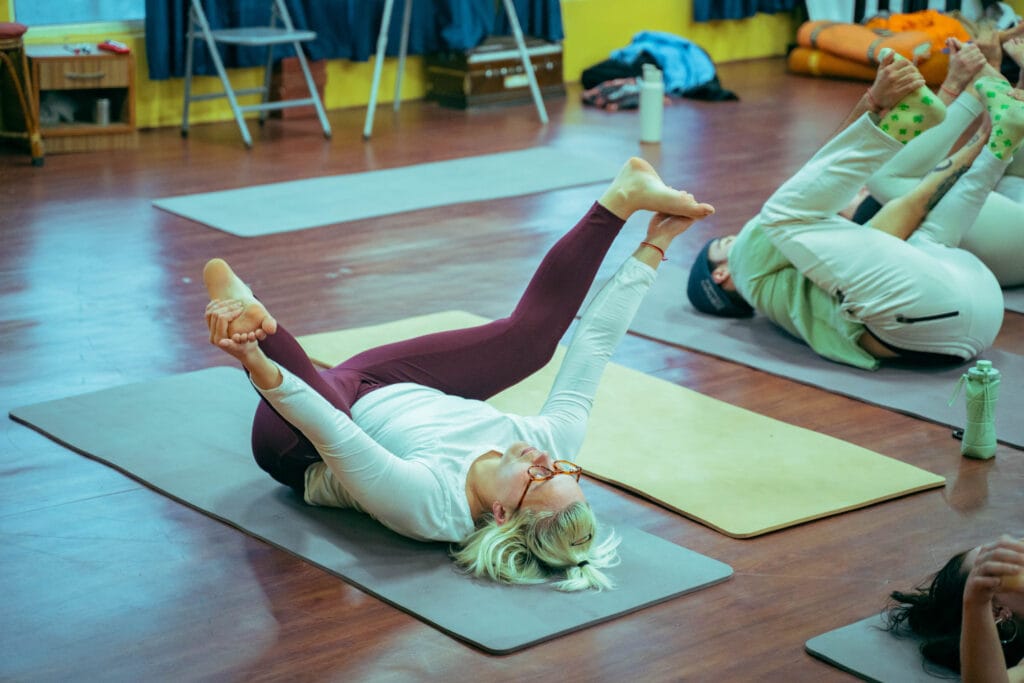
In Happy Baby pose yoga, you draw both legs up toward the sky, flex your feet so the soles face the ceiling, and hold the outer edges of your feet or ankles. Your knees stay wide, extending toward the armpits. And your lower back presses into the mat gently, while the spine is long and the face is relaxed.
Happy Baby Pose vs. Child’s Pose: What’s The Difference?
While both poses are comforting hip-openers named after childhood, they interact with gravity in opposite ways.
- Happy Baby Pose (Face Up): You lie flat on your back and hold the edges of your feet with your knees pulled toward your armpits. The floor causes your spine to stay straight and flat, which creates a deeper, more active stretch for the inner groin, hips, and hamstrings.
- Child’s Pose (Face Down): You kneel and fold forward. Your spine comfortably rounds, and your torso rests on or between your thighs. It is a neutral, grounding pose that helps deeply relax your mind and stretch the lower back and shoulders.
Quick Comparison
| Feature | Happy Baby Pose (Ananda Balasana) | Child’s Pose (Balasana) |
| Body Position | Lying flat on your back | Kneeling, facing the floor |
| Spine Shape | Flat against the mat | Rounded |
| Main Stretch | Inner groin, hips, hamstrings | Lower back, tops of thighs, shoulders |
| The Vibe | Playful, freeing, relieving | Quieting, introspective, grounding |
When to Choose Which?
Choose Happy Baby Pose at the end of a long day or after a deep yoga session. It is like a perfect remedy for releasing deep emotional tension in the hips, decompressing the lower back after hours of sitting, and bringing a playful sense of ease to your range of motion.
And, think of Child’s Pose as your ultimate rest stop. It is perfect when you feel overwhelmed, need to quiet your mind, or want to pause during a vigorous workout.
How to Do Happy Baby Pose: Step-by-Step
Getting into Happy Baby Pose (Ananda Balasana) is relatively simple, or it looks simple but doing it mindfully helps protect your lower back and maximise the release in your hips. The key is to let gravity do most of the work rather than forcing or straining your body into the shape.
Here is a slow, thoughtful breakdown of how to do Happy Child’s Pose step by step. Read once fully before you practice.
- Start by lying flat on your back on your mat.
- Let your arms rest beside your body and take two or three natural breaths.
- On your next exhale, bring both knees toward your chest.
- Begin to open your knees wider than your torso and draw them toward your armpits.
- Face your soles toward the ceiling.
- Reach your hands up and grip the outer edges of your feet, your ankles, or the backs of your thighs. Whatever allows your shoulders to stay on the mat.
- Gently press your tailbone and lower back bone down toward the mat.
- Let your head rest on the floor. Soften your jaw, your eyes and your forehead.
- Stay for 5 to 20 breaths or 1 to 3 minutes.
Learning how to map the spine against the floor in Ananda Balasana gives you a direct, felt experience of how outer body structure creates space for internal energetic flow. To find the perfect balance between active pulling and complete surrender is exactly what we focus on in the foundational alignment modules at Vinyasa Yoga Academy’s Yoga Teacher Training in Rishikesh and Bali.
What Ayurveda Says About Ananda Balasana?
From an Ayurvedic lens, Happy Baby Pose works deeply with Apana Vayu, or the downward-moving energy responsible for grounding and release. When Apana Vayu is blocked or disturbed, it shows up as lower back pain, digestive issues, anxiety and a sense of being ungrounded.
This pose encourages apana to flow freely by opening the lower pelvis and allowing the body to feel supported. It is particularly recommended for Vata imbalances, that scattered, restless, airy quality many people carry, because the effect of the floor beneath you is calming to an overactive Vata.
If you practice pranayama alongside Ananda Balasana, try a slow 4-count inhale and 6-count exhale. The extended exhale deepens the parasympathetic (rest) response and amplifies the grounding effect.
Five Real Anatomical Benefits of Happy Baby Pose
Beyond looking playful and feeling incredibly rejuvenating, Happy Baby Pose (Ananda Balasana) is a powerhouse posture for your physical and mental well-being. Most yoga posts list the same broad Happy Baby Pose benefits and move on but the body is more detailed than that, and so is this pose.
Here is what actually happens when you hold Happy Child Pose with awareness:
1. It Directly Targets the Sacroiliac Joint (Tailbone / Pelvis)
Happy Child Pose opens the hips and draws the lower back bone toward the mat, which gently creates space in this area. People with mild lower back tension often feel relief within the first minute of holding this pose.
2. It Activates the Parasympathetic Nervous System (Rest Response)
When you lie on your back and feel held by the ground, your body gets a very specific signal: you are safe. Your heart rate slows. Your breathing deepens. Cortisol levels begin to drop.
3. It Lengthens the Inner Thigh Muscles and Inner Groins (Inner Thighs)
As the knees fall wide, the inner thighs and inner thigh muscles stretch slowly and passively. This is one area that rarely gets enough attention in active yoga flows. Over time, tight inner thigh muscles contribute to knee pain, hip restriction, and poor pelvic alignment. Happy Child Pose works on this without any strain.
4. It Decompresses the Lumbar Vertebrae (Lower Back)
It offers temporary but very real relief for people who deal with lower back compression from standing, running, or heavy lifting. It is also why many physiotherapists include this movement in recovery treatments.
5. It Releases Psoas Tension in a Unique Way (Hips)
The psoas is the deep hip flexor that connects your lumbar spine (lower back) to your thigh bone. It is the muscle that clenches when you are anxious or sit for long periods. By creating deep hip rotation with external motion, it allows the psoas (simply: hips) to release from a position of safety, without any strain on the back.
Did You Know: If you carry stress in your belly or lower back, Happy Child’s Pose held for 2 to 3 minutes is often more effective than a 45-minute gym session for releasing that tension.
When to Use Happy Baby Pose in Your Practice?
“The pose begins when you want to leave it.”
– Baron Baptiste
Happy Baby Pose fits almost anywhere in a yoga sequence, but it tends to work best in these moments:
- At the end of a strong vinyasa or ashtanga flow, as a transition before Savasana (Corpse Pose)
- During a yin yoga or restorative class, held for 3 to 5 minutes with support
- First thing in the morning, before getting out of bed (underrated and really powerful)
- After a long travel or a day of sitting, decompress the hips and lower back
Whenever you notice stress held in the body, even 60 seconds in Happy Baby Pose yoga can shift your state.
What If You Cannot Reach Your Feet?
This is far more common than people admit, and it is no reason to avoid the pose. Tight hamstrings, limited hip flexibility, or a rounded upper back can all make reaching the feet feel impossible at first. Here are practical adjustments that work:
- Use a yoga strap or belt looped around the soles of your feet. Hold the strap with straight or slightly bent elbows.
- Hold the backs of your thighs instead. This brings the weight of the legs closer to your centre and removes the demand on hamstring flexibility.
- Stay in Happy Baby Pose with bent knees if straight legs feel too intense.
- Place a rolled blanket under your head if your neck strains when you look up.
Common Mistakes and How to Avoid Them?
Even a gentle pose like the Happy Baby has nuances worth respecting. To keep your practice safe and effective, keep an eye out for these frequently made missteps and learn how to fix them instantly:
- Pulling the Legs Too Aggressively: Happy Baby yoga pose is not about forcing the knees to the floor. If your lower back lifts off the mat, you have probably gone too far.
- Forgetting the Feet: Many people let their feet go unnoticed. Try and keep them active throughout. This is what creates the full hamstring and hip stretch.
- Tensing the Face and Shoulders: Look around any yoga class and you will find people working hard in a resting pose. Try letting everything above the hips go easy.
- Breathing Shallowly: Shallow breath tells the nervous system you are still tense. Take deliberate, slow breaths directly into the belly.
- Rushing Through: The Ananda Balasana yoga pose needs time to work. Less than thirty seconds is barely an introduction to it. Give at least two full minutes to feel the benefits of Happy Baby Pose.
Contraindications & Who Should Be Careful With Happy Baby?
Happy Baby yoga pose is gentle, but it is not for everyone in every condition. Please be mindful if you have or are dealing with any of these:
- Knee Injuries: Particularly ligament damage or post-surgery recovery. Bending the knee deeply can aggravate certain conditions.
- Pregnancy: Especially in the second and third trimesters. The supine position and compression on the abdomen are not appropriate here.
- Active Slipped Discs: The spinal flexion (rounding or forward bend) in this pose may not be suitable. Always check with a qualified healthcare professional.
- Severe Hip or Inner Thigh Injuries: A modified version with less range of motion may work, but get guidance first.
When in doubt, always work with a qualified yoga teacher who can observe your posture and suggest appropriate modifications.
Final Words
“Happy Baby is the only pose where I can feel completely vulnerable, quite silly, and utterly relaxed all at the same time.”
– YTT Student, Vinyasa Yoga Academy
Happy Baby Pose does not ask you to be tough, experienced, or calm. It asks only that you lie down and give your body permission to rest. In a world that constantly asks you to “perform”, this is yoga’s quiet rebellion.
Whether you are coming to your mat after a long workday, recovering from a week of intense practice, or just beginning your yoga journey, this restorative pose belongs in your life. It is not a beginner’s pose or an advanced pose. It is a human pose, a reminder of how natural ease feels when we stop fighting our own bodies and become a child.
If you feel inspired to explore the mechanics of foundational postures, like the Happy Baby Pose, learn about traditional alignment, and understand the mind-body connection behind every breath, your journey is just beginning.
At Vinyasa Yoga Academy, we specialise in addressing both the physical and spiritual aspects of practice, helping you turn your personal passion into a deeply authentic path. Whether you are looking to redefine your daily practice or become a globally certified yoga teacher, our residential and online YTT courses and retreats provide the sacred space and expert guidance you need to thrive truly.
Frequently Asked Questions About the Happy Baby Pose
How long should I hold Happy Child Pose?
To really feel any restorative effect, hold it for at least 1 to 3 minutes. The nervous benefits of Ananda Balasana appear most strongly after the one-minute mark. Usually, in a flow class, the standard is 5 to 10 breaths. In yin practice, you may hold the pose for as long as 5 minutes.
Can I practice Happy Child Pose every day?
Absolutely. It is one of the few yoga poses with almost no risk of overuse when done with conscious awareness. Daily practice (for even 2 to 3 minutes) can build cumulative benefits for body and mind, such as hip mobility, spinal health, and nervous system regulation over weeks and months.
What is the difference between Happy Child Pose and Child’s Pose?
Both are restorative and calming, but they serve different purposes and target the body in different ways.
Can I do the Happy Baby Pose in bed?
Yes, you can. Doing this pose in bed before sleep is an excellent way to release the day’s tension from your lower back and hips. Because a bed is softer than a yoga mat, it provides a supportive and cosy cushion for your back and spine.
Why does Happy Child Pose feel emotional sometimes?
The hips are often described in yoga and somatic therapy as a place where unprocessed emotions are held (particularly fear, grief, and stress). The hip flexors and psoas are directly involved in the body’s stress response. When you release these muscles deeply in this posture, it is not unusual for emotions to surface.
Can the Happy Child Pose help with anxiety and sleep problems?
Yes, quite effectively. The combination of a supine position, deep hip opening, and slow breathing helps activate the parasympathetic nervous system, which directly counters anxiety. Practiced as part of a bedtime routine, it can noticeably support better sleep quality over time.
This article is for general information and is not medical advice. If you have a respiratory or heart condition, are pregnant, or are unsure whether these practices suit you, please speak to your doctor before beginning.