







What Is Vinyasa Yoga? Benefits, Poses, Flow Sequences
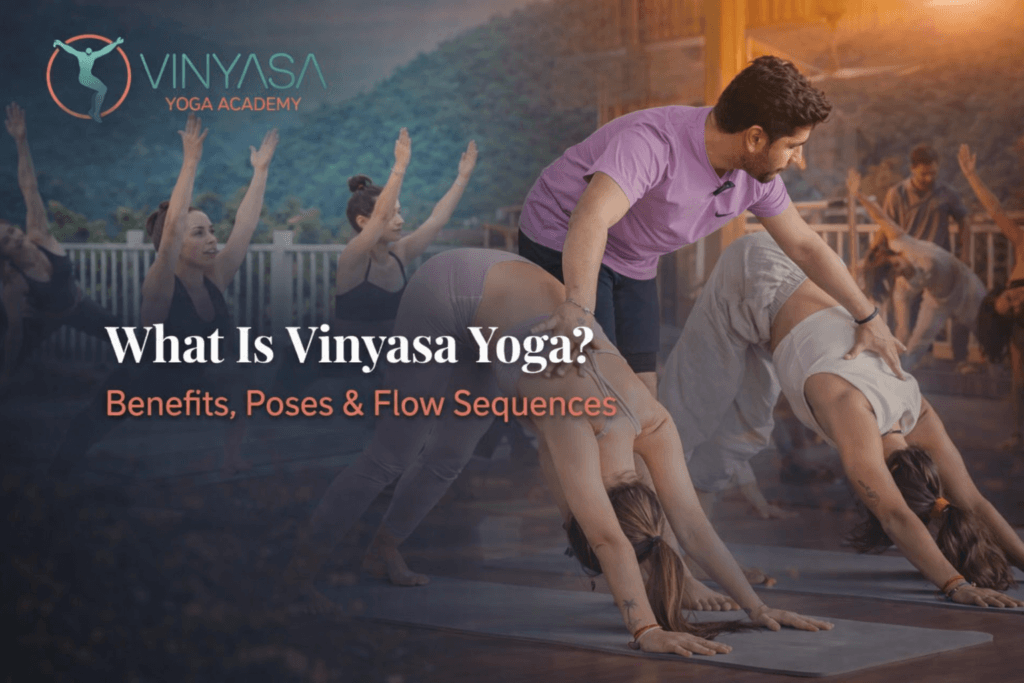
Table of Contents
- What Is Vinyasa Yoga?
- The Meaning of Vinyasa: What the Sanskrit Tells Us?
- History and Origins of Vinyasa Yoga
- 12 Benefits of Vinyasa Yoga Regular Practice
- 1. Strengthens Heart Health and Reduces Arterial Stiffness
- 2. Reduces Stress, Anxiety, and Risk of Depression
- 3. Supports Sustainable Weight Loss
- 4. Builds Full-Body Strength and Core Stability
- 5. Improves Flexibility and Joint Mobility
- 6. Expands Lung Capacity and Respiratory Efficiency
- 7. Enhances Focus, Concentration, and Mental Clarity
- 8. Regulates Sleep Cycles and Improves Rest Quality
- 9. Regulates Blood Sugar and Cholesterol Levels
- 10. Strengthens the Immune System
- 11. Corrects Posture and Reduces Chronic Pain
- 12. Improve Mood and Build Emotional Resilience
- Essential Vinyasa Yoga Poses for Every Level
- 1. Downward-Facing Dog (Adho Mukha Svanasana) — Beginner
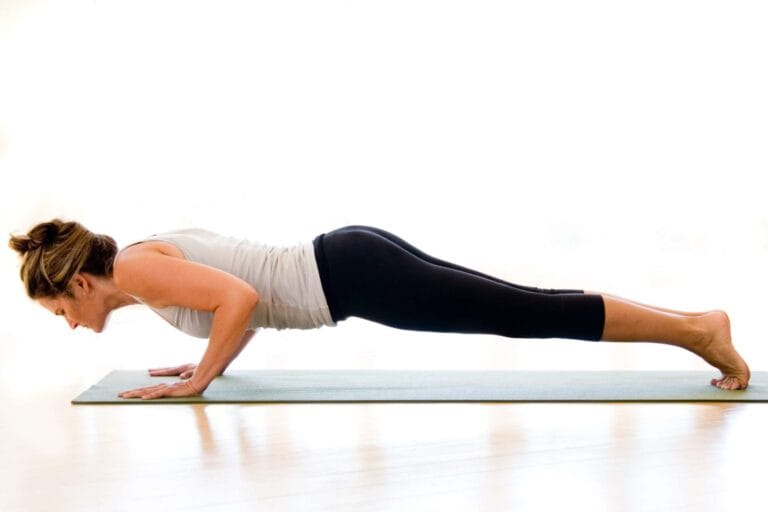
- 2. Four-Limbed Staff Pose (Chaturanga Dandasana) — Intermediate
- 3. Warrior I, II, and III (Virabhadrasana I, II, III) — Beginner to Intermediate
- 4. Chair Pose (Utkatasana) — Beginner
- 5. Triangle Pose (Trikonasana) — Beginner
- 6. Crow Pose (Bakasana) — Intermediate
- 7. Pigeon Pose (Eka Pada Rajakapotasana) — Intermediate
- 8. Wheel Pose (Urdhva Dhanurasana) — Advanced
- Vinyasa Flow Yoga: How Sequences Are Structured
- Sun Salutation Flow (Surya Namaskar A and B)
- Standing Power Flow
- Hip Opening Flow
- Core and Arm Balance Flow
- Evening Wind-Down Flow
- Vinyasa vs. Hatha vs. Ashtanga: An Honest Comparison
- Is Vinyasa Yoga Right for You?
- The Bottom Line
- Frequently Asked Questions About Vinyasa Yoga
- Q1. What is Vinyasa yoga, exactly?
- Q2. What is the difference between Vinyasa yoga and Hatha yoga?
- Q3. What is Vinyasa flow yoga?
- Q4. How many times a week should I practise Vinyasa yoga?
- Q5. Is Vinyasa yoga good for weight loss?
- Q6. Can complete beginners do Vinyasa yoga?
- Q7. What should I expect in my first Vinyasa yoga class?
- Q8. What is the difference between Vinyasa yoga and Ashtanga yoga?
- Related Reading
If you have ever watched a yoga class and marvelled at how gracefully practitioners move from one posture to the next, as if the whole sequence were a single unbroken movement, what you were witnessing was Vinyasa yoga.
It is one of the most popular and widely practised styles of yoga in the world today. And yet, despite its global reach, many people still wonder: what exactly is Vinyasa yoga? How is it different from other styles? What does regular practice actually do for the body and mind? And where do you begin?
This guide answers all of those questions completely. Written by the expert teachers at Vinyasa Yoga Academy in Rishikesh, India, a Yoga Alliance certified school with a 4.9-star rating from 786+ trained students, this is the most thorough, honest, and practical guide to Vinyasa yoga you will find online.

What Is Vinyasa Yoga?
Vinyasa yoga is a dynamic, breath-centred style of yoga that links continuous movement with intentional breathing. Unlike yoga styles where you hold each posture statically for several breaths, Vinyasa flows seamlessly from one pose to the next, each inhale and exhale serving as a conscious guide for the body’s movement.
It is sometimes called Vinyasa flow yoga, and that word ‘flow’ captures its essence perfectly. There is no stopping. There is no waiting. Every transition, every micro-movement between postures, is considered just as important as the postures themselves.
What makes Vinyasa yoga distinct from nearly every other physical practice is this: it does not treat movement as a means to reach a destination. It treats movement itself as the practice. You are not trying to ‘get into’ a pose and then breathe. You breathe in order to move, and you move in order to breathe, continuously, consciously, and with full awareness.
In the yogic tradition, this continuous, absorbing quality of practice is sometimes called Sahaja, the natural, spontaneous state of being fully present. Vinyasa yoga is one of the most accessible and immediate pathways to experiencing that state.
The Meaning of Vinyasa: What the Sanskrit Tells Us?
To truly understand Vinyasa yoga, it helps to understand where the word comes from. Vinyasa is Sanskrit, built from two root components that together carry a meaning far deeper than ‘flowing yoga’.
- Vi means ‘in a special way’ or ‘variation’, indicating that every action is conscious and intentional, not random or mechanical.
- Nyasa means ‘to place with awareness’, within a specific form, with complete body consciousness.
Together, Vinyasa means ‘to place the body in a special way, with complete awareness.’ This is the heart of the practice. It is not about throwing yourself into shapes or racing through poses to burn calories. It is the opposite, it is about bringing conscious, intelligent attention to every joint, every muscle, every breath, in every moment.
In even older Tantric texts, Vinyasa was defined as ‘the sequence of consciousness’, describing how life itself unfolds from the creative pulse of existence. Our external movements in Vinyasa yoga are considered an outward expression of our inner state: how we think, how we feel, and how we relate to the present moment.
“The dynamic Vinyasa yoga regular practice can shake things up to the point of calming things down.” — Yogi Vishnu Panigrahi, Founder — Vinyasa Yoga Academy, Rishikesh
History and Origins of Vinyasa Yoga
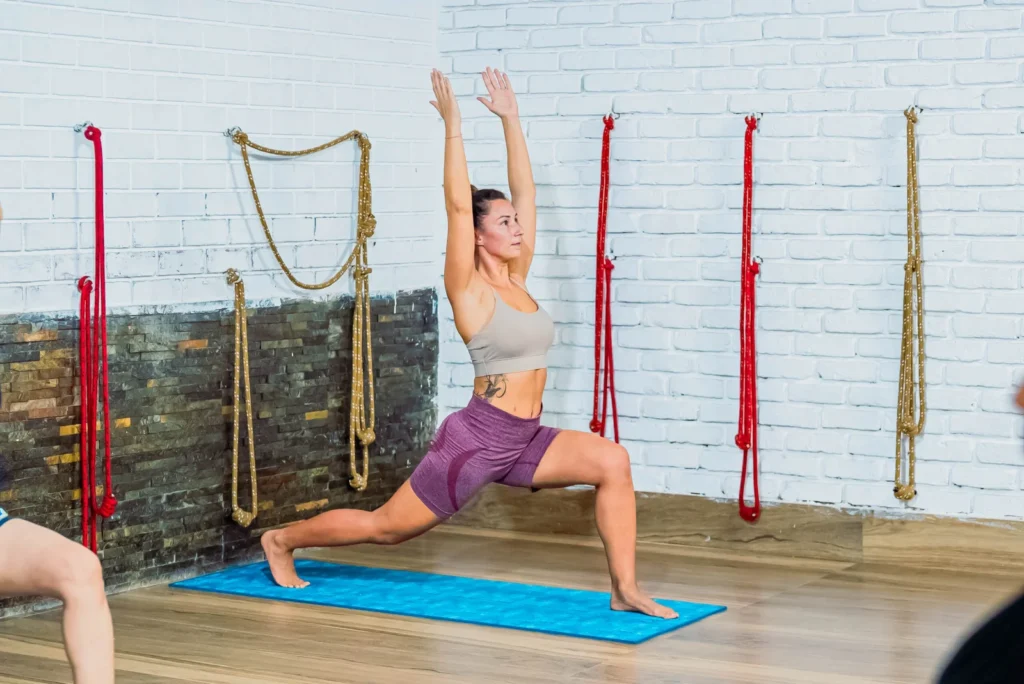
Vinyasa yoga does not belong to a single lineage, follow one founding guru, or require you to memorise a fixed sequence. It is a modern style of yoga, alive, adaptive, and endlessly creative, and that is precisely where its power lies.
It evolved organically from the Ashtanga Vinyasa Yoga tradition, which itself emerged from the revolutionary teachings of Sri Tirumalai Krishnamacharya, widely regarded as the father of modern yoga. His foundational insight was this: the transitions between postures are just as important as the postures themselves.
Krishnamacharya taught that breath-linked, continuous movement deepened concentration, sustained body consciousness throughout the entire practice, and created a natural meditative quality that static poses alone could not produce. Rather than ‘getting into a pose and then breathing,’ his method asked practitioners to let the breath lead the body at every moment. This philosophy became the intellectual and spiritual DNA of all Vinyasa yoga.
His students carried these teachings forward in their own unique directions. Pattabhi Jois formalised the Ashtanga system with fixed sequences. Others allowed the breath-movement principle to evolve freely into what we now call Vinyasa flow yoga, an open, teacher-led style with no mandatory sequence, adapted creatively by each instructor.
Today, Vinyasa yoga is practised in studios across every continent. But its most authentic expression remains rooted in Rishikesh, India, the yoga capital of the world, where the Himalayan environment, the sacred Ganges river, and centuries of unbroken yogic tradition create the ideal conditions for genuine practice and study.

12 Benefits of Vinyasa Yoga Regular Practice
The benefits of Vinyasa yoga regular practice extend far beyond a toned body or improved flexibility. Decades of research in sports science, neuroscience, and integrative medicine have validated what yogis have known for centuries. Here are 12 evidence-supported benefits, explained with the depth they deserve.
1. Strengthens Heart Health and Reduces Arterial Stiffness
Regular Vinyasa flow increases the heart rate into aerobic zones, improving cardiac output and blood circulation throughout the body. Research has consistently shown that breath-linked dynamic yoga significantly reduces arterial stiffness, a key physiological marker of cardiovascular ageing, and lowers resting blood pressure over sustained practice periods. A 60-minute Vinyasa session can burn between 400 and 600 calories while placing a gentle, progressive load on the cardiovascular system.
2. Reduces Stress, Anxiety, and Risk of Depression
Every breath in Vinyasa yoga directly activates the parasympathetic nervous system, the body’s ‘rest and digest’ response. This lowers circulating cortisol levels, reduces physiological stress markers, and builds long-term nervous system resilience. Multiple peer-reviewed clinical studies confirm yoga’s effectiveness as a complementary therapy for mild to moderate depression, making it one of the few physical practices with documented mental health benefits.
3. Supports Sustainable Weight Loss
Vinyasa yoga builds lean muscle tissue while elevating metabolic rate, a combination that supports healthy, sustainable weight management over time. Beyond calorie burn, the mindfulness component reduces stress-driven eating patterns, and the hormonal benefits of regular practice improve the body’s natural balance of hunger and satiety signals. This makes it a far more holistic approach to weight management than high-impact cardio alone.
4. Builds Full-Body Strength and Core Stability
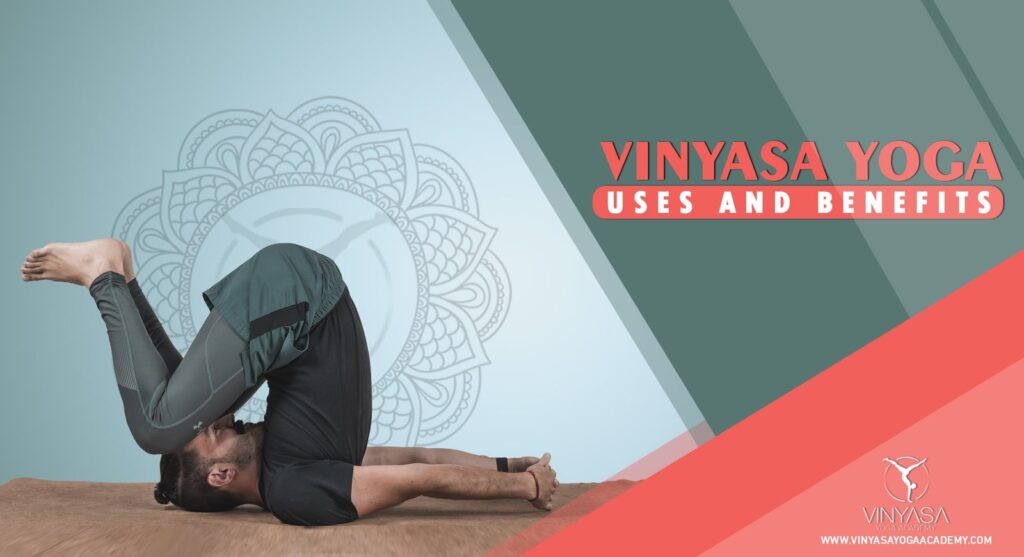
Unlike isolated weight training that targets individual muscles, Vinyasa yoga demands compound, multi-directional movement that engages multiple muscle groups simultaneously. Plank holds, Chaturanga transitions, Warrior sequences, and arm balances develop deep core stability, upper body endurance, and functional leg strength that translate directly into athletic performance and everyday physical confidence.
5. Improves Flexibility and Joint Mobility
The flowing nature of Vinyasa yoga safely takes every joint through its full range of motion, progressively and repeatedly, throughout each session. Much like targeted mobility exercises, regular practice systematically lengthens the major muscle groups: hamstrings, hip flexors, spinal extensors, chest, and shoulder muscles. This reduces injury risk, improves posture, and creates the kind of functional flexibility that actually helps you move better in daily life.
6. Expands Lung Capacity and Respiratory Efficiency
In Vinyasa yoga, every single movement is paired with a specific phase of breathing, inhaling to expand, exhaling to contract or release. This consistent breath training strengthens the respiratory muscles, increases tidal volume (the air moved per breath cycle), and, over months of practice, develops the practitioner’s ability to use breath as a conscious tool for energy management in any situation, on or off the mat.
7. Enhances Focus, Concentration, and Mental Clarity
Vinyasa yoga consistently induces what neuroscientists call a ‘flow state’, a documented neurological condition where the practitioner is fully absorbed in the present moment. This state is associated with reduced activity in the default mode network (responsible for mind-wandering and rumination) and heightened activation of attentional circuits. Practitioners regularly report sharper concentration, improved memory retention, and clearer decision-making following consistent practice.
8. Regulates Sleep Cycles and Improves Rest Quality
The parasympathetic nervous system activation triggered by Vinyasa practice has a measurable positive effect on sleep quality. Practitioners typically report falling asleep faster, experiencing fewer nighttime awakenings, and waking significantly more refreshed. This is particularly meaningful for those whose sleep is disrupted by chronic stress, one of the most prevalent and underestimated modern health issues.
9. Regulates Blood Sugar and Cholesterol Levels
Research published in peer-reviewed journals indicates that regular dynamic yoga practice improves insulin sensitivity, lowers fasting blood glucose, and positively shifts the ratio of LDL to HDL cholesterol. This makes Vinyasa yoga a powerful and evidence-based complementary intervention for those managing pre-diabetes, metabolic syndrome, or cardiovascular risk factors alongside conventional medical care.
10. Strengthens the Immune System
The lymphatic system, which plays a central role in immune defence and waste removal, has no pump of its own. Unlike the cardiovascular system, it relies entirely on body movement to circulate lymph fluid. The full-body, multi-directional nature of Vinyasa flow is particularly effective at stimulating lymph circulation, supporting the body’s natural detoxification processes, and enhancing immune response over time.
11. Corrects Posture and Reduces Chronic Pain
Modern sedentary lifestyles create predictable postural imbalances: rounded shoulders, forward head posture, compressed lumbar spines, and tight hip flexors. Vinyasa yoga systematically addresses all of these patterns by simultaneously strengthening the deep postural muscles of the back and core, while releasing the chronically shortened muscles of the chest and hips. Practitioners consistently report significant reductions in neck pain, back pain, and knee discomfort.
12. Improve Mood and Build Emotional Resilience
Rhythmic, breath-linked physical movement stimulates the release of endorphins, serotonin, and GABA, neurotransmitters directly responsible for mood regulation, emotional stability, and anxiety reduction. Vinyasa yoga’s unique combination of vigorous movement and present-moment mindfulness creates both a physiological and psychological shift, elevating baseline mood and building the inner resilience needed to navigate life’s challenges with greater calm and clarity.
Essential Vinyasa Yoga Poses for Every Level
Vinyasa yoga draws from a wide repertoire of asanas (postures) and, unlike Ashtanga, allows teachers to sequence them creatively around a theme, intention, or focus area. Below are the foundational poses that appear most frequently across all Vinyasa practices, from beginner-friendly community classes to advanced teacher training programmes.
1. Downward-Facing Dog (Adho Mukha Svanasana) — Beginner
The single most iconic posture in all of Vinyasa yoga, Downward Dog is simultaneously a full-body stretch, a strength posture, and the transitional ‘home base’ between more demanding poses. It lengthens the hamstrings and decompresses the spine while building shoulder and arm endurance. Most Vinyasa sessions return to this pose dozens of times.

2. Four-Limbed Staff Pose (Chaturanga Dandasana) — Intermediate
Often called the ‘yoga push-up,’ Chaturanga is the engine of the core Vinyasa transition: Plank to Chaturanga to Upward Dog to Downward Dog. Performed correctly, with elbows hugging the ribs and the entire body forming a single diagonal line, it builds exceptional upper body and core strength. Beginners typically modify by lowering the knees until arm strength is developed.

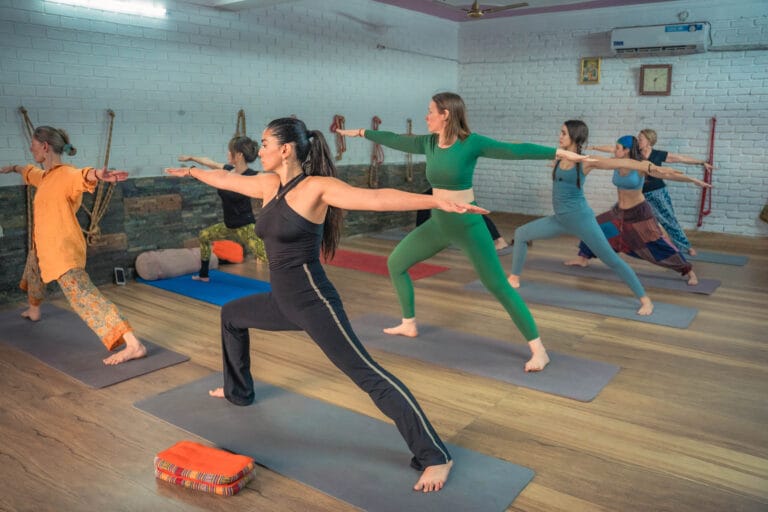
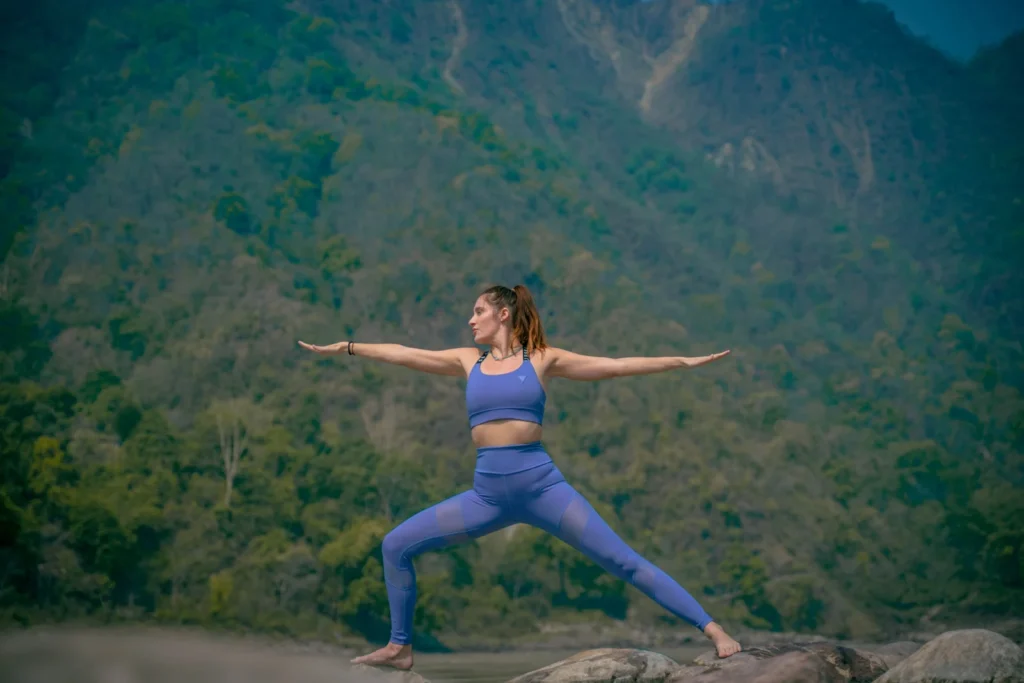
3. Warrior I, II, and III (Virabhadrasana I, II, III) — Beginner to Intermediate
The Warrior family forms the heart of most standing Vinyasa sequences. Warrior I opens the chest and hip flexors. Warrior II develops lateral stability, hip strength, and focused attention. Warrior III challenges single-leg balance and entire posterior chain strength. Together, they build the lower body power, mental determination, and postural awareness that define a strong Vinyasa practice.
4. Chair Pose (Utkatasana) — Beginner
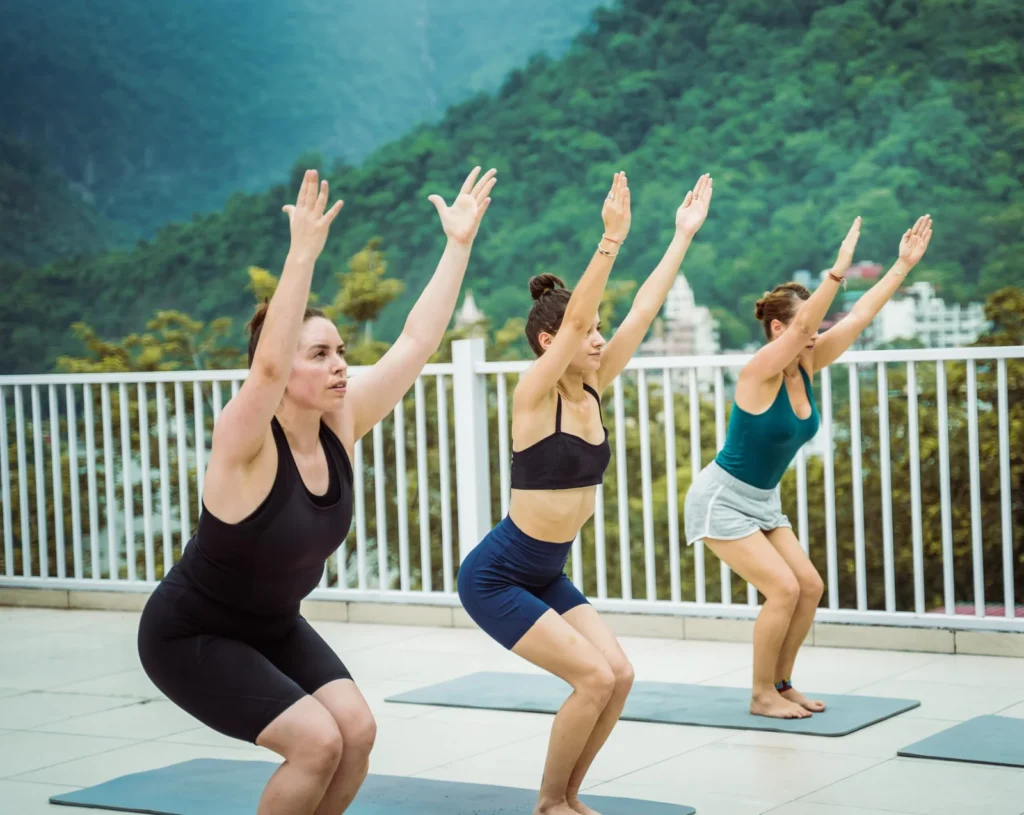
Deceptively challenging, Chair Pose builds significant quadriceps and glute strength while simultaneously training shoulder endurance and spinal extension. In Vinyasa flow it appears frequently within Sun Salutation B sequences and as a transition between standing postures. Holding it also develops the practitioner’s mental ability to remain calm and breathe steadily under physical discomfort, a transferable life skill.
5. Triangle Pose (Trikonasana) — Beginner
A beautiful lateral stretch that creates space along the entire side body from ankle to fingertips. Triangle pose simultaneously stretches the hamstrings, inner thighs, and spinal muscles while opening the chest and stimulating the abdominal organs. In Vinyasa sequencing, it often follows the Warrior family as a lengthening counterpose before transitioning back to the floor.

6. Crow Pose (Bakasana) — Intermediate
One of the most celebrated arm balances in Vinyasa yoga, Crow Pose develops wrist strength, deep core compression, and, perhaps most importantly, the fearlessness to shift your centre of gravity forward and trust your arms to hold you. It represents a genuine milestone in a practitioner’s journey and demonstrates the intersection of physical strength and mental courage that Vinyasa yoga cultivates so effectively.

7. Pigeon Pose (Eka Pada Rajakapotasana) — Intermediate
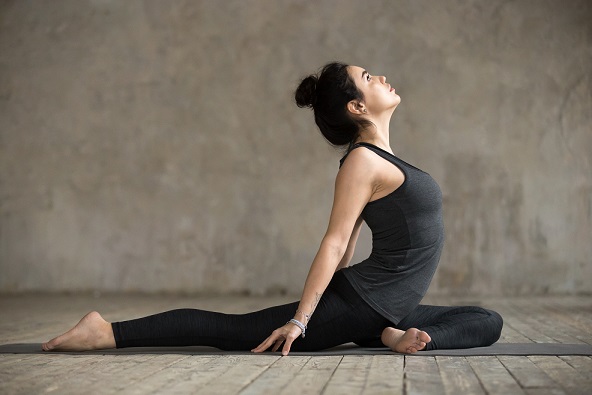
The deepest and most effective hip opener in the Vinyasa repertoire. Pigeon Pose targets the external hip rotators, including the piriformis, releasing tension stored from prolonged sitting, stress, and emotional holding. Regular practice significantly reduces lower back pain, improves pelvic mobility, and often produces a profound sense of emotional release as the hips open over time.
Also Read: Supine Pigeon Pose (Supta Kapotasana): Benefits, Steps & Precautions
8. Wheel Pose (Urdhva Dhanurasana) — Advanced
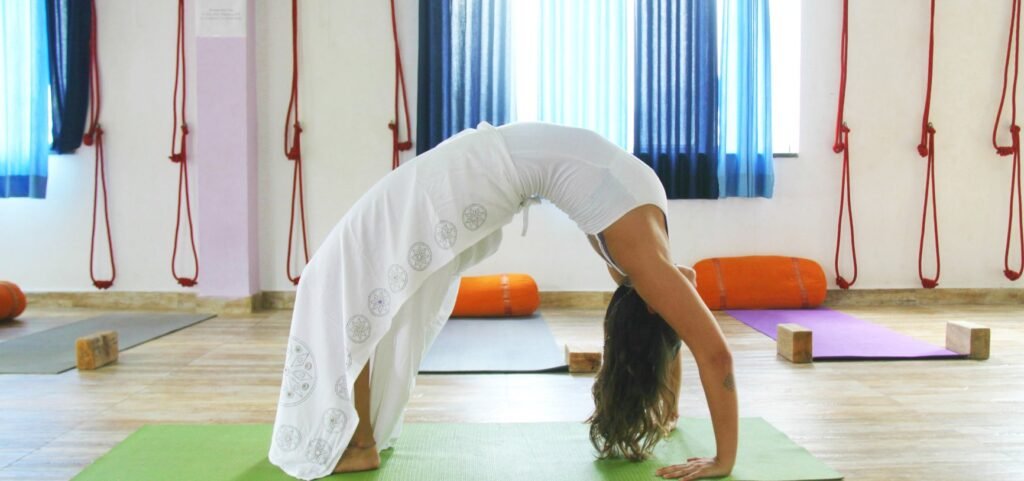
A full backbend that opens the entire anterior body, chest, shoulders, hip flexors, and quadriceps simultaneously. Wheel Pose strengthens the arms, legs, and deep spinal muscles in an integrated way, stimulates the nervous system, and is considered one of yoga’s most energising postures. It should always be preceded by a thorough warm-up sequence and approached progressively over weeks and months of consistent practice.
Also Read: Anxiety, Burnout & Screens: Why More Millennials Are Turning to Vinyasa Yoga
Vinyasa Flow Yoga: How Sequences Are Structured
One of Vinyasa flow yoga’s greatest strengths is its sequencing intelligence. Unlike Ashtanga yoga’s fixed series, Vinyasa sequences are built by the teacher around a specific theme, target area, or energetic intention. This means every class offers a different experience while maintaining the fundamental principle that connects them all: breath-movement synchronisation.
All Vinyasa sequences are built around what teachers call the core Vinyasa unit: Plank to Chaturanga to Upward Dog to Downward Dog. This four-part transition, repeated between standing sequences, maintains momentum, provides active recovery, and keeps the breath rhythm consistent throughout the session.
Here are the most common Vinyasa flow sequences and what they achieve:
Sun Salutation Flow (Surya Namaskar A and B)
The foundation of all Vinyasa practice. Sun Salutations are full-body sequences that warm the musculoskeletal system, establish the breath-movement rhythm, and progressively build internal heat. They are used to open every Vinyasa session and represent the entry point for all new practitioners. Surya Namaskar A typically takes 5 to 8 minutes; Surya Namaskar B is longer and more physically demanding.
Standing Power Flow
Anchored in Warrior I, Warrior II, Warrior III, Triangle, and Crescent Lunge, this sequence builds lower body strength, lateral and rotational stability, and cardiovascular endurance through sustained standing work. It forms the core of most intermediate Vinyasa classes and can be practised at varying speeds, from slow and strength-focused to fast-paced and aerobic.
Hip Opening Flow
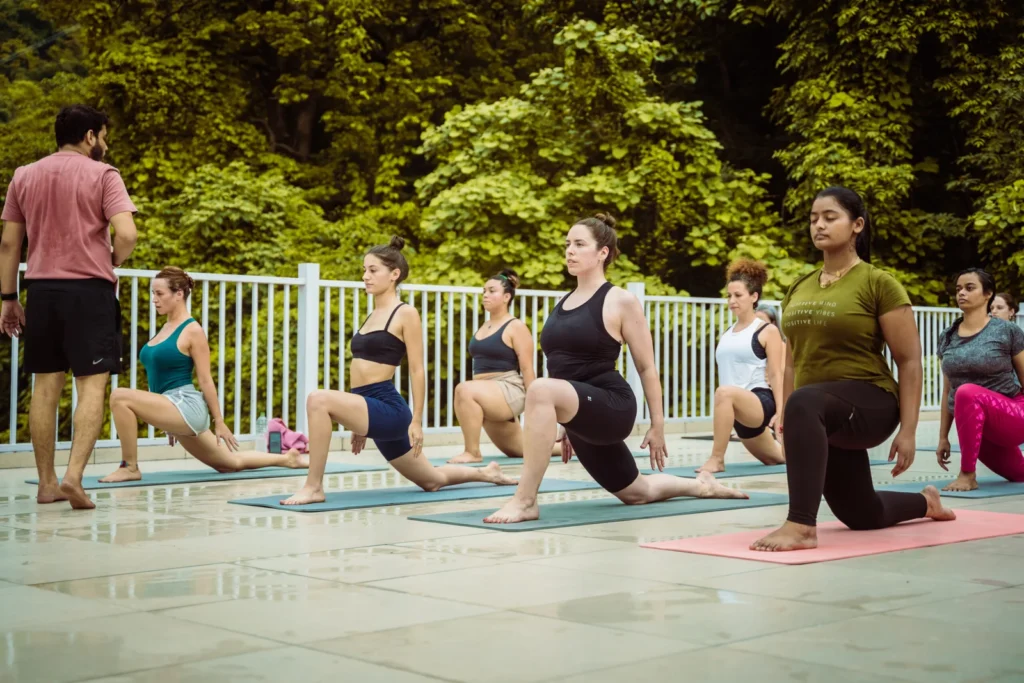
Targeting the deep external hip rotators and hip flexors through Low Lunge, Pigeon, Lizard, Bound Angle, and Seated Forward Fold, a hip-focused flow releases the physical and emotional tension commonly stored in the hip complex. It significantly eases lower back pain, improves overall pelvic alignment, and creates a profound sense of physical release and emotional openness.
Core and Arm Balance Flow
This sequence progresses from core activation through Boat Pose and Side Plank into arm balances such as Crow, Side Crow, and, for advanced practitioners, Handstand preparation. It develops the deep abdominal strength, wrist stability, and focused attention required for the more demanding expressions of Vinyasa yoga and is typically introduced in intermediate to advanced classes.
Evening Wind-Down Flow
A slower, floor-based sequence using supported forward folds, supine twists, legs-up-the-wall, and a long final relaxation to shift the nervous system from sympathetic activation (stress response) to parasympathetic dominance (rest and recovery). Ideal before sleep, after an intense training day, or as a standalone practice on active recovery days.

Vinyasa vs. Hatha vs. Ashtanga: An Honest Comparison
Understanding how Vinyasa yoga relates to other major styles helps you make a genuinely informed decision about your practice. Here is a straightforward comparison:
| Feature | Vinyasa Yoga | Hatha Yoga | Ashtanga Yoga |
| Pace | Moderate to fast | Slow to moderate | Fast, fixed pace |
| Sequence | Creative, teacher-led | Flexible, pose-by-pose | Fixed mandatory series |
| Breath Linking | Central to practice | Encouraged | Central (Ujjayi breath) |
| Cardio Intensity | Moderate to High | Low to Moderate | High |
| Best For | All levels, variety | True beginners | Disciplined, advanced |
| Class Variety | Very High | Moderate | Fixed series only |
| Weight Loss | Highly effective | Moderate | Highly effective |
| Creative Freedom | Maximum | Moderate | None |
For true beginners with no prior yoga experience, starting with a foundational Hatha class or a beginner-specific Vinyasa programme is recommended. Building body awareness and alignment first creates the safest and most enjoyable entry into Vinyasa flow. At Vinyasa Yoga Academy, our 200 Hour Yoga Teacher Training in Rishikesh covers all three styles in depth, giving every student the complete picture before they begin teaching others.
Also Read: Difference Between Ashtanga Vinyasa Yoga And Vinyasa Yoga
Is Vinyasa Yoga Right for You?
The honest answer: yes, with the right guidance.
Vinyasa yoga is inherently scalable. Every posture can be modified to accommodate different body types, fitness levels, injury histories, and levels of experience. Bent knees in Downward Dog, yoga blocks under the hands in Triangle, dropping to the knees in Chaturanga, these accessible modifications preserve the core qualities of breath-movement connection and mindful flow while making the practice immediately safe and achievable.
What makes Vinyasa yoga particularly well-suited for beginners is its momentum. Unlike static practices where holding a challenging posture in isolation can feel defeating, the continuous flow of Vinyasa carries you through difficult moments with breath and movement. Many students who found slower yoga styles frustrating discover that Vinyasa keeps them genuinely engaged, motivated, and consistently returning to the mat, because it never stays the same.
That said, certain individuals should approach Vinyasa yoga with additional care or medical guidance. If you have an acute joint injury (particularly wrists, shoulders, or knees), uncontrolled high blood pressure, late-stage pregnancy, or have recently undergone surgery, please consult a qualified yoga teacher and your medical professional before beginning. A good teacher, like those at Vinyasa Yoga Academy, will always prioritise your safety over the pace of the class.
| “Our programs are designed to support students as they reach inside themselves and share their unique qualities with the world — whether stepping onto the mat for the first time or deepening a lifelong practice.” — Vinyasa Yoga Academy, Rishikesh, India |
The Bottom Line
Vinyasa yoga is not just a form of exercise. It is a complete practice, one that simultaneously develops physical strength and flexibility, cardiovascular health, mental clarity, emotional resilience, and the rare and valuable ability to be fully present in your own body and life.
Its genius lies in its simplicity: breathe and move. Move and breathe. Let one guide the other. And in that continuous, conscious rhythm, repeated across weeks and months and years of practice, something profound begins to happen. The body becomes stronger, quieter, and more at home in itself. The mind becomes calmer and more focused. Life, quite simply, begins to feel different.
Whether you are a complete beginner taking your first steps toward a yoga practice, a practising yogi ready to deepen your understanding, or an international student considering formal teacher training in India, Vinyasa Yoga Academy in Rishikesh is here to guide your journey. Our Yoga Alliance-certified courses, experienced faculty, and Himalayan setting provide everything you need to transform both your practice and your ability to share it with others.
Frequently Asked Questions About Vinyasa Yoga
Q1. What is Vinyasa yoga, exactly?
Ans: Vinyasa yoga is a breath-centred, dynamic style of yoga that links continuous movement between postures. Derived from the Sanskrit roots vi (special way) and nyasa (to place with awareness), every inhale and exhale guides a specific movement, creating a flowing, meditative, and physically engaging practice. It is sometimes called Vinyasa flow yoga because of this fluid, uninterrupted quality of movement and breath.
Q2. What is the difference between Vinyasa yoga and Hatha yoga?
Ans: Hatha yoga holds each posture statically for several breaths, focusing on alignment, stillness, and foundational body awareness. Vinyasa flow yoga moves continuously, connecting each pose to a breath, making it more dynamic, varied, and cardio-intensive. Hatha is the ideal starting point for complete beginners; Vinyasa is the natural and rewarding next step once foundational awareness is established.
Q3. What is Vinyasa flow yoga?
Ans: Vinyasa flow yoga is simply another name for Vinyasa yoga, emphasising the fluid, movement-based quality of the practice. The ‘flow’ refers to the smooth, uninterrupted transitions between postures, particularly the classic core Vinyasa sequence of Plank, Chaturanga, Upward Dog, and Downward Dog, which repeats throughout every session to maintain continuity of breath and movement.
Q4. How many times a week should I practise Vinyasa yoga?
Ans: For noticeable physical and mental benefits, practising three to five times per week is ideal. Beginners should start with two to three sessions weekly to allow the body adequate time to adapt and recover. Experienced practitioners often practise daily, alternating between vigorous power Vinyasa sessions and slower, restorative flows to maintain balance, prevent overtraining, and sustain a long-term practice.
Q5. Is Vinyasa yoga good for weight loss?
Ans: Yes, Vinyasa flow yoga is one of the most effective yoga styles for weight management. A 60-minute session burns between 400 and 600 calories, depending on body weight, pace, and intensity. Beyond calorie expenditure, regular practice builds lean muscle (raising resting metabolic rate), lowers cortisol (reducing stress-driven fat storage), and improves the hormonal environment for sustainable, healthy weight loss over time.
Q6. Can complete beginners do Vinyasa yoga?
Ans: Absolutely. Every Vinyasa posture has accessible modifications that make the practice safe and achievable for beginners. Starting with a qualified, experienced teacher, rather than self-teaching from online videos, is strongly recommended to ensure correct alignment and breath technique from the very beginning. Many yoga teacher training programmes, including those at Vinyasa Yoga Academy in Rishikesh, warmly welcome students with zero prior yoga experience.
Q7. What should I expect in my first Vinyasa yoga class?
Ans: A typical Vinyasa class begins with a centering period and breath awareness, followed by Sun Salutations to warm the body and establish the breath rhythm. The main standing and balancing sequence then builds progressively toward a ‘peak pose’, the class’s most challenging posture. This is followed by hip openers, a cool-down, and a final Savasana (relaxation). Classes run 60 to 90 minutes and vary significantly in theme and intensity.
Q8. What is the difference between Vinyasa yoga and Ashtanga yoga?
Ans: Both are breath-linked, dynamic practices, but Ashtanga yoga follows a strictly fixed sequence of poses that never changes, regardless of the teacher or location. Vinyasa yoga sequences are creatively designed by each teacher for each class. Ashtanga requires learning specific series in a prescribed, graduated order; Vinyasa offers variety, creative expression, and adaptability. Ashtanga is considered the traditional form from which Vinyasa yoga evolved.
Related Reading
- What Is Vinyasa Flow — beginner introduction
- 200-Hour Yoga Teacher Training in Rishikesh — learn vinyasa in residence