








Benefits of Warrior Pose (Virabhadrasana)
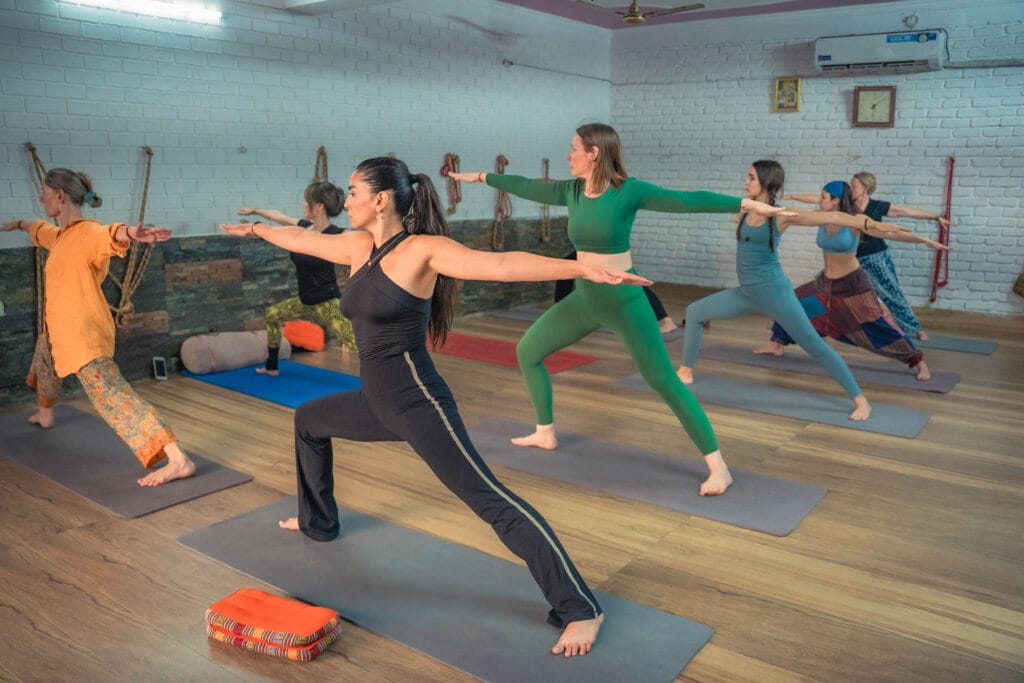
Table of Contents
Benefits of Warrior Pose (Virabhadrasana)
The word “Virabhadrasana” is a culmination of two words, “Veera”, which means vigorous, warrior, or courageous, and “Bhadra”, which means good or auspicious. That’s why Virabhadrasana is commonly known as the warrior pose.
How To Do Virabhadrasana, or Warrior Pose?
The Virabhadrasana, or the warrior pose, is one of the most graceful yoga asanas, which adds beauty and grace to your yoga practice.
Yoga is a crucial science, so it is significant to know each and every step behind it to do it correctly. If you want to avail yourself of the maximum benefits of the Virabhadrasana, or warrior pose, you have to follow the same principle.
The following steps need to be followed for practising Virabhadrasana, or the warrior pose, in a correct manner:
- Begin with the standing position: stand erect with your legs wide apart by a distance of at least 3-4 feet.
- Then turn your right foot out by 90 degrees and your left foot in by approximately 15 degrees.
- Now lift both arms sideways to shoulder height with your palms facing upwards.
- Make sure that your arms are parallel to the ground.
- While exhaling, bend your right knee.
- Ensure that your right knee and right ankle form a straight line, and your knee does not overshoot the ankle.
- Turn your head in the right direction.
- Now, as you settle down in the posture, stretch your arms further.
- Gently push your pelvis down, and hold this posture with the determination of a warrior.
- Keep breathing as you go down, and then breathe out while bringing your hands down from the sides.
- Repeat the same steps for the left side, and then relax.
Virabhadrasana Beneficial For Health
The Virabhadrasana, or the warrior pose, is one of the restorative and therapeutic poses that you can add to your daily routine. The benefits of practising the Virabhadrasana, or the warrior pose, are spread across the body, mind, and soul, just like most of the yoga and meditation poses. Bringing the Virabhadrasana, or the warrior pose, into your daily yoga routine can potentially yield some super merits.
Let’s have a look at a wide range of benefits that Veerabhadrasana, or the warrior pose, offers:
- It strengthens and tones the arms, legs, and lower back.
- It enhances body posture.
- It stimulates stamina.
- It releases stress or tension in the shoulders.
- It improves muscle strength.
- It encourages flexibility in the body.
- It helps in relieving aches and pains.
- It prevents chronic pelvic pains, especially in women.
- It enhances the sleep cycle.
- It encourages general mental health and emotional well-being.
- It improves concentration.
- It energises the entire body.
- It stimulates your abdominal organs.
- It encourages blood circulation and respiration.
- It opens up your hips, chest, and lungs.
Contraindications of the Warrior pose (Veerabhadrasana)
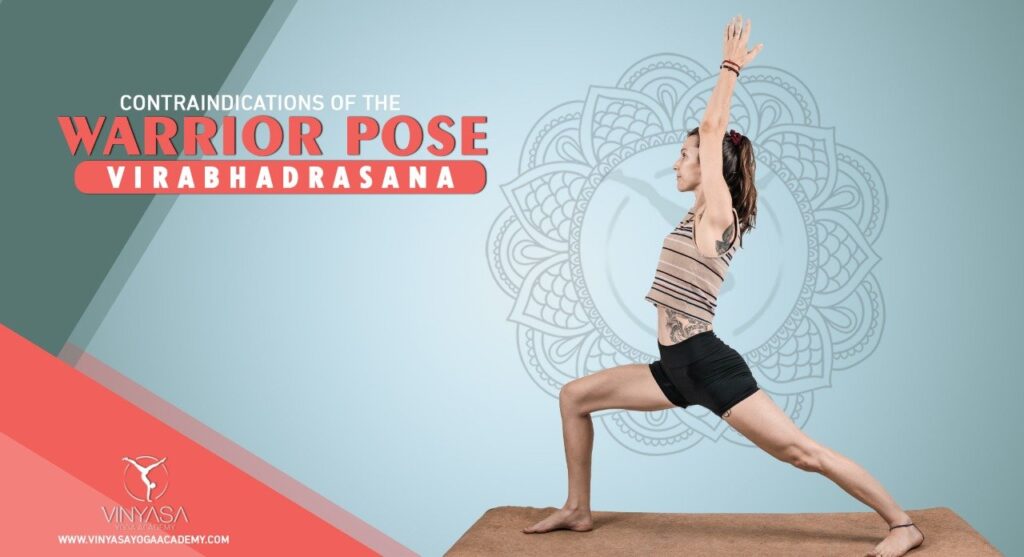
The Veerabhadrasana or the warrior pose seems simple on the surface, however achieving perfect posture isn’t as easy as it appears. The regular practice of the Virabhadrasana or the warrior pose is extremely safe. However, these are few things you need to be cautious about when you do this asana-
- Make sure that your front knee should be bent at a roughly 90 degree angle. If you bend it too far forward, it can damage your knees and the ligaments in your legs.
- Keep in mind that you are not turning your back heel too far out. Make sure to turn it 45-60 degrees toward your center when lifting it from the mat during the pose lunging.
- Don’t overarch your lower back. Keep your lower back as erect as possible.
- Also ensure that your arms and shoulders have the right relationship while practicing this asana.
Best Time to Practice Warrior Pose
Timing plays an important role in maximising the benefits of any yoga asana, and Virabhadrasana is no exception.
- Morning practice is considered ideal for Warrior Pose, as the mind is fresh and the body is ready to be energised for the day ahead.
- It is best to practice on an empty stomach — at least 4 to 6 hours after a meal — to avoid discomfort during the pose.
- Evening practice is also suitable, especially after a long day, as Warrior Pose helps release tension from the shoulders, hips, and lower back.
- Avoid practising immediately after waking up without a warm-up. Begin with gentle stretches before moving into Virabhadrasana.
Consistency is key — practising Warrior Pose daily, even for a few minutes, will yield far better results than occasional intense sessions.
Modifications of Warrior Pose for Beginners
Not everyone can jump straight into the full expression of Virabhadrasana. These modifications make the pose accessible for beginners, those with limited flexibility, or individuals recovering from injury.
Use a chair for support If balancing feels difficult, place a chair beside you and lightly rest your hand on it while getting into the pose. This helps build confidence and correct alignment without the fear of falling.
Shorten your stance Beginners often struggle with a wide stance. Reduce the distance between your feet to make the pose more stable and comfortable. Gradually widen your stance as your flexibility and strength improve.
Keep arms at hip level If raising both arms overhead causes strain in the shoulders or lower back, keep your hands on your hips instead. Focus on getting the leg alignment right before working on the arms.
Use a wall for Warrior III For Warrior III, beginners can place their hands on a wall for balance instead of extending the arms forward. This gives the body the support it needs while still building strength and balance.
These modifications ensure that every practitioner, regardless of their level, can safely experience the benefits of Warrior Pose.
THE BOTTOM LINE
Love them or hate them, the Virabhadrasana or the warrior pose is one of the most iconic yoga asanas which is predominantly used in warm ups, dynamic flows, and much more.
Yoga is just as much about the mind as it is about the body, so if you want to become a full-fledged yogi then you should know the philosophy behind the practice.
The Virabhadrasana or the warrior pose is the unique, powerful and bit complex asana as it requires you to balance simultaneous movements in different directions. However, this asana teaches you to develop a sense of balance and become more aware of body positioning.
So practice the Virabhadrasana or the warrior pose daily and reap its benefits.
If you are keen to learn more about the health benefits of the Virabhadrasana or the warrior pose, you can visit our website.
Stay healthy, stay strong, and get the best out of life!
Keep reading.