Beginner’s Introduction to Yoga Mudras: Types, Purpose, Function & More
Table of Contents
- What Is Mudra in Yoga? How Do They Direct Energy?
- How Many Mudras Are There in Yoga?
- Yoga Mudra Categories
- Mudras and the Five Elements of the Self
- What Are The Six Yoga Mudras Every Beginner Should Know?
- 1. Chin Mudra: The Gesture of Consciousness
- 2. Vayu Mudra Yoga: The Air Gesture
- 3. Brahma Mudra Yoga: The All-Directional Gesture
- 4. Prana Mudra: The Gesture of Life Force
- 5. Dhyana Mudra: The Meditation Seal
- 6. Ashwini Mudra Yoga: The Horse Gesture
- Yoga Mudra Benefits: How Are Mudras In Yoga Effective?
- For the Body
- For The Mind
- For the Energy
- What Is Mudra Asana Yoga: How Do Gestures Meet Postures?
- Some Practical Tips On Getting Started With Yoga Mudras
- Your Practice In Your Hands
- FAQs: What People Most Often Ask About Yoga Mudras
- What is a mudra in yoga, in brief?
- What are the benefits of yoga mudra? Please specify.
- How many mudras are there in yoga?
- How long do I need to hold a mudra to feel a difference?
- Can I do mudras if I’m a complete beginner?
- Is there a yoga mudra for headaches?
- Is there a yoga mudra for weight loss?
You already do yoga with your hands. You just haven’t realised it yet.
– Guru Yogi Vishnu Panigrahi
Think about the last time you pressed your fingertips together while you were thinking hard, or how you instinctively placed a hand over your heart when something moved you. Or how a child naturally folds their hands when they pray, without being taught the geometry of it.
Your hands already reach for meaning. Yoga mudras simply give that instinct a structure.
This is not a list of 50 gestures you need to memorise. This is an open, grounded look at what yoga mudras are, why they work, which ones actually belong in your daily life, and what ancient texts and modern practice together tell us about these quiet, powerful tools.
What Is Mudra in Yoga? How Do They Direct Energy?
The word ‘mudra‘ comes from the Sanskrit language, where it means a seal, a mark, or a gesture. In the context of yoga, a mudra is a deliberate position of the hands, body, or face that influences the flow of prana (the life force) that moves through the body’s energy channels, called nadis.
The simplest way to understand it is to think of your body as a circuit. Prana is the current flowing. When the circuit is open, i.e., when the energy leaks out or gets blocked, you feel it as tension, scattered thinking, poor sleep, low energy, or emotional unsteadiness. Mudras act as switches that close specific parts of that circuit, directing energy to its right path.
What makes this more than a spiritual metaphor is the anatomy behind it. The fingertips carry the highest density of nerve endings in the body. Each finger corresponds to one of the five classical elements in Ayurveda and yogic philosophy (space, air, fire, water, and earth).
When different fingers touch or press against each other, nerve pathways send signals to the brain that subtly impact the body’s physiological state. This is why these simple gestures are able to really calm the nervous system, sharpen concentration, and ease physical discomfort.
How Many Mudras Are There in Yoga?
The Hatha Yoga Pradipika, compiled in the 15th century by Svātmārāma, describes ten core mudras, calling them the ten seals that annihilate old age and death, which is a poetic way of saying ‘they sustain vitality’.
The Gheranda Samhita, another foundational Hatha yoga text, lists 25 mudras in yoga. The classical performance arts text Natyashastra describes 24 single-hand and 13 double-hand gestures or mudras.
When you combine hand mudras (hasta mudras), body mudras (kaya mudras), head mudras (mana mudras), and energetic locks (bandha mudras), the total number of mudras across all yogic and Tantric traditions runs into the hundreds.
For practical everyday yoga practice, most teachers work with a focused set of hasta mudras, or hand gestures, as they are the most accessible ones. You can hold them quietly while seated in meditation, during pranayama, in any restorative yoga pose, or even on your morning commute.
Yoga Mudra Categories
The five categories of mudra in yoga you will encounter most often are:
- Hasta Mudra: Gestures formed with the hands and fingers. These are the most widely practised in yoga and meditation.
- Mana Mudra: Gestures that engage the sense organs, including the eyes, tongue, and ears.
- Kaya Mudra: Postural mudras that involve the whole body, sometimes combined with breath and visualisation.
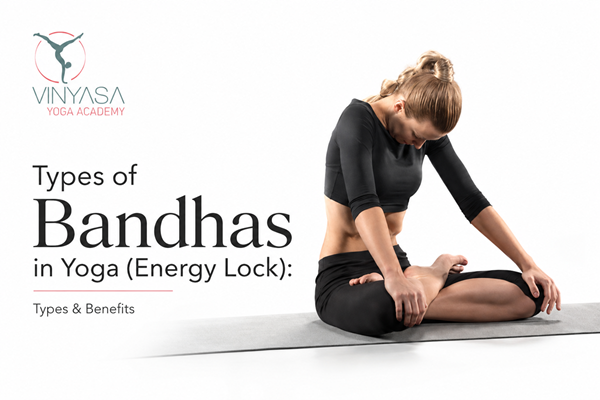
- Bandha Mudra: Energetic locks that work with the perineum, abdomen, and throat to redirect and contain prana.
- Adhara Mudra: Perineal gestures, closely related to bandha practice, that work with the pelvic floor.
For most people starting out, hasta mudras are the doorway in.
Mudras and the Five Elements of the Self
One of the most useful lenses for understanding yoga hand mudras is the five-element system (Pancha Mahabhutas) that underlies both Ayurveda and yoga philosophy.
Each finger signifies one of the five elements:
- The thumb carries fire (Agni)
- The index finger holds air (Vayu)
- The middle finger relates to space or ether (Akasha)
- The ring finger embodies earth (Prithvi)
- The little finger connects to water (Jal)
When you form a yoga mudra, you are, in a manner, adjusting the balance of these elements within your body.
The Surya mudra, formed by placing the ring finger at the base of the thumb, reduces the earth element and is traditionally associated as a yoga mudra for weight loss. It should always be understood as one part of a broader lifestyle approach, not a standalone remedy.
Similarly, Jal mudra (connecting the little finger and thumb) increases the water element and supports hydration at a cellular level, benefiting skin, joints, and emotional fluidity.
What Are The Six Yoga Mudras Every Beginner Should Know?
Rather than overwhelming you with a long list, here are the six yoga mudras that consistently show up across styles, traditions, yoga teacher training courses, and daily practices, each explained in terms of what it actually does for you.
1. Chin Mudra: The Gesture of Consciousness
Chin mudra is one of the first mudras taught in yoga because it is both simple and deeply effective. It forms a connection between the individual self (represented by the index finger) and universal consciousness (the thumb).
In practical terms, it calms the mind, supports concentration, and is widely used during pranayama and seated meditation. When the palm faces down, the same gesture becomes Jnana mudra, which has a slightly more grounding quality.
How to form Chin Mudra (in brief): Touch the tip of your index finger to the tip of your thumb. Let the other three fingers extend naturally, palm facing upward.
If you are looking for a yoga mudra for headache or mental fatigue, the chin mudra is your right and effective starting point.
2. Vayu Mudra Yoga: The Air Gesture
Vayu mudra works with the air element in the body. When the air element is excessive, which in Ayurvedic terms shows up as anxiety, restlessness, bloating, or joint discomfort, this gesture helps bring it back into balance. It stimulates the throat chakra and eases the heart centre. Many people find it useful during periods of stress or digestive irregularity.
How to perform Vayu Mudra: Fold your index finger inward so its tip rests at the base of your thumb. Press the thumb gently over the folded finger.
3. Brahma Mudra Yoga: The All-Directional Gesture
This gesture is most commonly practised in pranayama, particularly with the four-direction breathing, i.e., inhaling and exhaling while turning the head to face front, right, back, and left in sequence.
Brahma mudra reduces tiredness, supports complete diaphragmatic breathing, and is considered grounding and centring. It is particularly valued in restorative practices and for individuals who carry significant upper-body tension.
How to do Brahma Mudra: Make loose fists with both hands, then bring the knuckles together with palms facing upward.
4. Prana Mudra: The Gesture of Life Force
Prana mudra activates dormant energy in the body and is often described as the most vitalising of the hand gestures. It is used when energy is low, when immunity feels depleted, and when the body needs to restore after illness or exhaustion.
Some practitioners use it as a yoga mudra for sleep when combined with slow, nasal breathing before bed.
How to perform Prana mudra: Bring the tips of your ring finger and little finger to meet the tip of your thumb, extending the index and middle fingers.
5. Dhyana Mudra: The Meditation Seal
This is the introspective gesture seen in statues of the Buddha and in classical depictions of meditating yogis. Fire is linked to the thumb in classical yogic anatomy, and the touching of thumbs symbolises the sustained presence of consciousness during practice.
It settles the mind, encourages inward attention, and is specifically associated with deepening meditative awareness.
How to form Dhyana Mudra: Place your right hand over your left hand, with both palms facing upward. Bring the thumbs together so their tips lightly touch. Rest your hands in your lap.
6. Ashwini Mudra Yoga: The Horse Gesture
Usually practised while seated in a comfortable position, with slow and conscious contractions.
This one is different from the hand mudras listed above. Ashwini mudra involves rhythmically contracting and releasing the anal sphincter muscles. It’s similar to a Kegel exercise but specifically focused on the perineal region.
Ashwini Mudra yoga is a fundamental practice for awakening the apana vayu, or the downward-moving energy in Hatha yoga, and redirecting it upward through the sushumna nadi (the central energy channel along the spine).
This mudra improves pelvic floor health, digestive regularity, and is considered a baseline for more advanced pranayama and meditation practices.
If you feel a pull to move beyond the basics and truly experience the deep science of mudras, pranayama, and traditional yoga, the journey doesn’t have to stop here. Deepen your practice at the source with Vinyasa Yoga Academy’s leading yoga teacher training courses in Rishikesh, Bali, and online.
Yoga Mudra Benefits: How Are Mudras In Yoga Effective?
Mudra practice does not work like a supplement. It works more like sunlight. You may not always notice it in the moment, but over time, something in you has evolved.
That shift happens across three distinct layers. Yogic tradition calls them ‘koshas’. Modern language might simply call them physical, mental, and energetic. Either way, mudras reach all three.
For the Body
- The nervous system is where mudra practice leaves its most measurable impression. Holding a gesture like Chin mudra or Prana mudra during slow nasal breathing activates the parasympathetic branch of the autonomic nervous system.
- Heart rate steadies. Breath deepens. The chronic low-level tension that most people carry in the shoulders, jaw, and chest begins to loosen its grip.
- Beyond the nervous system, specific mudras influence the five-element balance that governs physical health in Ayurvedic medicine. Regular practitioners also report improvements in breath quality.
- The combination of breathwork with mudras expands lung capacity and clears the nasal passages over time.
For The Mind
- Concentration is perhaps the most immediately noticeable mudra benefit. The act of forming and holding a mudra requires a degree of deliberate attention that naturally draws the mind to itself.
- Gyan mudra and Hakini mudra are classically associated with sharper focus and memory, and their use during study or creative work is well-established in traditional practice.
- Dhyana mudra is specifically designed for deepening meditative absorption.
- Even Brahma mudra, used during the four-direction breath, clears the fog of mental tiredness in a way that feels almost immediate.
- For those working with anxiety, the sustained gesture acts as an affix that keeps the mind from spiralling.
For the Energy
- Yogic texts consistently describe mudras as tools for removing blockages from the nadis, or the energy channels that run through the body, and for redirecting prana with intention.
- In lived experience, practitioners describe this as a felt sense of being more present in their own bodies. Less scattered, less like they are operating on half a charge.
- The persistent low-grade exhaustion that plagues modern life responds well to consistent mudra practice because it often has energetic rather than purely physical roots.
- Mudras slow you down without requiring you to stop. You can hold a gesture at your desk, on the train, or in a waiting room.
- That quality of quiet rejuvenation available anywhere, costing nothing, leaving no residue, is perhaps the deepest practical benefit mudras offer.
What Is Mudra Asana Yoga: How Do Gestures Meet Postures?
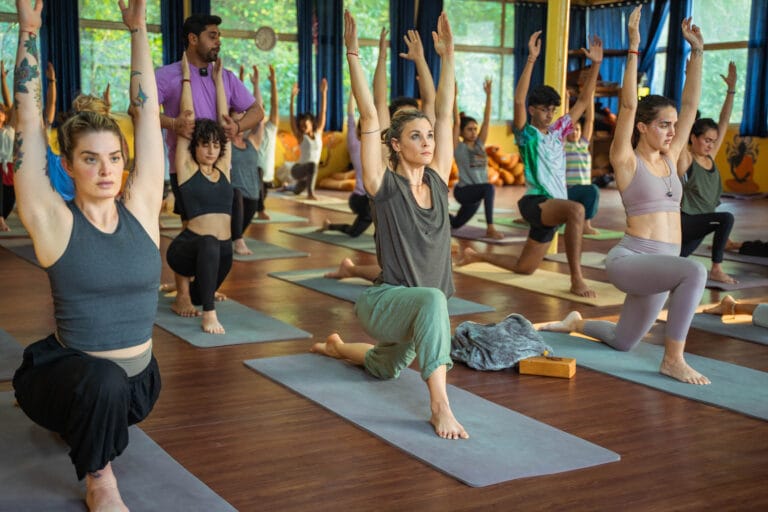
In classical Hatha yoga, mudras are not only held during seated meditation. Many are integrated directly into asana practice, creating what practitioners call ‘mudra asana yoga‘. It is a unified experience where gesture, posture, and breath work collectively.
- Special Mention: Yoga Mudrasana
Yoga Mudrasana is a seated forward fold with the hands clasped behind the back. This asana-mudra combination helps compress the abdominal organs, stimulating digestion, and is traditionally said to awaken the Kundalini Shakti, which is the dormant spiritual energy at the base of the spine.
A few well-known examples of Mudra asana yoga are:
| Yoga Asana (Posture) | Paired Mudra (Hand Gesture) | Energetic Focus |
| Sukhasana (Easy Cross-Legged Pose) | Chin Mudra (Consciousness Seal) | Mental Clarity & Presence |
| Tadasana (Mountain Pose) | Prithvi Mudra (Earth Gesture) | Deep Grounding & Stability |
| Anjaneyasana (Low Crescent Lunge) | Uttarabodhi Mudra (Highest Enlightenment) | Fearlessness & Energy Uplift |
| Vajrasana (Thunderbolt Pose) | Garuda Mudra (Eagle Seal) | Heart Opening & Vitality |
| Virabhadrasana I (Warrior I Pose) | Kali Mudra (Fierce Empowerment) | Focused Power & Direction |
| Utkatasana (Chair Pose) | Anjali Mudra (Prayer Seal) | Core Concentration & Centre |
| Vrikshasana (Tree Pose) | Hakini Mudra (Mind Power / Focus) | Hemispheric Balance & Focus |
Practising mudra asana combinations transforms both the posture work and the gesture and is a hallmark of deeper yoga training. If you practise with a teacher or are exploring yoga mudra certification pathways, ask specifically about this integration.
Read More: Sukhasana (Easy Pose): The Myth, The Meaning, The Mechanics
Some Practical Tips On Getting Started With Yoga Mudras
Having integrated mudras into our daily sadhana sessions and taught these subtle energetic seals to hundreds of students over the years, we have learned that their power lies not in rigid perfection, but in conscious, steady application.
If you are ready to move beyond the theory and begin feeling the shifts in your energy body, these practical, time-tested tips will help you establish a safe and deeply effective practice:
- Begin with a single mudra. Chin mudra or prana mudra are both excellent entry points.
- Sit comfortably with a straight spine, either cross-legged on the floor or upright in a chair.
- Hold the gesture for a minimum of 5 minutes, ideally working up to 15 to 45 minutes over time.
- Pair it with slow nasal breathing.
- Morning is considered the optimal time for most mudra practices, especially on an empty stomach during or after your pranayama.
- Evening practice, particularly with yoga mudras for sleep, can aid in relaxation before bed
Depth with one or two key mudras, or gestures, will serve you far better than a surface familiarity with dozens. The question is never which mudra to start practising. The real question is, can you commit to sitting quietly for a few minutes each day?
Your Practice In Your Hands
Beginning your journey with mudras will remind you that the most powerful tools for healing and balance are already right at your fingertips. You don’t need a complex setup or years of advanced physical training to begin directing your inner energy; you simply need a few quiet moments, an intentional breath, and a willing heart.
By starting small with just one or two gestures a day, you will quickly find that these ancient energetic seals can massively transform your modern, everyday well-being.
At Vinyasa Yoga Academy, nestled in the spiritual heart of Rishikesh, India, and Bali, Indonesia, we weave these subtle energetic practices into the very fabric of our world-renowned teacher training courses and retreats. Let us help you transform these simple signals into a profound, lifelong path of self-discovery. Explore our upcoming courses today and take your practice to the next level.
FAQs: What People Most Often Ask About Yoga Mudras
What is a mudra in yoga, in brief?
A mudra is a mindful formation (through hands, feet, or tongue) used in yoga and meditation to direct the flow of prana (life force) through the body. The word “mudra” translates from Sanskrit as “seal” or “gesture.” They influence the nervous system, the energy channels, and the balance of the five elements within the body.
What are the benefits of yoga mudra? Please specify.
Specific mudras are associated with particular benefits, like Vayu mudra for joint discomfort and bloating, Prana mudra for fatigue, Chin mudra for concentration, and so on. Regular mudra practice improves breath quality and lung capacity, supports mental clarity and focus, reduces stress and anxiety, promotes digestive health, and deepens dhyana.
How many mudras are there in yoga?
This varies by tradition. The Hatha Yoga Pradipika describes 10, the Gheranda Samhita lists 25, and the Natyashastra details over 30 classical hand gestures. Across all yogic and Tantric traditions combined, the number runs into the hundreds. However, for everyday yoga and meditation practice, a working set of 10-15 hasta (hand) mudras covers most needs.
How long do I need to hold a mudra to feel a difference?
The ideal is to practise mudras for 30 to 45 minutes a day. You can do this all at once or break it up into 10-15-minute sessions throughout the day. For chronic physical issues or depression, practising consistently every day will begin to show gradual shifts within 3 to 4 weeks.
Can I do mudras if I’m a complete beginner?
Absolutely, you can practise mudras even if you’ve never sat on a mat. You don’t need any prior yoga experience or flexibility. You can practise them while sitting on a couch or relaxing in a chair. Chin Mudra (index finger to thumb) or Dhyana Mudra (hands stacked in your lap) are perfect, easy places to start for you.
Is there a yoga mudra for headaches?
Chin mudra, practised with slow nasal breathing, is commonly used to ease tension and headaches linked to mental stress. Prana mudra, too, can help when headaches are associated with fatigue or low energy. It is important to know that mudras work most strongly as part of a consistent yoga practice rather than as instant remedies.
Is there a yoga mudra for weight loss?
Yes, Surya Mudra (Sun gesture). Press your ring finger to the base of your thumb and hold it down with your thumb. It is traditionally used to stimulate metabolic fire and reduce bloating. For real results, try pairing it with physical asana practice, conscious breathing, and healthy eating.
This article is for general information and is not medical advice. If you have a respiratory or heart condition, are pregnant, or are unsure whether these practices suit you, please speak to your doctor before beginning.