








Why and How Maha Shivaratri Is Celebrated?
Table of Contents
- What Is Maha Shivaratri?
- History Behind Maha Shivaratri
- Why Is Maha Shivaratri Celebrated?
- How Is Maha Shivaratri Observed? Rituals and Practices
- Lord Shiva and the Yogic Tradition
- How Can You Observe Maha Shivaratri?
- Final Takeaway
- Frequently Asked Questions About Maha Shivaratri
- Q1. Can non-Hindus observe Maha Shivaratri?
- Q2. What is the significance of the Shivalingam?
- Q3. Why do people stay awake all night?
- Q4. What is the difference between Shivaratri and Maha Shivaratri?
- Q5. What should you not do on Maha Shivaratri?
Hindus are known for their festivals and utmost belief in their gods. In Hindu mythology, out of all the supreme gods and deities, one holds the utmost power: Lord Shiva. According to Hindu mythology, Lord Shiva is one of the three supreme deities and is prayed to and worshipped from time to time. One such big puja that takes place for the great Lord Shiva is the Maha Shivaratri. In this article, we will talk about everything one needs to know about Maha Shivaratri.
What Is Maha Shivaratri?
Maha Shivaratri literally translates to “The Great Night of Shiva”. In Hinduism, Maha Shivaratri is one of the grandest celebrations, practised every year with a strict dedication to honour the god Lord Shiva. The Hindu schedule is praised in Varanasi in the obscure for a fortnight, or Krishna Paksha, on the thirteenth evening or fourteenth day of Magha or Phalguna (month of February or March as indicated by the English schedule) to venerate the Shiva Lingam to fulfil Lord Shiva’s wishes.
History Behind Maha Shivaratri
Puranas contain numerous accounts and legends portraying the beginning of this celebration. According to one such tale, once Brahma and Vishnu, two of the Hindu Trinity gods, argued about who was superior. This conflict of superiority led to a fight between them. Other gods and divine beings were afraid that this fight might destroy the world. So, they begged Lord Shiva to intervene and stop them. Brahma and Vishnu then decided that whoever finds this pillar’s end first ends up being superior to the other.
Brahma then took the form of a swan and looked in the sky for its end. At the same time, Vishnu took Varaha (Boar) and went into the earth to look for its bottom end. This column was nothing but light, so it had no end. Therefore, while on his way above, Brahma was tired of looking for the end. After some time, he saw a Kateki blossom coming down slowly. Brahma asked her where she was coming from, and she said that she was put up there as an offering at the top of the column.
Becoming tired, Brahma made a plan to lie that he had found the end of the column and asked Kateki Blossom to lie and act as a witness.
At this, the furious Shiva uncovered his actual form. Shive became furious over Brahma and cursed him that no one in this world would pray for him or worship him ever again. The Kateki bloom was also prohibited from being utilised to contribute to any prayer, as she had falsely testified for Brahma. This was done fourteen days in the period of the Phalguni from the time Shiva took the form of a pillar, that is, the day Maha Shivaratri is celebrated. Shiva is worshipped on this day to spread, and in the hope that he brings joy and flourishing.
Why Is Maha Shivaratri Celebrated?
According to Hindu mythology and the people’s beliefs, Maha Shivratri is a celebration of the grand marriage of the god of destruction, that is, Lord Shiva, and the goddess of love, richness, and magnificence, Devi Parvati. According to the Puranas, on their marriage eve, the great Lord Shiva called upon other supreme deities, along with the demons, to enjoy and celebrate their wedding in harmony.
The celebration is also about celebrating the divine power of Lord Shiva. Also, keeping the god of destruction (as per Hindu mythology) happy and satisfied and preventing him from getting angry over our sins. Lord Shiva is one of the major gods in Hindu mythology and one of the Hindu trinity. According to Hindu mythology, Lord Shiva has made several sacrifices and has helped solve several difficult conflicts and disasters. So, this celebration is for all such powerful and divine acts that Lord Shiva has done.
How Is Maha Shivaratri Observed? Rituals and Practices
The way Maha Shivaratri is observed varies by region, tradition, and individual spiritual path, but certain core practices remain universal.
- Breaking the Fast at Dawn: The celebration concludes at sunrise with prasada, blessed food that is shared among all who attended the vigil.
- Fasting (Upavasa): Devotees observe a strict fast throughout the day, many consuming only water. Fasting is not merely abstinence from food; it is a practice of turning inward, quieting the senses, and sharpening awareness.
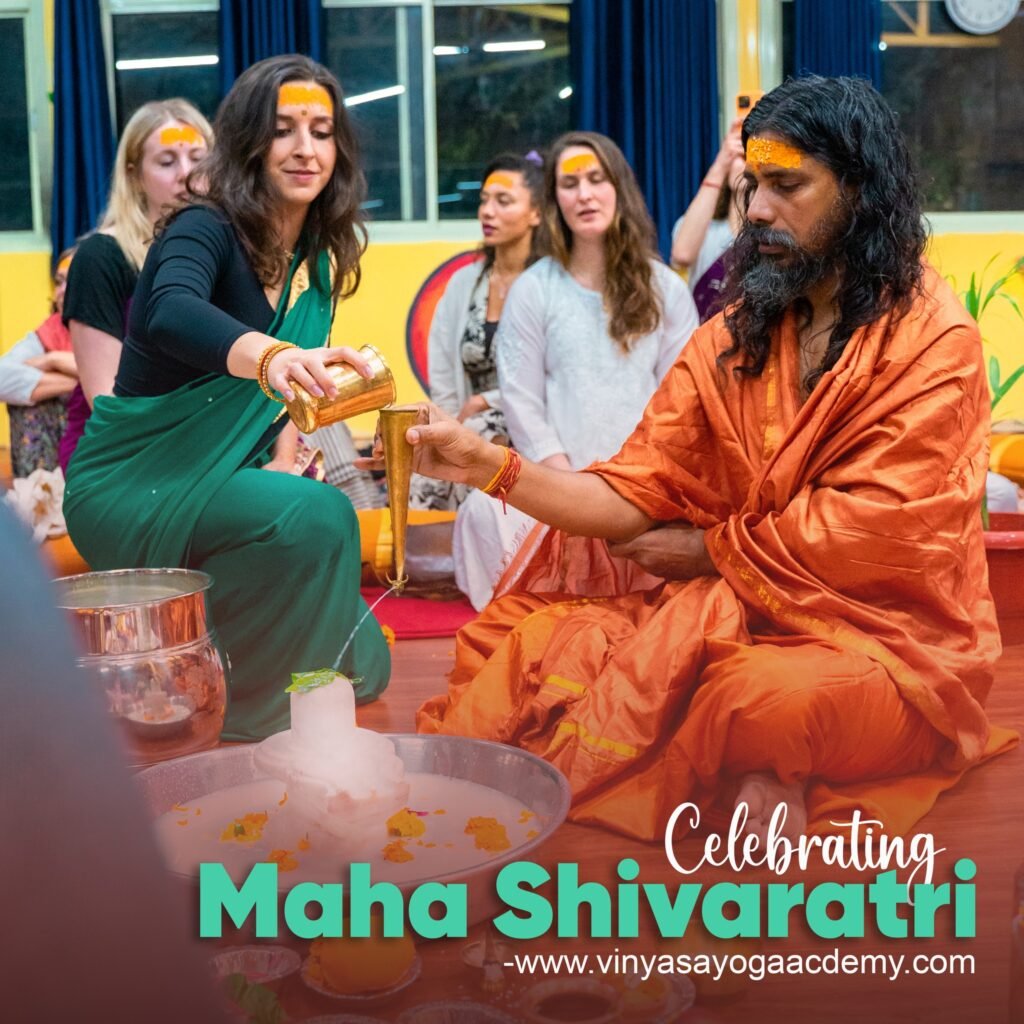
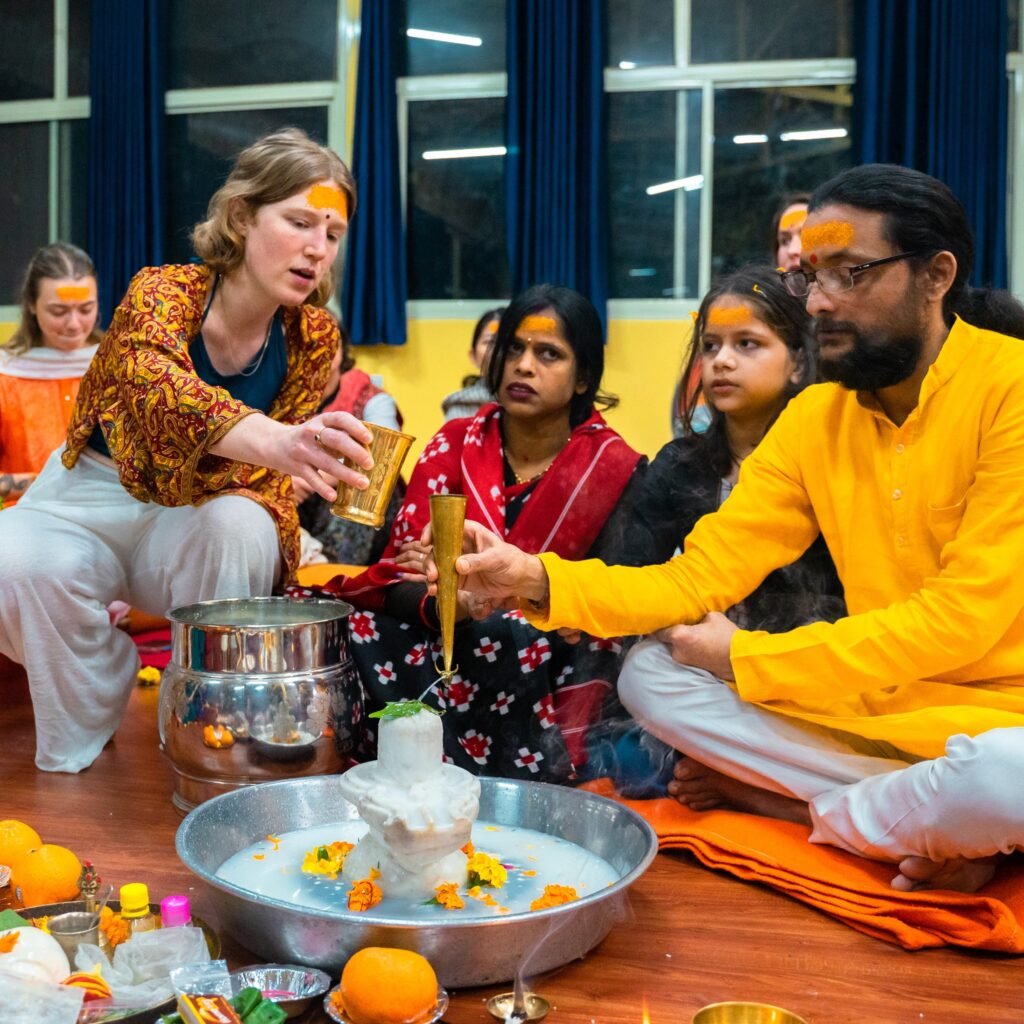
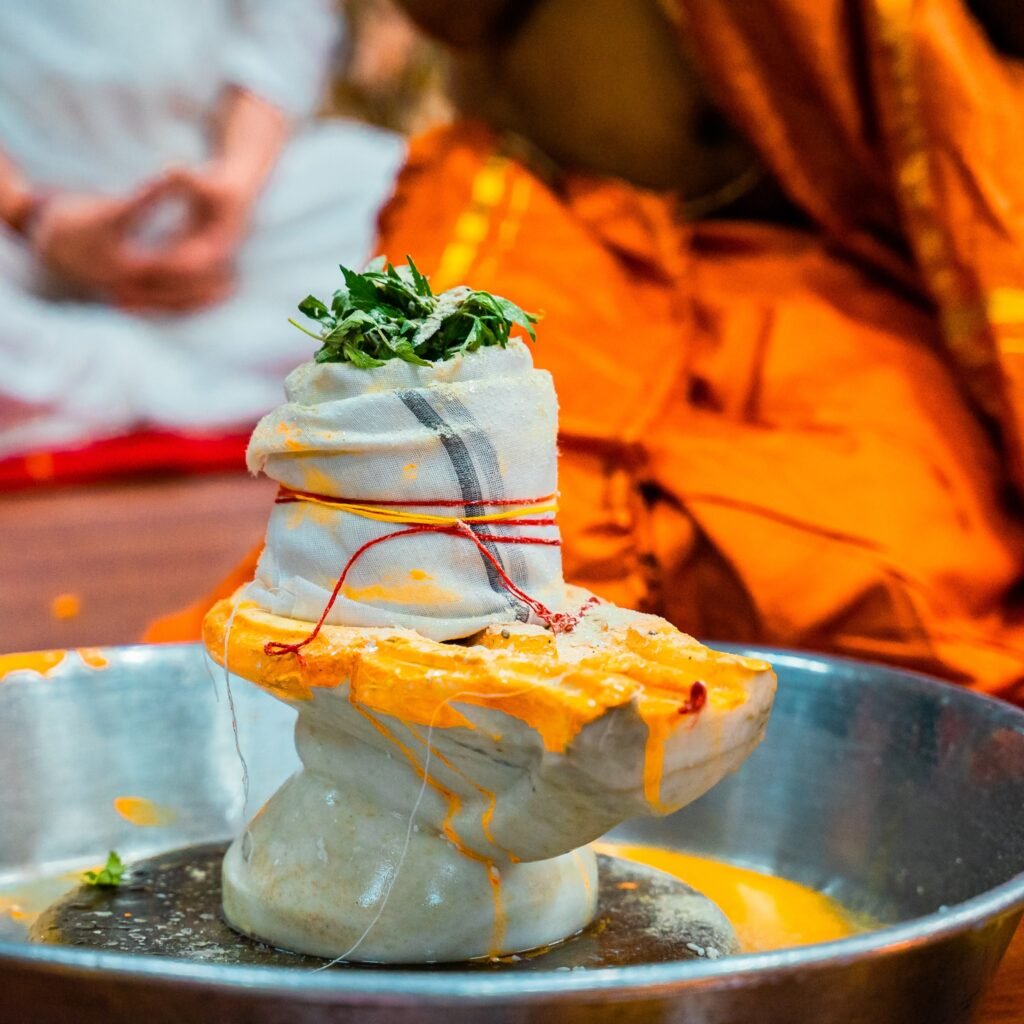
- Temple Worship and Abhishekam: Shiva temples remain open all night. Devotees offer Abhishekam, a ceremonial bathing of the Shivalingam with water, milk, honey, curd, ghee, and sacred leaves like Bilva (Bael). Each offering carries specific spiritual significance.
- Chanting Om Namah Shivaya: This is the primary mantra of Maha Shivaratri. Repeated throughout the night, it is not merely a prayer but a vibrational invocation that aligns the chanter with the energy of Shiva — the state of pure, undivided consciousness.
- Jagaran — Staying Awake Through the Night: Wakefulness is central to the festival. Sleep represents unconsciousness; wakefulness represents awareness. By staying awake, devotees symbolically align themselves with the ever-aware nature of Shiva himself.
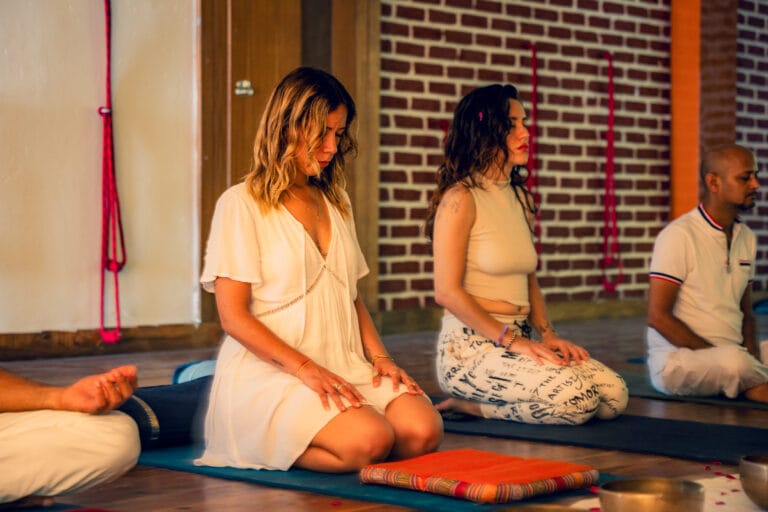
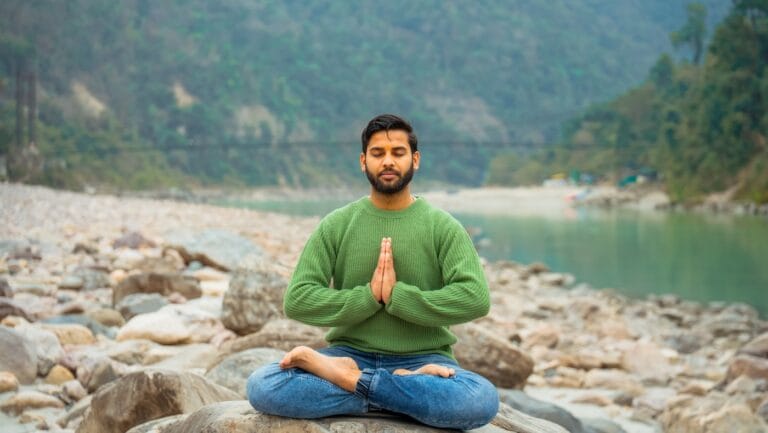
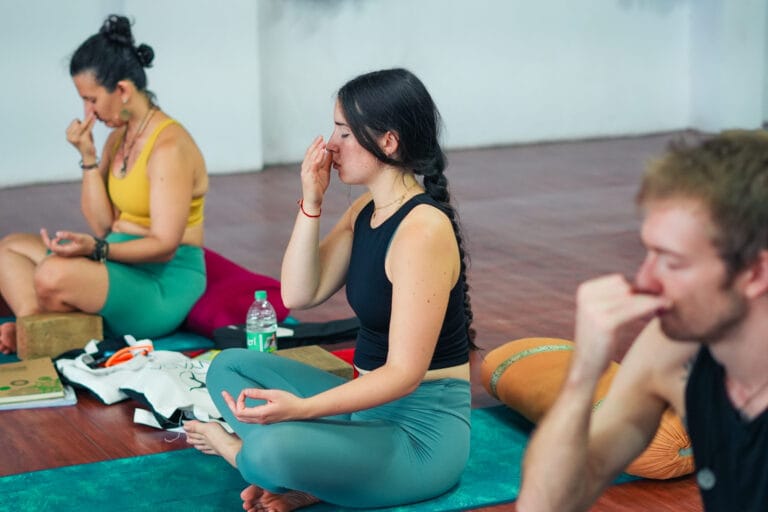
- Meditation and Pranayama: For yogis, Maha Shivaratri is above all a night of deep meditative practice. The combination of fasting, darkness, and natural energy upliftment creates uniquely fertile conditions for inner stillness and insight.
Lord Shiva and the Yogic Tradition
It is impossible to talk about Maha Shivaratri without talking about yoga. Lord Shiva is not just a deity in the devotional sense — he is the source and embodiment of the entire yogic science. He is Adiyogi (the first yogi), Mahayogi (the great yogi), and Yogeshwara (the Lord of Yoga). Every major dimension of yoga — Hatha, Jnana, Bhakti, and Mantra — traces its origins back to Shiva.
Shiva’s form itself is a yogic teaching. He sits in deep meditation on Mount Kailash, the Ganga flowing from his matted locks, a crescent moon adorning his head, and the third eye of wisdom at the centre of his brow. His state is one of absolute stillness within absolute freedom — which is precisely what yoga aims to cultivate in the practitioner.
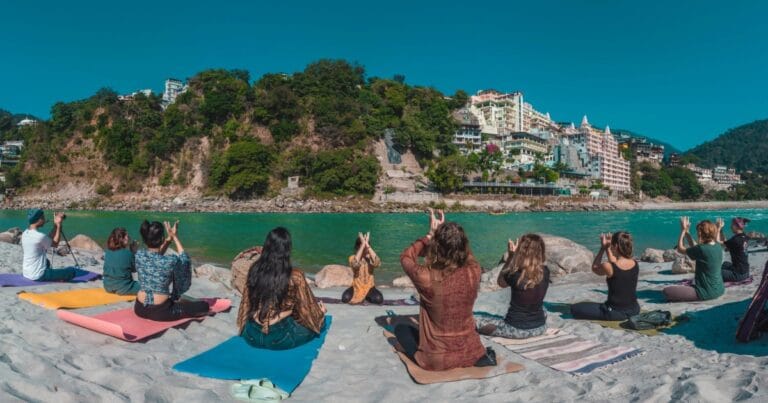
For students enrolled in yoga teacher training in Rishikesh, the spiritual heartland where the Ganga descends from the Himalayas, Maha Shivaratri is not a distant mythology but a living practice. You can hear the chants rising from the ghats and the bells ringing before dawn and feel the collective energy of thousands turning inward on this sacred night.
How Can You Observe Maha Shivaratri?
You do not need to be in Varanasi or Rishikesh to meaningfully observe Maha Shivaratri. The essence of the festival is accessible anywhere there is sincerity and intention.
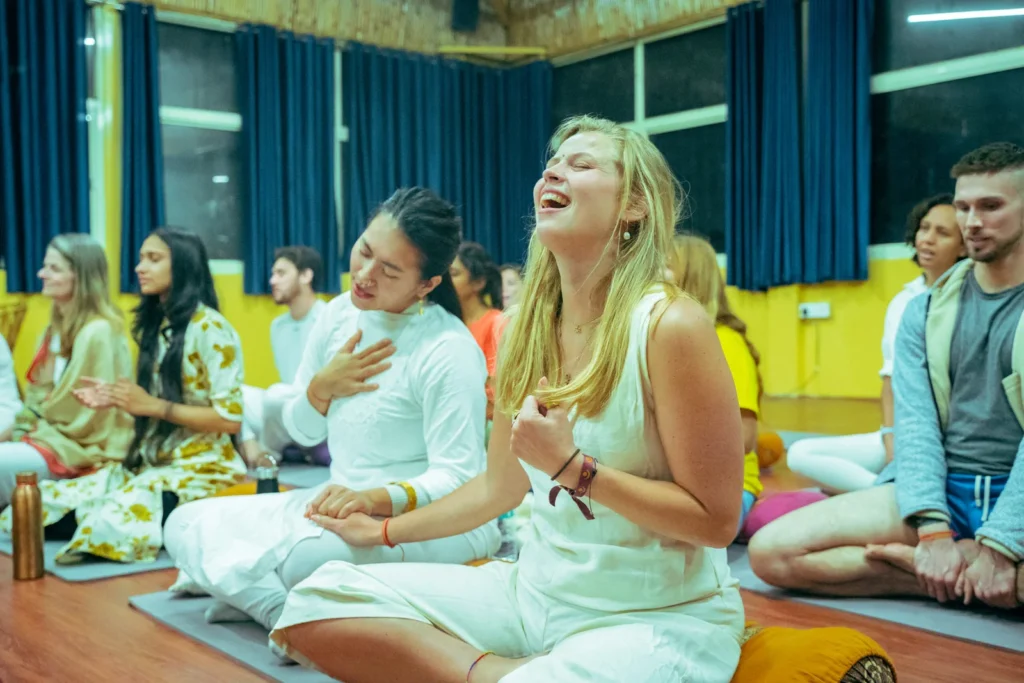
Begin with a light fast during the day. As evening falls, create a quiet space for practice. Spend some time with pranayama to settle the nervous system, then move into a gentle meditation session. Chant Om Namah Shivaya, aloud or silently, as many times as feels natural. If you can, stay awake for at least part of the night, using that time for reading, journaling, or simply sitting in silence. The quality of your inner attention matters far more than the perfection of any ritual.
Also Read: Karma Yoga
Final Takeaway
Maha Shivaratri is far more than a religious festival. It is an annual invitation to go inward, to shed what no longer serves you, and to reconnect with the still, luminous awareness that lies beneath all thought and activity. It is, at its core, a yoga practice: the art of waking up.
Whether you observe it through fasting and chanting or simply through an evening of quiet meditation, Maha Shivaratri offers a rare opportunity to step out of the noise of daily life and touch something timeless. As Lord Shiva himself embodies, in absolute stillness, there is infinite potential.
At Vinyasa Yoga Academy, we believe that festivals like Maha Shivaratri are not just occasions to remember; they are living practices that deepen your understanding of yoga from the inside out. If this sacred night has stirred something in you, perhaps it is time to take the next step on your yogic journey.
Frequently Asked Questions About Maha Shivaratri
Q1. Can non-Hindus observe Maha Shivaratri?
Absolutely. Maha Shivaratri, particularly in its yogic dimension, transcends religious identity. Thousands of international yoga practitioners join celebrations at centres like Isha Yoga Center every year.
Q2. What is the significance of the Shivalingam?
The Shivalingam is a representation of infinite, formless consciousness. Offering Abhishekam to the Shivalingam is a symbolic act of purification — both of the deity and of the devotee’s own mind.
Q3. Why do people stay awake all night?
Staying awake symbolises moving from unconsciousness (tamas) to awareness (sattva). Yogically, it also aligns the practitioner with the natural energy rise that occurs on this night.
Q4. What is the difference between Shivaratri and Maha Shivaratri?
Shivaratri (meaning “night of Shiva”) actually occurs once every month — on the 13th or 14th night of the waning moon. This monthly observance is called Masik Shivaratri. Maha Shivaratri, however, is the “great” one — the annual occurrence that falls in the month of Phalguna (February–March) and carries far greater spiritual weight. Think of Masik Shivaratri as a weekly practice and Maha Shivaratri as the annual culmination.
Q5. What should you not do on Maha Shivaratri?
There are a few traditional prohibitions observed on this day. Sleeping during the daytime is strongly discouraged, as it runs contrary to the spirit of heightened awareness the festival cultivates. Consuming alcohol, non-vegetarian food, and tamasic items is avoided. Certain flowers — particularly Ketaki (screw pine) and Kewda — and red vermillion (sindoor) are traditionally not offered to Lord Shiva. Negative emotions like anger, greed, and harsh speech are also considered contrary to the energy of the da
This article is for general information and is not medical advice. If you have a respiratory or heart condition, are pregnant, or are unsure whether these practices suit you, please speak to your doctor before beginning.