







Bandhas in Yoga (Energy Lock): Types & Benefits
Table of Contents
- What Are Bandhas in Yoga?
- The Meaning Behind the Word ‘Bandha’
- What the Research Says?
- How Many Bandhas Are There in Yoga?
- The 3 Main Bandhas: What They Are and How to Do Them
- 1. Mula Bandha or The Root Lock
- How to do Mula Bandha:
- Mula Bandha Benefits
- 2. Uddiyana Bandha or The Upward Flying Lock
- How to do Uddiyana Bandha
- Uddiyana Bandha Benefits
- 3. Jalandhara Bandha or The Throat Lock
- How to do Jalandhara Bandha
- 4. Jalandhara Bandha Benefits
- Maha Bandha: The Great Lock
- How to Practise Maha Bandha (For Beginners):
- Bandhas and Mudras: What’s the Difference?
- When and How to Use Bandhas in Your Practice
- Meditation
- Asana
- Pranayama
- Who Should Be Careful With Bandhas?
- Final Thought: The Locks That Open Everything
- Frequently Asked Questions About Bandhas
- What is Bandha in Yoga?
- How many bandhas are there in yoga?
- What’s the difference between bandhas and mudras?
- What are the advantages of Mula Bandha?
- What is Maha Bandha, and what are the benefits of Maha Bandha?
- How to do Uddiyana Bandha step-wise?
- What is Jalandhara Bandha, and when should you do it?
- Where can I learn bandhas properly with guidance?
- Can beginners perform bandhas in yoga?
Bandhas are some of the most talked-about and least-explained concepts in yoga. Most classes mention them. Very few actually touch the core.
Bandhas, or Energy Locks in English, are a complete internal system that ancient yogis used to harness, control, and direct the body’s vital energy. And once you, as a practitioner, understand how they work, your entire practice shifts.
Read on to learn what bandhas are, how many there are, how to do each one, what the science says, and how to weave them into your daily practice. All that you need.
What Are Bandhas in Yoga?
Bandhas are internal energy locks in yoga, the intentional muscular contractions that temporarily contain and redirect life force, or Prana, within the body. There are 3 primary bandhas, namely, Mula Bandha (root lock), Uddiyana Bandha (abdominal lock), and Jalandhara Bandha (throat lock). Together they constitute a Maha Bandha, the great lock. Rooted in ancient yogic texts like the Hatha Yoga Pradipika, bandhas help regulate breath, support posture, calm internal systems, and awaken deeper layers of energy and awareness.
The Meaning Behind the Word ‘Bandha’
Exactly what bandhas do is close off specific pathways in the body to contain and redirect prana (yogic definition). The word ‘bandha’ comes from Sanskrit and translates as ‘to lock,’ ‘to bind,’ or ‘to close off.’
Think of your body’s energy system like a riverway. Prana is the water flowing through it. Without any regulation, energy scatters and dissipates. And you feel scattered, too. Bandhas are like dams placed at strategic points; they hold the energy, concentrate it, and then redirect it with purpose.
There are a few ring-shaped muscles that open and close certain passages in the body. On a physical level, each bandha involves the contraction of those specific muscles, known as sphincter muscles. Engaging a bandha means changing your internal pressure, stimulating nerve clusters, and influencing how prana and apana vayu (the two main energy currents) move through your nadis (energy channels).
What the Research Says?
Research on pranayama, which integrates bandhas, consistently shows measurable effects on heart health, blood pressure, and the autonomic nervous system. Scientific studies published in the International Journal of Yoga show that Mula Bandha yoga produced significant improvement in pelvic floor dysfunction after 12 weeks of practice. The research is still growing, but the foundation is solid.
How Many Bandhas Are There in Yoga?
The Hatha Yoga tradition recognises six bandhas in total: three major, two minor, and one that combines them all. Most yoga teachers will focus on the four you’ll encounter most:
| Bandha | Meaning | Location | Key Benefit | Best Time to Use |
| Mula Bandha | Root Lock | Regulates prana in the neck, calms the mind, and supports thyroid | Grounds energy, lifts prana upward | During asana & pranayama (inhale or exhale) |
| Uddiyana Bandha | Upward Flying Lock | Abdomen, 4 inches below the navel | Digestive health, core fire, energy flow | Only on external breath retention (Bahya Kumbhaka) |
| Jalandhara Bandha | Throat / Chin Lock | Throat, chin to chest | Regulates prana in the neck, calms the mind, and supports the thyroid | During pranayama with breath retention |
| Maha Bandha | The Great Lock | All three combined | Full energetic reset, endocrine balance, spiritual depth | Advanced practice on external breath retention |
Hasta Bandha (hand lock) and Pada Bandha (foot lock) are subtle engagements in the hands and feet used to distribute weight and energy evenly in standing and arm-balancing poses. You may probably already be doing them without knowing it.
The 3 Main Bandhas: What They Are and How to Do Them
1. Mula Bandha or The Root Lock
This mula bandha yoga is the foundation of the three. It involves a subtle, sustained contraction at the base of the pelvic floor, specifically the perineum, which is a small region between the anus and the genitals. Men locate it between the testes and the anus; women contract the muscles behind the cervix.
Mula means ‘root’ in Sanskrit. It’s kind of similar to a Kegel exercise, but not the same. A Kegel grips everything at once. Mula bandha asks for a gentle lift, a deliberate draw inward and upward, with the breath still flowing.
How to do Mula Bandha:
- Sit comfortably in the Sukhasana pose or on a chair
- Close your eyes and take three slow breaths
- On your next exhale, intentionally draw the perineum upward and inward as if you’re trying to stop the flow of urine mid-stream
- Hold it gently (5-10 secs) without tensing the abdomen, thighs, or glutes
- Release and repeat 4-5 times
Mula Bandha Benefits
- Strengthens the pelvic floor and supports spinal alignment
- Stimulates the muladhara (root) chakra
- Helps lift prana upward through the sushumna nadi
- Reduces symptoms of urinary incontinence and pelvic organ prolapse (per clinical research)
- Balances the endocrine and nervous system
- Reduces anxiety, restlessness, and low energy
2. Uddiyana Bandha or The Upward Flying Lock
‘Uddiyana’ means ‘to fly upward.’ This is the abdominal lock, and it’s a dramatic one. When done correctly, the entire belly is hollowed in and raised under the ribcage, creating a sharp vacuum-like effect in the torso.
This Uddiyana bandha yoga is only practised on external breath retention, i.e., bahya kumbhaka. Means you exhale fully, then just simulate an inhale without actually breathing in. The cause? During diaphragm lifts, the abdominal wall rushes inwards, and the belly disappears.
How to do Uddiyana Bandha
- Stand with feet hip-width apart
- Bend your knees slightly and place your hands on your thighs
- Exhale completely through the mouth
- When all the air is out, close your mouth
- Fake an inhale, pulling the ribcage wide without letting air in
- Feel your belly pull inward and upward spontaneously
- Hold for a few seconds
- Gently release and breathe in slowly
Important: Uddiyana bandha should only be practised on an empty stomach, or ideally 4-6 hours after a meal. If you are unable to do it, don’t force it.
Uddiyana Bandha Benefits
- Stimulation of digestive fire (agni)
- Improved gut health
- Toning of abdominal organs; relief from constipation
- Increases metabolism and relieves adrenal fatigue
- Activates the Manipura Chakra (solar plexus), your center of willpower
- Creates a soft internal massage for the lower back muscles
It is described in Hatha Yoga Pradipika as ‘the best of all bandhas in yoga, ‘even an old person becomes young with regular practice.’
3. Jalandhara Bandha or The Throat Lock
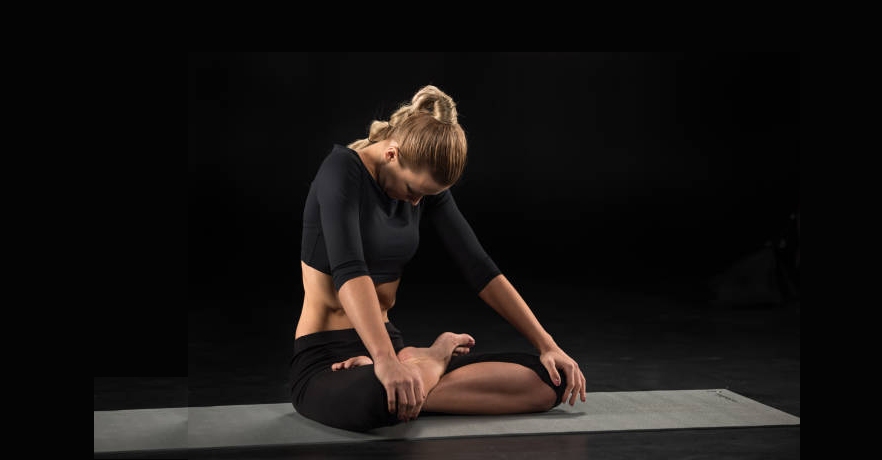
Jalandhara bandha locks the stream of energy through the network of channels in the neck, particularly by dropping the chin toward the chest while lengthening the neck. In Sanskrit, ‘jala’ means ‘net’ or ‘mesh,’ and ‘dhara’ means stream.
Unlike mula and uddiyana, jalandhara is rarely done alone. It lives mainly in pranayama practices, especially those involving breath retention. It prevents the surge of prana rushing upward too fast and helps regulate blood flow to the brain, heart, and thyroid glands.
It can also be adapted to certain yoga poses. For example, Setu Bandha Sarvangasana (bridge pose) and Sarvangasana (shoulder stand) naturally tend to prompt a gentle lock in the throat.
How to do Jalandhara Bandha
- Find a comfortable cross-legged position with your spine straight and hands on your knees
- Take a deep breath in, filling your lungs to about 70-80% capacity
- Lift your chest upward toward the chin (do not just move the head down)
- Drop your chin into the gap between the collarbones while lengthening the back of your neck
- Straighten arms, lock the elbows, and press the palms into the knees to maintain the chest lift
- Hold your breath comfortably without straining the throat or face
- Lift the head back to the centre first, then exhale slowly
4. Jalandhara Bandha Benefits
- Regulates prana flow in the neck region
- Supports thyroid and parathyroid function
- Calms the brain and reduces anger, stress, and anxiety
- Clears nasal passages and supports respiratory function
- Activates the vishuddha (throat) chakra, the center of communication and truth
Maha Bandha: The Great Lock
What happens when you engage all three bandhas at once? You get Maha Bandha, the great lock. Revered in ancient texts like the Gheranda Samhita and Hatha Yoga Pradipika as one of the most powerful yogic practices available, maha bandha combines the effects of all three locks into a single, unified seal.
In practical terms, it creates a profound internal stillness, regulates the entire endocrine system, and produces a state that yoga practitioners describe as one of deep clarity and groundedness. Ancient texts describe it as a practice that ‘cuts the snares of death.’ Meaning, it helps the practitioner transcend the limitations of the physical body.
How to Practise Maha Bandha (For Beginners):
- Sit in a comfortable meditative posture, such as Sukhasana, Siddhasana, or Padmasana
- Place palms on knees. And Inhale deeply through the nose
- Exhale fully and completely; all the air out
- Without inhaling, first engage Mula Bandha (lift the perineum)
- Then do Uddiyana Bandha (hollow the belly in and up)
- Take a tiny sip of air to lift the chest, then lower the chin for Jalandhara Bandha
- Hold all three locks as long as comfortably possible
- Press the palms down gently
- To release, first lift the chin, then inhale fully, then release the other two locks
- Start with 1-3 rounds initially
This is an advanced practice. Learn it in person with a qualified teacher before practising independently.
At Vinyasa Yoga Academy in India and Bali, bandha instruction is a core part of our 200 hour Yoga Teacher Training course. Students don’t just get to hear about bandhas (energy locks). They practise them, understand them, and learn how to teach them safely and authentically.
Also Read: Yoga Mudras
Bandhas and Mudras: What’s the Difference?
People often confuse bandhas and mudras, since both work with prana and both are used in pranayama and meditation. Bandhas (energy locks) are internal muscular binds. They physically lock and transfer energy in the body through muscular contractions and breath retention.
Mudras are symbolic gestures, most commonly of the hands (like chin mudra or jnana mudra), though some involve the whole body. They redirect energy through touch, pressure, and intention.
Think of mudras as channels that shape the direction of energy. Think of bandhas as gates that control the flow. In practice, they’re often used together to create a complete energetic circuit in the body, especially during pranayama and meditation.
When and How to Use Bandhas in Your Practice
One of the most common questions beginners in yoga have is when and how to engage Bandhas in their practice. Here’s a simple map:
Bandhas in Practice Quick Reference:
Meditation
As per yogic practice, a light Mula Bandha during sitting meditation supports posture, prevents energy from scattering, and keeps awareness focused inward.
Asana
Mula Bandha can be engaged throughout most yoga poses to support the core and lift energy upwards. Uddiyana Bandha is not typically done with or during active movements; a gentle ‘drawing in’ of the lower belly is fine.
Pranayama
All three bandhas appear here. Mula and Jalandhara are used on both inhalation and exhalation. Uddiyana and Maha Bandha are used only on external retention (exhale hold).
Tip: Start slow with Mula bandha first, as it’s the most accessible. Give yourself weeks with that one before transitioning to Uddiyana or Jalandhara bandha. And for Maha Bandha, work under the guidance of a teacher. The breath retentions involved here require care.
Who Should Be Careful With Bandhas?
Bandhas are not about pushing harder. They’re about greater sensitivity. The most effective practitioners are often the ones who’ve learned to feel, not just to perform. While the three Bandhas are safe for most healthy adults when learned correctly, they’re not for everyone at every stage.
- Pregnancy: Avoid Uddiyana bandha and Maha Bandha during all trimesters. Mula bandha may be practised lightly but only with an expert’s support.
- High blood pressure or heart conditions: Avoid breath-retention-based bandhas (Uddiyana, Maha). Mula bandha may be suitable; consult with your doctor.
- Recent abdominal surgery: Give the body time to heal before engaging uddiyana bandha
- Hernias: Avoid uddiyana bandha entirely
- Beginners: Always learn with a qualified yoga teacher before practising advanced bandhas by yourself.
Final Thought: The Locks That Open Everything
There’s something beautiful about the idea of a lock that doesn’t shut you down but opens you up. Bandhas contain energy, so you can grow stronger. They direct prana so it goes where it’s actually needed. And when practiced with consistency and care, they reveal a whole layer of yoga that most people never reach. Not because it’s a secret, but because it requires slowing down long enough to feel it.
You don’t have to be advanced, you just have to be curious. That’s how every deep practice begins.
Ready to learn bandhas properly with expert instruction, immersive practice, and a community that takes this seriously? Vinyasa Yoga Academy offers Yoga Teacher Training courses and transformative retreats in Rishikesh, India, and Ubud, Bali. Pranayama, bandha practice, philosophy, and asanas are all in traditional settings designed for real growth. Whether you’re a curious student or training to teach, your foundation starts here.
Frequently Asked Questions About Bandhas
What is Bandha in Yoga?
Bandha (energy lock) is a Sanskrit word meaning ‘lock’ or ‘bind.’ Bandhas are purposeful muscular locks in yoga to channel the flow of prana (life force energy) through the body.
How many bandhas are there in yoga?
In yoga, there are majorly four bandhas in yoga, which are Mula Bandha (root lock), Uddiyana Bandha (abdominal lock), Jalandhara Bandha (throat lock), and Maha Bandha (the great lock, combining all three). The other two minor bandhas are Hasta Bandha and Pada Bandha.
What’s the difference between bandhas and mudras?
Mudras are symbolic gestures (usually of the hands), while bandhas are internal muscular locks. Both work with prana, but bandhas physically lock energy in the body, whereas mudras redirect it using subtle touch and intention.
What are the advantages of Mula Bandha?
Mula bandha strengthens the pelvic floor muscles and balances the endocrine system. It helps reduce anxiety, improve reproductive health, and direct energy upward through the Sushumna Nadi.
What is Maha Bandha, and what are the benefits of Maha Bandha?
Maha Bandha, the great lock, is the combination of mula, uddiyana, and jalandhara bandhas. It stabilises the endocrine system, calms the nervous system, and creates a deep inner quietness.
How to do Uddiyana Bandha step-wise?
Exhale fully, then simulate an inhale without breathing in (fake breathing). Your belly will hollow inward and upward under the ribcage. Hold for a brief moment, then release gently and inhale. Practise only on an empty stomach.
What is Jalandhara Bandha, and when should you do it?
Jalandhara Bandha is the chin lock where you lower the chin toward the chest by lengthening the back of the neck. It is mostly used during pranayama with breath retention and rarely in asana practice.
Where can I learn bandhas properly with guidance?
Bandhas are best learned in a structured setting where your mind and body can focus and rest. Yoga teacher training courses at Vinyasa Yoga Academy (India and Bali) include hands-on bandha instruction within pranayama and asana modules. You not only get to learn, but eventually master and teach any sequences you wish.
Can beginners perform bandhas in yoga?
Yes, but not all. Out of the three bandhas, Mula Bandha is ideal for beginners. Uddiyana and Maha Bandha are more advanced practices and should be learned with a qualified teacher, especially as they involve breath retention.