






Ashtanga Vinyasa Yoga and Vinyasa Yoga: Difference, Origin, Asanas & More
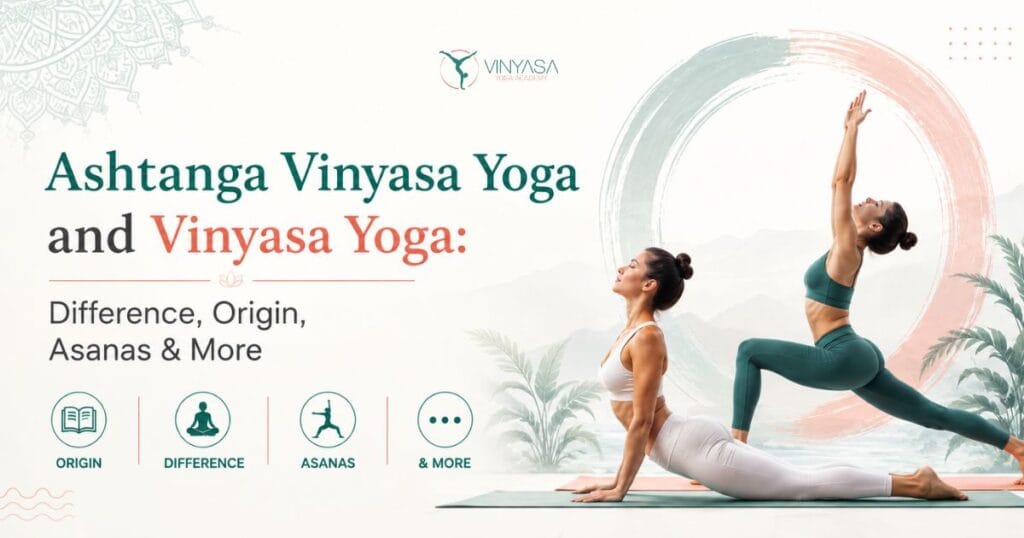
Table of Contents
- Quick Summary
- Where Did Ashtanga Yoga and Vinyasa Yoga Originate From?
- What Are the 8 Limbs of Ashtanga Yoga?
- What Is Ashtanga Vinyasa Yoga Specifically?
- Ashtanga Yoga Core
- How many asanas are there in Ashtanga yoga?
- What Is Vinyasa Yoga Specifically?
- Power Vinyasa Yoga
- Ashtanga Vinyasa Yoga vs Vinyasa Yoga: The Key, Real Differences
- Is Vinyasa yoga good for weight loss?
- Can Ashtanga yoga build muscle?
- Ashtanga Vinyasa vs Vinyasa Flow: Which One Is Best For You?
- How to Do Ashtanga Yoga at Home?
- Ashtanga Yoga in Rishikesh: Why It Matters Where You Learn
- Winding Up
- Frequently Asked Questions
- What is the difference between Ashtanga yoga and Vinyasa yoga in one sentence?
- Who is the founder of Ashtanga Vinyasa Yoga?
- Is Ashtanga yoga suitable for beginners?
- What is Samadhi in Ashtanga yoga?
- How many steps are there in the Ashtanga Yoga Surya Namaskar sequence?
- What is the difference between power yoga and Vinyasa yoga?
- Can you do Ashtanga yoga on your period?
Ashtanga builds the vessel, Vinyasa explores the fluid energy within it. Do not see them as opposites but as two sides of the same breathing ritual.
– Guru Yogi Vishnu Panigrahi
Most people who walk into their first yoga class don’t really know the difference between Ashtanga Vinyasa yoga and Vinyasa yoga. They just know it involves some postures, breathwork, and a mat.
Then someone says, “That’s what a Vinyasa class is.” Or, “Have you done Ashtanga yet?”
And suddenly there’s a new question. What are these? Are they the same? Is Ashtanga the parent and Vinyasa the derived version?
The full answer is more compelling than most practitioners make it sound.
Quick Summary
Both Ashtanga Vinyasa Yoga and Vinyasa Yoga link breath with movement. Both are active, physically engaging, and deeply rooted in the same ancient tradition. But they are not the same practice. Ashtanga yoga challenges you to find freedom within a strict framework. You meet the same sequence of poses every time you step on the mat. On the flip side, Vinyasa is your creative canvas. It takes that same connection of breath and movement but gives it a modern, fluid twist, bringing a completely fresh sequence to every single class.
Here, we break down exactly where the two differ—in structure, philosophy, sequence, intensity, and who each one is truly built for.
Where Did Ashtanga Yoga and Vinyasa Yoga Originate From?
To help you understand the difference between Ashtanga and Vinyasa yoga, we have to go back to a man named Sri T. Krishnamacharya, referred to as the father of modern yoga. Teaching in Mysore in the early 20th century, Krishnamacharya developed a system of dynamic, breath-linked movement that became the foundation for both Ashtanga Vinyasa and modern Vinyasa flow yoga.
One of his students, K. Pattabhi Jois, took that system, structured it into fixed sequences, and called it Ashtanga Vinyasa Yoga. He began teaching it formally in Mysore around 1948. His discovery is the practice most people refer to when they say “Ashtanga.”
The word ‘Ashtanga’ itself comes from Sanskrit: ‘Ashta’ means eight, and ‘Anga’ means limbs. It is a reference to the eight limbs of Ashtanga yoga described by the sage Patanjali in the Yoga Sutras, which is a complete philosophical map for living, not just for moving your body.
Vinyasa flow yoga, on the other hand, evolved more openly. Other teachers trained by Krishnamacharya (and teachers trained by those teachers) took the breath-movement principle and applied it without the fixed sequences. Result? Every class became a fresh creation, shaped by the teacher’s intention for that day.
So, to put it simply, Ashtanga Vinyasa yoga is the systematic parent. Vinyasa flow yoga is the more creative, adaptable child.
What Are the 8 Limbs of Ashtanga Yoga?
Patanjali’s Ashtanga yoga, or the philosophical system, is a complete path toward a settled, awakened mind. The eight limbs are not steps you tick off. They’re more like eight points of conversation you have with yourself.
| Limb | Sanskrit | What Is It About? |
| Ethical restraints | Yama | How you treat others: non-violence, truthfulness, non-stealing |
| Personal observances | Niyama | How you treat yourself: cleanliness, contentment, self-study |
| Physical postures | Asana | What most people think of as “yoga” |
| Breath regulation | Pranayama | Using breath as a tool for the mind |
| Withdrawal of senses | Pratyahara | Turning attention inward, away from distraction |
| Concentration | Dharana | Holding the mind on a single point |
| Meditation | Dhyana | Unbroken, effortless awareness |
| Union | Samadhi | A state of complete stillness and absorption |
Most of what we call yoga today (poses on a mat) is the third limb alone. The other seven surround it. Ashtanga Vinyasa Yoga, as a physical practice, is intended with this in mind. The structure, the breath, the drishti (gaze), and the bandhas (internal locks), all of it is meant to eventually quieten the mind into that eighth limb, samadhi.
What Is Ashtanga Vinyasa Yoga Specifically?
Ashtanga Vinyasa Yoga is a set physical practice that involves the same sequence every time and the same poses in the same order, with no improvisation.
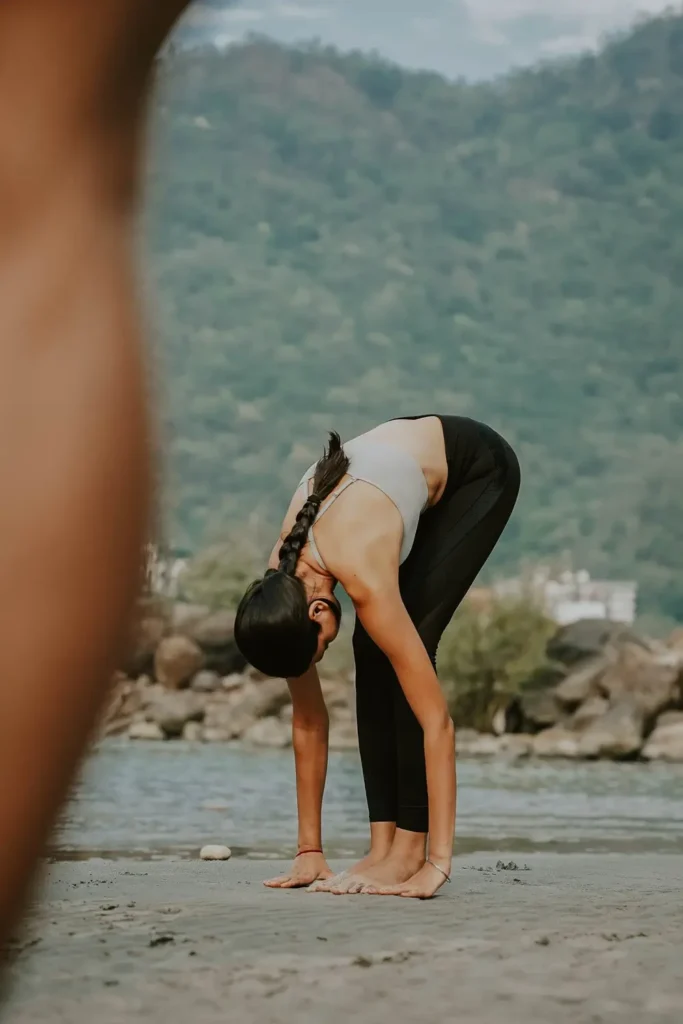
The practice is divided into series. The Primary Series (Yoga Chikitsa, meaning “yoga therapy”) is where every student starts. It has a fixed set of ashtanga yoga asanas, like forward folds, hip openers, seated postures, and inversions. These are always practiced in the same sequence, always beginning with Ashtanga Yoga Surya Namaskar (Sun Salutations A and B).
Only when a student has mastered the Primary Series do they progress to the Intermediate Series (Nadi Shodhana) and then to the Advanced Series.
Ashtanga Yoga Core
When dissected, Ashtanga Vinyasa yoga is built around three core functions that work in sync:
- Vinyasa, or the linking of each breath with a specific movement
- Bandha, or internal energy locks (primarily Mula Bandha and Uddiyana Bandha), that create internal stability and heat
- Drishti, or a gaze point fixed during each pose, to focus and concentrate
Traditionally, Ashtanga yoga is taught in the Mysore style (till today). Students come to the shala and practice their own sequence at their own pace, and a teacher is present to offer individual adjustments and advancements to students pose by pose. It’s remarkably personal for a group setting.
How many asanas are there in Ashtanga yoga?
The Primary Series of Ashtanga Yoga contains approximately 41 main poses, though the count varies depending on how you count vinyasa transitions. The full Ashtanga system across all series contains several hundred postures.
What Is Vinyasa Yoga Specifically?
Vinyasa yoga maintains the core principle of one breath, one movement, but removes the fixed sequence. The teacher designs each class around a theme, a peak pose, or an area of focus.
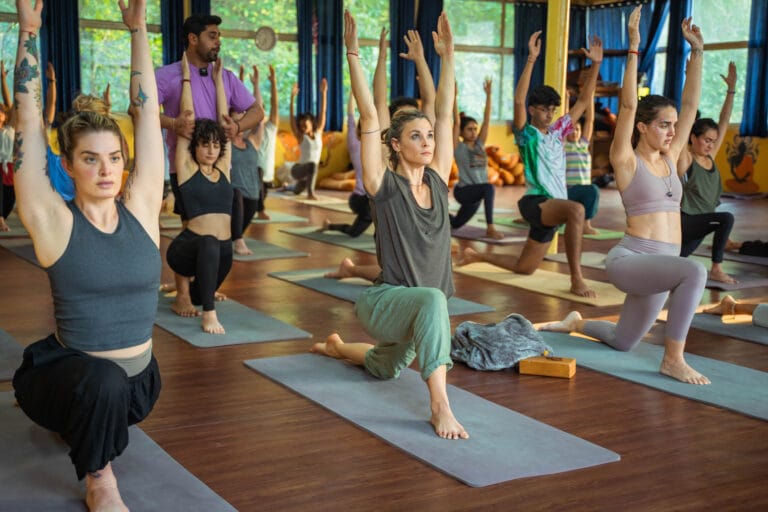
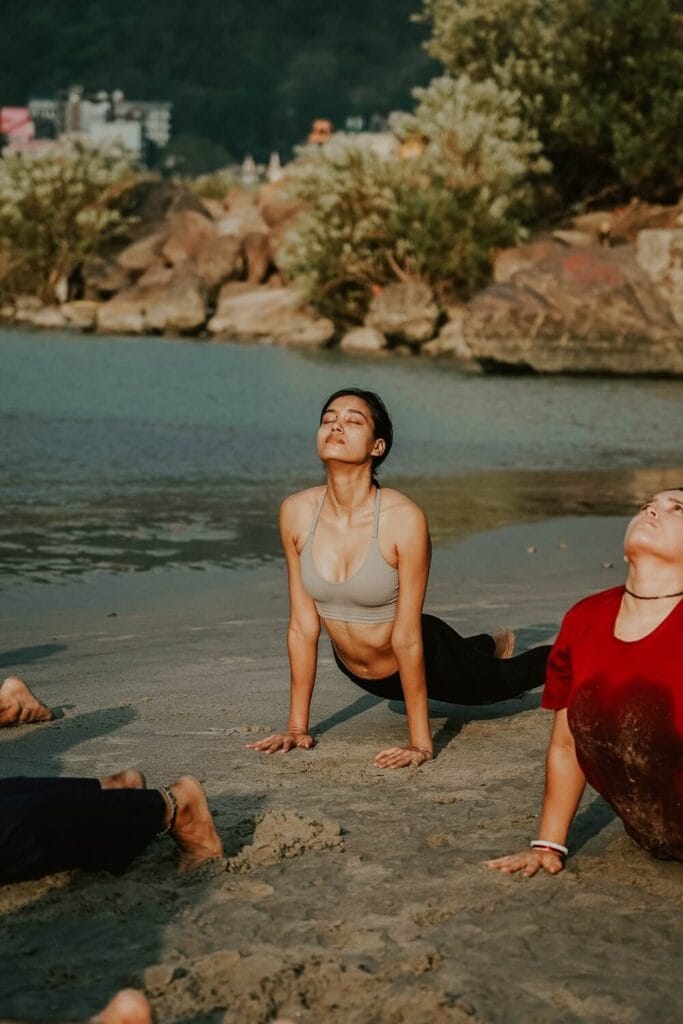
Sun Salutations still open the practice, like in Ashtanga. The core Vinyasa transition (Plank to Chaturanga to Upward Dog to Downward Dog) threads through the class. But everything between these root asanas is the teacher’s creation.
The creative diversity in Vinyasa flow yoga is wide and enormous, and it’s easier to do as well (than Ashtanga). Teachers offer more modifications, the pace varies, and the absence of a fixed sequence means a beginner and an experienced practitioner can practice in the same class without being left behind or held back.
Power Vinyasa Yoga
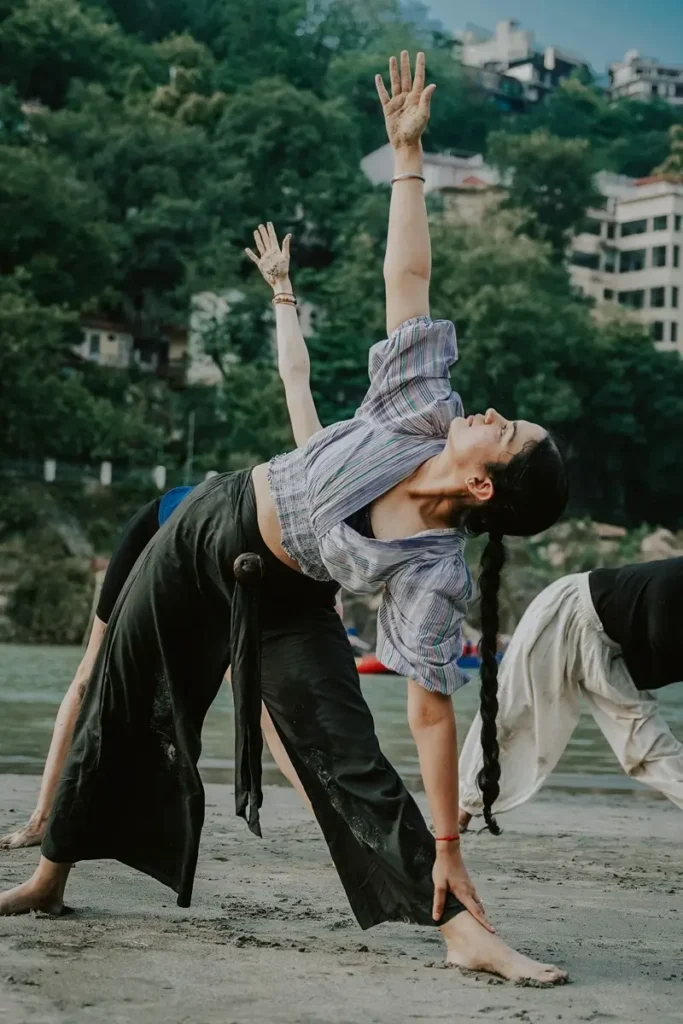
Power yoga is a more intense variation of Vinyasa yoga that emphasises strength, athletic conditioning, and a higher aerobic challenge. It sits closer to Ashtanga in intensity while upholding the creative, teacher-led format of Vinyasa.
Ashtanga Vinyasa Yoga vs Vinyasa Yoga: The Key, Real Differences
| What You’re Comparing | Ashtanga Vinyasa Yoga | Vinyasa Yoga |
| Sequence | Fixed; same poses every time | Changes with every class |
| Tradition | Highly traditional, lineage-based | Contemporary, teacher-led |
| Pace | Set rhythm, Ocean Breath | Varies by class and teacher |
| Intensity | High physical demands | Varies from easy to intense |
| Best for beginners? | Harder, steep learning curve | More accessible, easier to modify |
| Internal tools used | Bandha + Dristi + Vinyasa | Primarily breath and movement |
| Teaching style | Mysore-style or led class | Teacher-led, instructional |
| Creativity | None (sequence never changes) | High, varies every session |
| Philosophical depth | Directly connected to Patanjali’s 8 limbs | Draws on the tradition, less structured |
| Weight loss? | Highly effective | Yes, especially power Vinyasa |
Is Vinyasa yoga good for weight loss?
Absolutely, yes. A 60-minute Vinyasa flow class burns roughly 300-600 calories, depending on body weight and intensity. Over time, the combination of strength-building, increased metabolic rate, and cortisol reduction supports healthy, sustained weight management.
Can Ashtanga yoga build muscle?
Yes, the Primary Series is one of the most physically demanding practices in yoga. Chaturanga alone, when done dozens of times per class, builds durable upper body and core strength over time. Ashtanga yoga, paired with standing sequences, deep forward folds, and seated work, develops the whole body holistically.
Ashtanga Vinyasa vs Vinyasa Flow: Which One Is Best For You?
This choice depends on one thing more than anything else: what do you actually want from your practice?
Choose Ashtanga Vinyasa Yoga if:
- You thrive on structure, discipline, and measurable progress
- You want to go deep into one system and really master it
- You’re drawn to the traditional roots of yoga and its philosophical framework
- You have an established, consistent practice and want more of a challenge
- You prefer knowing exactly what to expect every time you step on the mat
Choose Vinyasa Yoga if:
- You like variety and don’t want every class to feel the same
- You’re newer to yoga and want a welcoming entry point
- You want the physical benefits of a dynamic practice without a steep learning curve
- You enjoy being guided by a teacher rather than memorising a sequence
- You want to explore different areas of the body across different classes
There’s no better one here. Many people who practice Vinyasa yoga for years eventually become curious about Ashtanga yoga. Likewise, many Ashtanga practitioners find Vinyasa flow yoga a rewarding way to stay playful in their practice outside of their main sessions.
How to Do Ashtanga Yoga at Home?
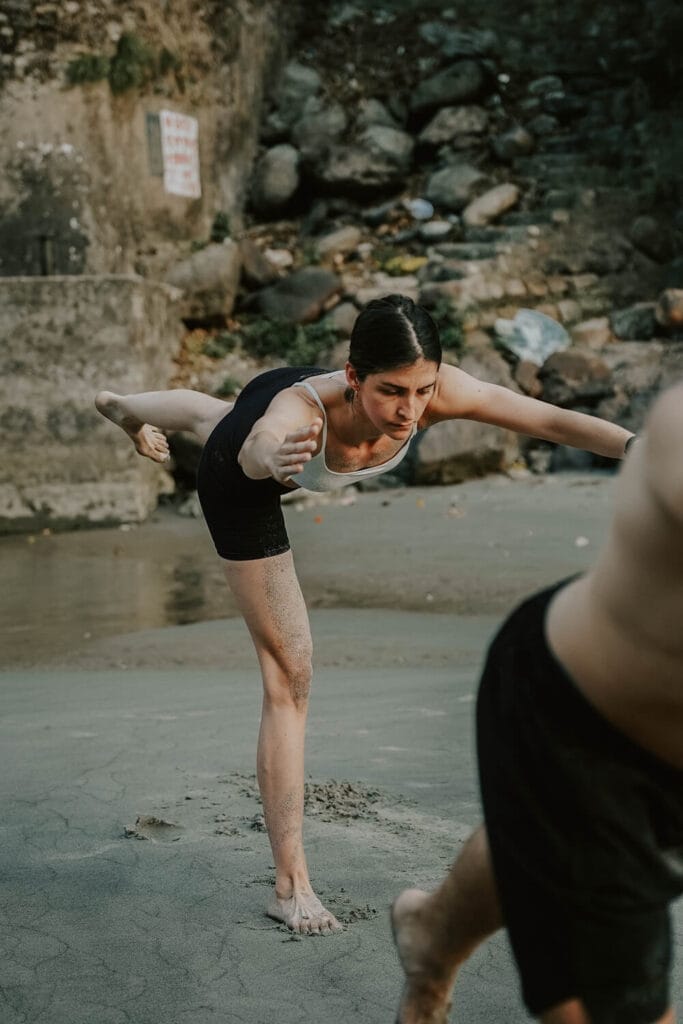
Ashtanga yoga is traditionally a self-practice. The Mysore method was designed specifically for students to practice independently once they’ve learnt their sequence from a qualified teacher. Many committed practitioners, those with years of practice, do their Primary Series at home every morning.
The keyword is ‘once they’ve learned it from a teacher.’ The first time through the sequence, you need someone experienced to watch, judge, and review your alignment; adjust your posture, and decide when you’re ready to progress to the next pose. Trying to learn Ashtanga at home from YouTube from scratch can lead to injury and frustration.
For Vinyasa yoga at home, the barrier is lower. Online 200 hour yoga teacher training are widely available online, and the adaptable nature of the practice means you can modify the intensity based on how you feel that day.
Ashtanga Yoga in Rishikesh: Why It Matters Where You Learn
Rishikesh is not just a popular yoga destination. It’s the living centre of India’s yogic tradition. The place where many of these lineages were preserved, studied, and passed on.
Practising or training in Ashtanga yoga in Rishikesh gives you direct access to teachers whose knowledge comes not from a training manual but from years of unbroken practice within these traditions.
You feel the difference. The experience and adjustments are different. The philosophy conversations are different. The environment itself, the Himalayan air, the Ganga, and the early-morning stillness, all shape your practice.
At Vinyasa Yoga Academy, our yoga teacher training courses in Rishikesh include both Ashtanga Vinyasa and Vinyasa flow methodology. Students understand not just how to do the poses, but where they originate from, why the sequence is built the way it is, and how both systems fit into the larger world of yoga philosophy.
Winding Up
Ultimately, choosing between Ashtanga Vinyasa and Vinyasa yoga isn’t about deciding which style is better, but about deciding what your body and mind need right now.
If you crave routine, tradition, and a clear metric for your progress, Ashtanga is calling your name. If you love variety, musical playlists, and a practice that changes with your mood, Vinyasa yoga may be your perfect match. Whichever path you choose, the magic happens simply because you show up for yourself.
Frequently Asked Questions
What is the difference between Ashtanga yoga and Vinyasa yoga in one sentence?
Ashtanga Vinyasa Yoga follows a fixed, set sequence of postures practiced the same way every time, in every class, while Vinyasa Yoga uses the same breath-movement principle but with a different sequence in every class. Ashtanga is static; Vinyasa is dynamic.
Who is the founder of Ashtanga Vinyasa Yoga?
K. Pattabhi Jois is considered the founder of Ashtanga Vinyasa Yoga as a physical system. He developed and organised the practice in Mysore, India, beginning around 1948, building on the foundational teachings of his guru, Sri T. Krishnamacharya.
Is Ashtanga yoga suitable for beginners?
Ashtanga Vinyasa Yoga has a real learning curve. It’s generally recommended to build a foundation through Hatha or Vinyasa yoga first and then approach Ashtanga with a qualified teacher. The Primary Series is physically demanding and follows a strict sequence, which can feel overwhelming without prior experience.
What is Samadhi in Ashtanga yoga?
Samadhi is the eighth and final limb of Patanjali’s Ashtanga yoga. It describes a state of complete absorption. In yogic tradition, it is the experience of pure, undivided awareness. The physical practice of Ashtanga Vinyasa is designed (over years of sincere practice) to prepare the body and mind for this state.
How many steps are there in the Ashtanga Yoga Surya Namaskar sequence?
Surya Namaskar A in Ashtanga yoga has 9 vinyasas (breath-linked movements). Surya Namaskar B has 17 vinyasas. Every movement in both sequences is assigned a specific breath (inhale or exhale), forming one of the defining characteristics of the Ashtanga yoga system.
What is the difference between power yoga and Vinyasa yoga?
Power yoga is a variation of Vinyasa yoga. It is more fitness-oriented, higher in intensity, and with a stronger emphasis on strength and cardiovascular work. All power yoga is Vinyasa yoga, but not all Vinyasa yoga is power yoga. Standard Vinyasa flow can range from mild and restorative to vigorous and athletic, depending on the teacher and the class.
Can you do Ashtanga yoga on your period?
Traditional Ashtanga practice recommends resting the first few days of menstruation, called “moon days” in the Ashtanga tradition. The body is in a state of natural downward-releasing energy during this time, and intense efforts work against the process. Most teachers today leave the decision to the individual student, but the traditional guidance is to rest or practice a light, supported version during the first one to three days.