








8 Yoga Poses for Bloating and Gas Relief
Table of Contents
- What Actually Causes Bloating and Gas?
- 8 Yoga Poses for Bloating and Gas Relief
- 1. Pawanmuktasana, also known as Wind-Relieving Pose
- 2. Balasana, also known as Child’s Pose
- 3. Paschimottanasana, also known as Seated Forward Bend
- 4. Malasana, also known as Garland Pose (Deep Squat)
- 5. Adho Mukha Svanasana, also known as Downward-Facing Dog
- 6. Supta Matsyendrasana, also known as Supine Spinal Twist
- 7. Setu Bandhasana, also known as Bridge Pose
- 8. Viparita Karani, also known as Legs-Up-the-Wall Pose
- A Simple Daily Sequence (Just 10–15 Minutes)
- The Gut-Brain Connection: Why Yoga Works on a Deeper Level
- Want to Go Deeper? Learn from Certified Yoga Teachers in Rishikesh
- Frequently Asked Questions
- Q1. Which yoga asana is best for stomach bloating?
- Q2.How quickly does yoga relieve bloating?
- Q3. Is it okay to do yoga poses for gas right after eating?
- Q4. Are these poses safe for everyone?
Bloating is one of those things that sounds minor until you’re the one dealing with it. That tight, heavy feeling after a meal, the uncomfortable pressure that builds through the day, the way it quietly affects your mood, your energy, your willingness to step outside, it adds up. And if it happens often enough, it stops feeling like an occasional nuisance and starts feeling like just… your normal.
It isn’t your normal. And you don’t always need medicine to fix it.
According to the American College of Gastroenterology, nearly 30% of adults experience bloating every single week. Research published in the Journal of Ayurveda and Integrative Medicine found that 75% of participants who practiced targeted yoga regularly reported significant relief from bloating within 4 to 6 weeks. Even 10 minutes a day appears to make a measurable difference.
This guide covers eight yoga poses for bloating and gas that are rooted in both traditional practice and modern understanding of how the digestive system works, along with practical guidance on when to practice them, how to sequence them, and why they work the way they do.
What Actually Causes Bloating and Gas?
Gas in the digestive system is completely normal. Your body produces it constantly as a byproduct of digestion. The problem is when it gets trapped, when the natural movement of the intestines slows down, when muscles tighten due to stress, or when certain foods ferment longer than they should in the colon.
Common triggers include beans and legumes, cruciferous vegetables like cauliflower and cabbage, carbonated drinks, eating too quickly, swallowing air, and, often underestimated, chronic stress and shallow breathing. For people with IBS, constipation, or food intolerances, the issue is compounded further. Studies from the Gut Journal (2021) show that 66% of IBS patients rank bloating as their most disruptive daily symptom.
What yoga does that most other remedies don’t: it addresses the mechanical, muscular, and nervous system dimensions of bloating at the same time. Specific poses physically compress and release the abdominal organs. Deep breathing stimulates the vagus nerve, shifting the body from stress mode into what physiologists call “rest and digest.” The result is faster transit of gas, reduced inflammation, and a calmer gut environment overall.
8 Yoga Poses for Bloating and Gas Relief
Now we will discuss 8 yoga poses that help reduce gas and bloating.
1. Pawanmuktasana, also known as Wind-Relieving Pose
Best for: Trapped gas, lower belly pressure
If there is one yoga asana for stomach bloating that belongs on this list above all others, it is Pawanmuktasana. The name translates directly to “wind-releasing posture,” and it does exactly what it says.
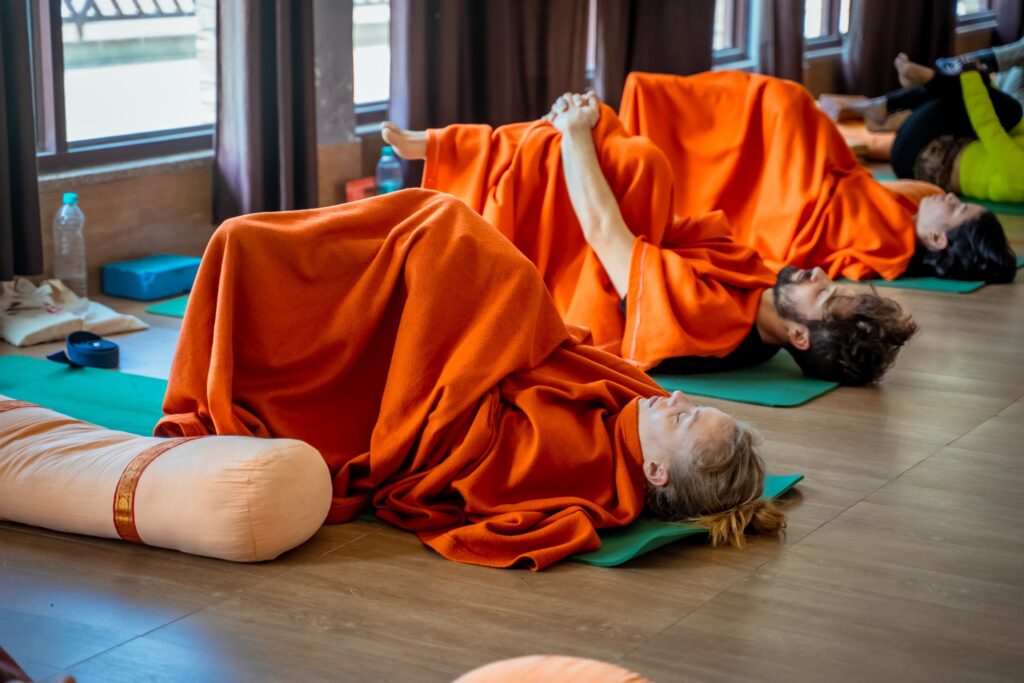
Lie on your back with legs extended. Exhale and draw both knees toward your chest, wrapping your arms around your shins. Tuck your chin slightly. Stay here for 5–8 slow breaths. For extra movement, rock gently side to side, which creates a mild massage along the ascending and descending colon. Release on an inhale, returning legs to the floor.

The abdominal compression in this pose physically pushes gas pockets through the intestinal tract. It is direct, immediate, and effective. Most people feel something shift within a few minutes of holding it.
2. Balasana, also known as Child’s Pose
Best for: Upper belly bloating, stress-related digestive tension
Child’s Pose works on two levels. Physically, the pressure of the thighs against the abdomen creates a steady, gentle compression that encourages peristalsis — the rhythmic muscular contractions that move gas and digested matter through the gut. Neurologically, the posture activates the parasympathetic nervous system, which is responsible for digestive function.
Start on your hands and knees. Sit your hips back toward your heels, letting your knees fall slightly wider than your hips. Fold forward until your forehead rests on the mat. Extend your arms forward or lay them alongside your body with palms facing up. Breathe deeply into your belly, really feel the abdomen expand downward against the thighs on each inhale. Stay for 1–2 minutes.
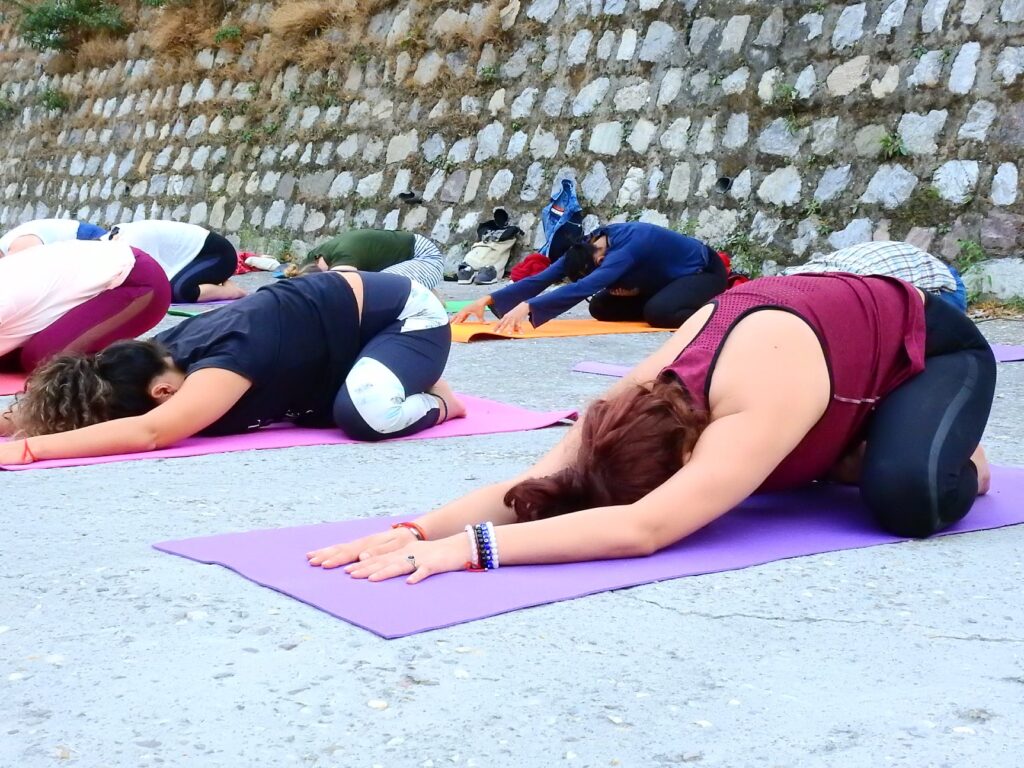
This is a pose worth returning to throughout the day. Even 60 seconds of Child’s Pose after a heavy meal can make a notable difference.
3. Paschimottanasana, also known as Seated Forward Bend
Best for: Constipation with bloating, sluggish digestion
For people dealing with both yoga for constipation and bloating together, Paschimottanasana is particularly useful. The forward fold compresses the entire length of the abdomen, from the stomach down to the lower intestines, while also stretching the lower back, which frequently tightens when the digestive system is under stress.
Sit in Dandasana (legs stretched forward, back tall). Inhale to lengthen the spine. As you exhale, fold from the hips, not the waist, reaching toward your feet or shins. Let the abdomen come toward the thighs. Do not force the stretch. The compression, not the flexibility, is what matters here. Hold for 30–60 seconds, breathing normally. Inhale to come back up.
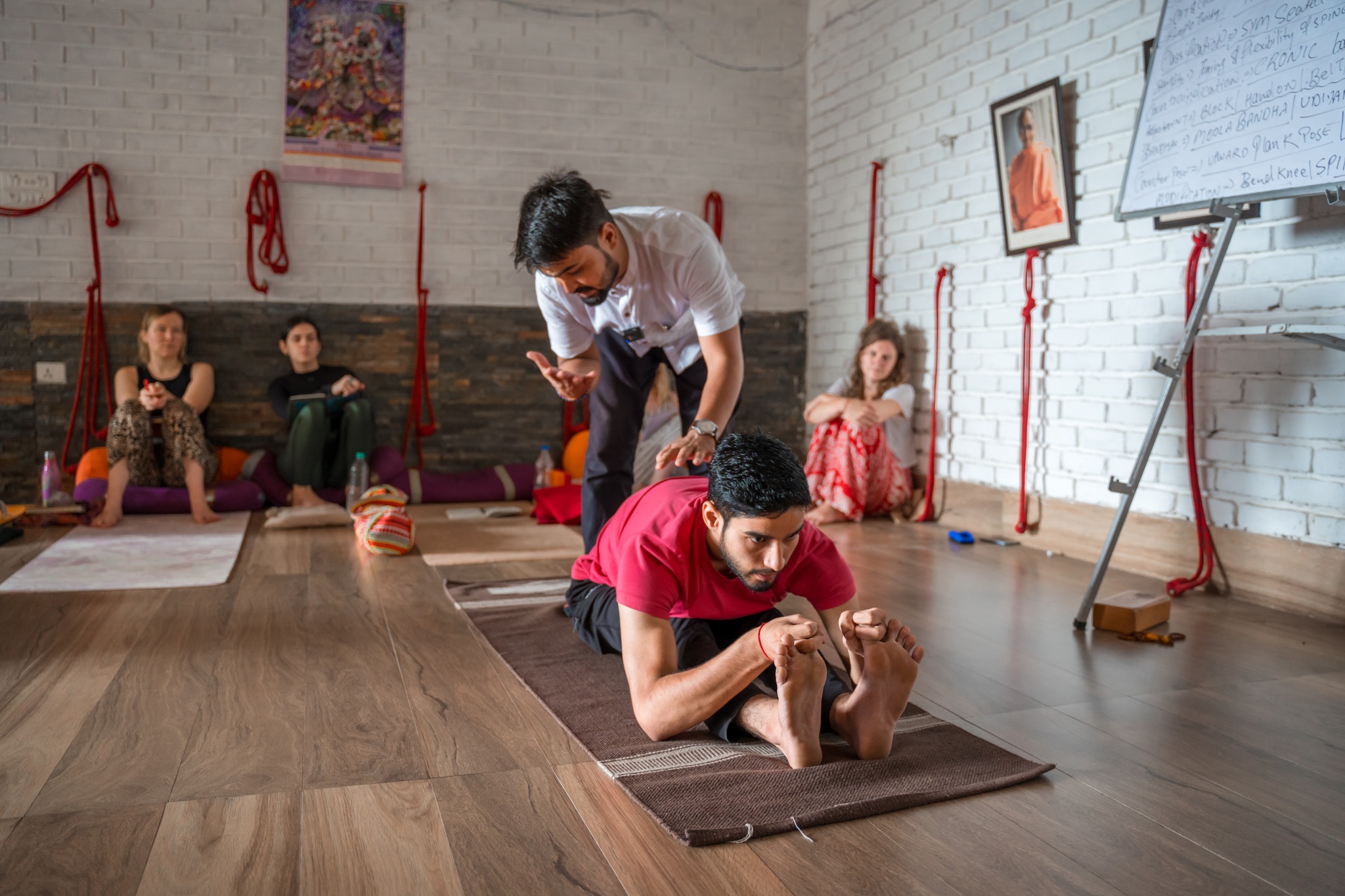
This pose also gently stimulates the liver and kidneys, which play a supporting role in digestive health.
4. Malasana, also known as Garland Pose (Deep Squat)
Best for: Gas problem, constipation, pelvic floor tension
Malasana is one of the most anatomically logical yoga poses for a gas problem. A deep squat naturally relaxes the puborectalis muscle, the muscle that keeps the rectum closed, making it significantly easier for trapped gas and stool to pass. It is the position the human body was designed to use for elimination, and most people simply don’t use it anymore.
Stand with feet slightly wider than hip-width, toes turned out at a comfortable angle. Bend the knees and lower into a full squat with heels flat on the floor. If your heels lift, place a folded blanket or rolled mat beneath them. Bring your hands to a prayer position at your chest and use your elbows to gently press the inner thighs outward. Breathe steadily for 5–10 breaths.
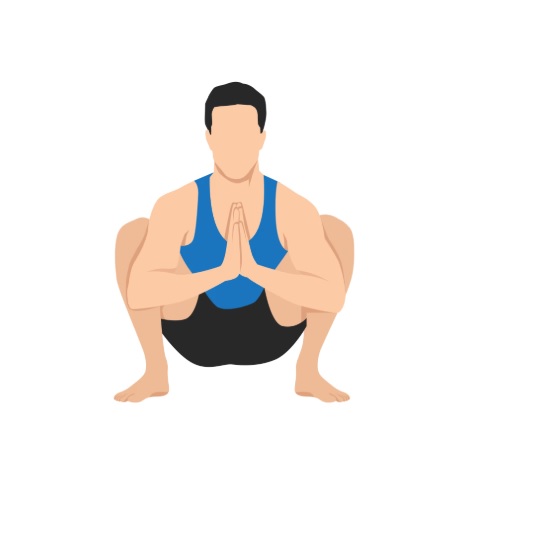
Beyond gas relief, this pose improves circulation in the pelvic region and is particularly beneficial for women managing PCOS or menstrual discomfort.
5. Adho Mukha Svanasana, also known as Downward-Facing Dog
Best for: Full digestive reset, general bloating, and heaviness
Downward Dog is rarely the first pose that comes to mind for digestive issues, but it should probably be mentioned more. When you invert the torso — hips above the heart, head below — the orientation of the abdominal organs shifts. Gas that is sitting in one part of the intestine is encouraged to move. Circulation to the digestive organs increases. The entire length of the spine decompresses, releasing the tension that often constricts the gut.
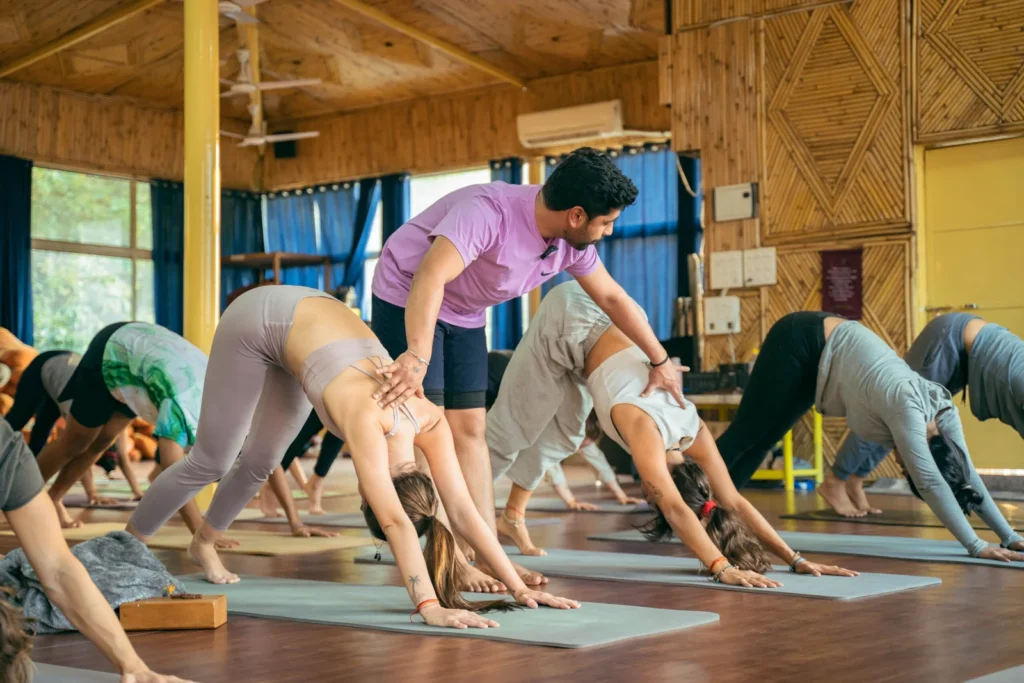
Begin on all fours. Tuck your toes, press firmly into your palms, fingers spread wide, and lift the hips up and back into an inverted V shape. Keep your spine long and let the head hang freely. Hold for 5–8 breaths, then lower gently. This is an excellent pose to include in a morning yoga for bloating routine, before you have eaten anything.
6. Supta Matsyendrasana, also known as Supine Spinal Twist
Best for: Moving gas through the colon, IBS-related bloating
This pose works with the anatomy of the digestive system rather than just against the symptom. The large intestine travels up the right side of the abdomen, across the top, and down the left side. Twisting to the right first, then to the left, follows this natural pathway, which is why yoga teachers often say to “wring out” the digestive system with this pose.
Lie on your back. Draw your right knee to your chest, then guide it across to the left as you extend your right arm out to the side. Look over your right shoulder. Let gravity do the work, no forcing. Hold for 30–45 seconds, then switch sides. Always right first, then left.

It is a gentle twist, suitable for most people, and one of the best yoga poses for gas that also relieves lower back tension at the same time.
7. Setu Bandhasana, also known as Bridge Pose
Best for: Bloating tied to stress, lower back tension, poor core circulation
Bridge Pose does not look like a digestive remedy. But for people whose bloating is stress-driven or linked to a tight, tense lower back, it is quietly one of the most effective options in this list.
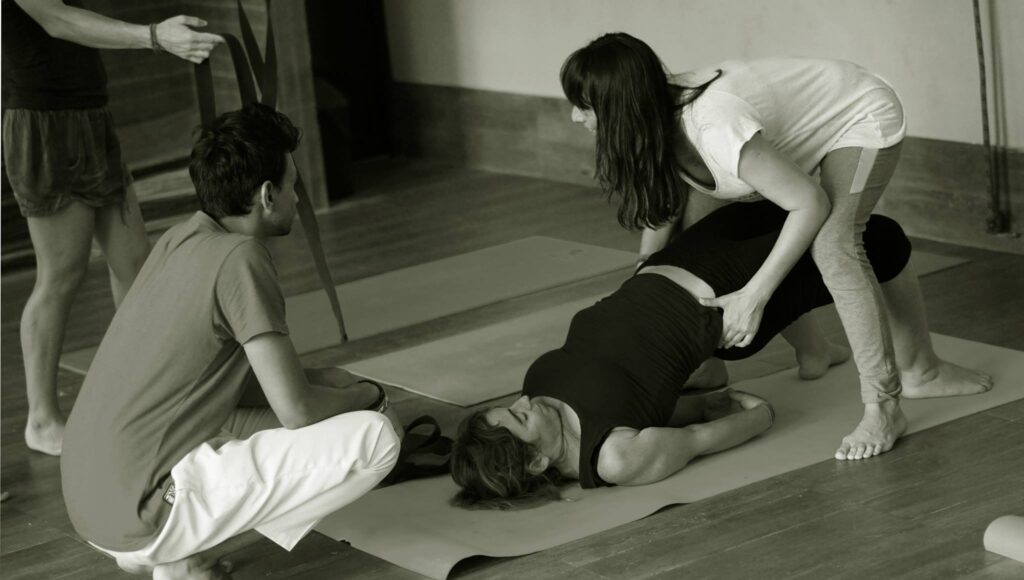
Lie on your back, knees bent, feet flat on the floor, hip-distance apart. Press into your feet and lift the hips toward the ceiling, engaging the glutes lightly. Hold for 5 breaths, lower slowly, and repeat 3 times. The movement creates an internal abdominal massage from below while also activating the vagus nerve — the same nerve that governs gut motility and the body’s calm-down response.
If you practice this pose consistently and notice that your bloating improves, the lower back and nervous system were probably more involved in the problem than the food was.
8. Viparita Karani, also known as Legs-Up-the-Wall Pose
Best for: Evening bloating, post-meal discomfort, fatigue with gas
End every bloating sequence with this one. It requires nothing more than a wall and a few minutes of stillness.
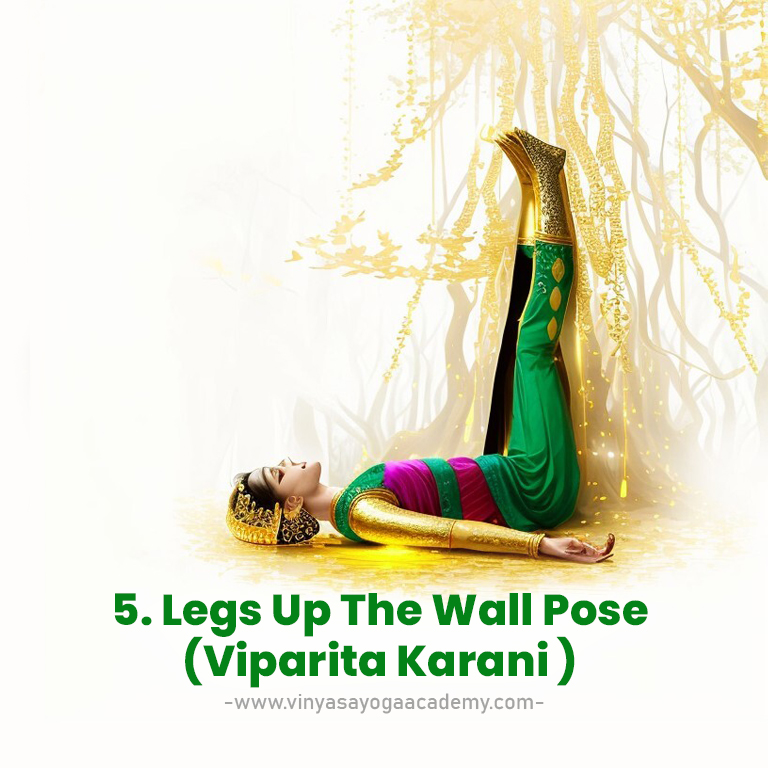
Lie on your back close to a wall and swing your legs up so they rest against it. Let your arms relax beside you. Stay here for 5–10 minutes. The gentle reversal of gravitational pressure encourages gas to move through the intestines, reduces abdominal inflammation, and activates deep parasympathetic rest. Viparita Karani is effective for bloating that accumulates throughout the day and peaks in the evening.
It also doubles as one of the most effective wind-down postures for sleep, which matters, as poor sleep is a documented contributor to gut dysregulation.
A Simple Daily Sequence (Just 10–15 Minutes)
You do not need a full yoga class to see results. A short, consistent daily practice outperforms occasional longer sessions for digestive issues.
- Morning (empty stomach): Pawanmuktasana → Paschimottanasana → Malasana → Downward Dog
- Evening (2+ hours after dinner): Supine Spinal Twist (right then left) → Bridge Pose → Legs-Up-the-Wall
Practice at least 30 minutes after a light meal, or 2 hours after a heavy one. Over 4–6 weeks of daily practice, most people notice a meaningful reduction in how often bloating occurs and how severe it is when it does.
The Gut-Brain Connection: Why Yoga Works on a Deeper Level
Chronic bloating is rarely just about food. The gut contains over 100 million nerve cells and is in constant two-way communication with the brain via the vagus nerve. When you are stressed, anxious, or breathing shallowly, even without being consciously aware of it, your digestive system receives that signal and slows down. Transit time increases. Gas accumulates. The abdominal muscles tighten around the intestines.
Yoga interrupts this cycle. The slow, diaphragmatic breathing that runs through every pose directly stimulates the vagus nerve and signals safety to the nervous system. The body shifts from sympathetic dominance (fight-or-flight) to parasympathetic dominance (rest-and-digest). Gut motility resumes. Muscles soften. The conditions that were keeping the gas trapped begin to dissolve.
This is not abstract — it is measurable physiology. It is also why people who practice yoga regularly for other reasons often find, almost as a side effect, that their digestion simply gets better.
Also Read: Yoga Poses for Anxiety Relief
Want to Go Deeper? Learn from Certified Yoga Teachers in Rishikesh
Understanding how yoga affects the digestive system is one thing. Practicing it correctly, with the right alignment, breath control, and sequencing, is another. If you have been trying poses on your own without consistent results, the missing piece is often instruction — not effort.
The 200 Hour Yoga Teacher Training in Rishikesh at Vinyasa Yoga Academy covers yoga anatomy and physiology in structured detail, including how specific asanas interact with the digestive system, the nervous system, and the body’s organ functions. The curriculum is built on classical Hatha and Vinyasa foundations and is certified by Yoga Alliance. Meals, accommodation, and daily practice are included in the program, which runs in monthly batches throughout the year.
Many students come to the training to deepen their personal practice — not necessarily to teach. The understanding of the body you develop over 200 hours changes how you practice yoga for the rest of your life, including how you use it to manage everyday health issues like bloating, stress, and fatigue.
If Rishikesh is on your radar, it is worth looking into. Vinyasa Yoga Academy has trained students from over 50 countries since its founding, and the setting itself — in the foothills of the Himalayas, along the Ganges — is genuinely unlike anywhere else to study.
Frequently Asked Questions
Q1. Which yoga asana is best for stomach bloating?
Ans: Pawanmuktasana (Wind-Relieving Pose) is the most directly targeted yoga asana for stomach bloating. It applies abdominal compression that physically moves trapped gas through the intestines. For chronic or stress-related bloating, pairing it with Child’s Pose and Supine Spinal Twist provides more complete relief.
Q2.How quickly does yoga relieve bloating?
Ans: Some poses, particularly Pawanmuktasana and Malasana, can bring noticeable relief within minutes. For people with chronic bloating, consistent daily practice over 4–6 weeks tends to produce lasting, cumulative improvement rather than just temporary relief.
Q3. Is it okay to do yoga poses for gas right after eating?
Ans: Gentle poses like Child’s Pose and Legs-Up-the-Wall can be done 30–45 minutes after a light meal. Active compression poses — Pawanmuktasana, Malasana, forward bends — are better practiced on an empty stomach or at least 2 hours after eating.
Q4. Are these poses safe for everyone?
Ans: Most of these yoga asanas for relieving gas are safe for healthy adults. People with hernias, recent abdominal surgery, or pregnancy should consult a doctor before beginning. Learning correct alignment from a qualified teacher also significantly reduces the risk of strain — particularly in forward bends and deep squats.
If your bloating is severe, persistent, or accompanied by symptoms like blood in stool, unexplained weight loss, or significant pain, please consult a qualified healthcare provider before relying solely on yoga as a remedy.
This article is for general information and is not medical advice. If you have a respiratory or heart condition, are pregnant, or are unsure whether these practices suit you, please speak to your doctor before beginning.