 +91-8755744872
 contact@vinyasayogaacademy.com




Most people come to yoga for one of three reasons. Some want to get stronger. Some want to stop feeling stiff. And some just want to stop feeling stressed all the time. The beautiful thing about yoga is that you don’t have to choose. A well-rounded yoga practice gives you all three. In this guide, we’ve broken down the best yoga asanas for strength, flexibility, and calm. We’ve kept the language simple and the instructions clear, so whether you’re completely new or coming back after a break, you’ll know exactly what to do.
Best Yoga Asanas for Building Strength
A lot of people think yoga is just stretching. That’s not true. Many yoga poses require you to hold your own body weight in challenging positions, which builds real, functional strength, especially in your core, legs, arms, and back. You don’t need a gym for this. Just a mat and consistency.
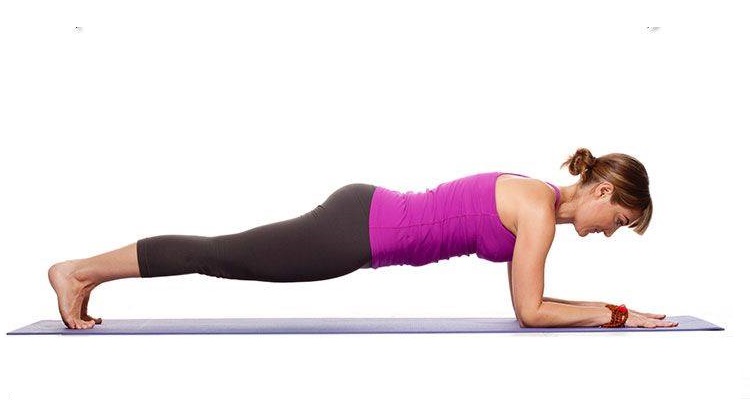
1. Plank Pose
The plank is one of the most effective full-body strength poses in yoga. It targets your core, shoulders, arms, and glutes all at once. It looks simple, but holding it properly is a real challenge.
How to Do It
- Come onto all fours with your wrists directly under your shoulders.
- Step both feet back until your body forms a straight line — head to heels.
- Engage your core and squeeze your glutes. Don’t let your hips sag or rise up.
- Hold for 20–60 seconds. Breathe steadily throughout.
- Beginners: Drop your knees to the mat to reduce wrist strain.
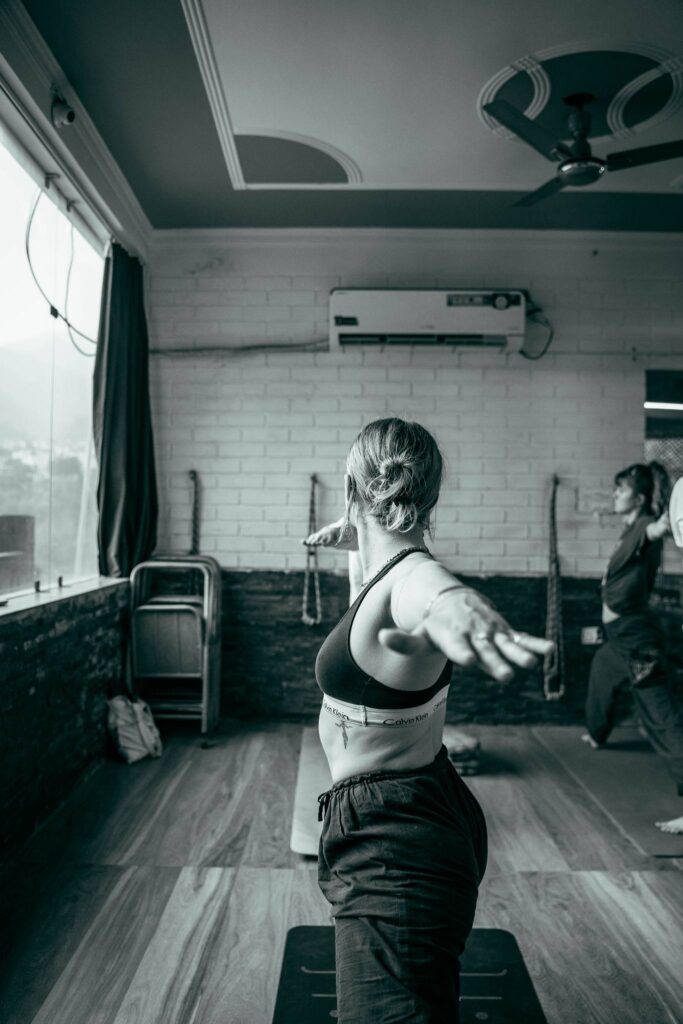
2. Warrior II
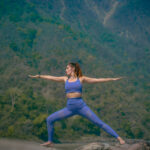
Warrior II is a classic standing pose that builds serious leg and hip strength. It also improves stamina and focus. Named after the fierce warrior Virabhadra from Hindu mythology, this pose teaches you to be both strong and stable.
How to Do It
- Stand with your feet about 3.5 to 4 feet apart.
- Turn your right foot out 90 degrees, and your left foot in slightly.
- Bend your right knee until it’s directly over your right ankle.
- Extend both arms out parallel to the floor and gaze over your right hand.
- Hold for 30–60 seconds. Repeat on the other side.
Also Read: Benefits Of Warrior Pose Veerabhadrasana
3. Boat Pose
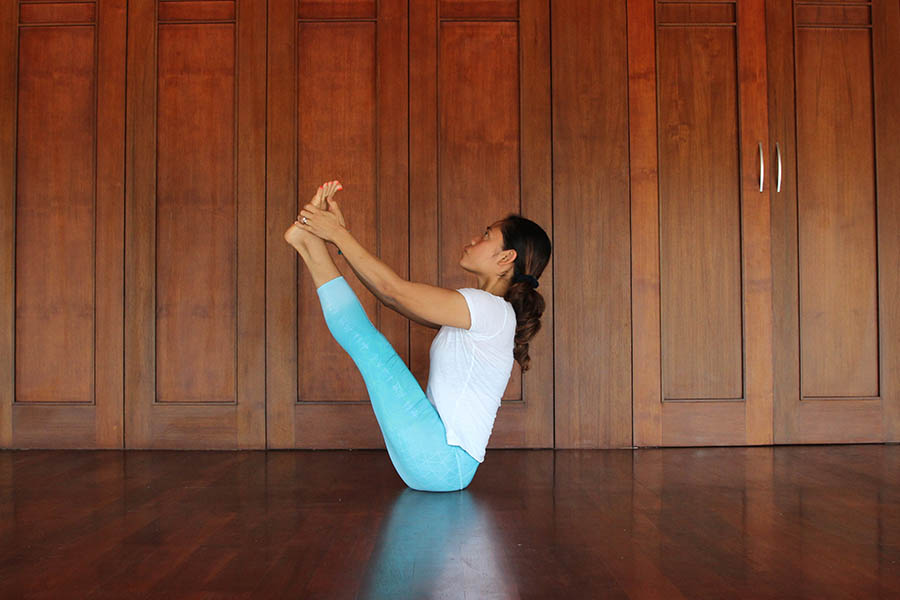
Boat Pose is a seated balance that fires up your deep core muscles. Unlike crunches, it engages your hip flexors and spinal muscles at the same time, making it one of the most efficient core-strengthening yoga poses.
How to Do It
- Sit on the mat with your knees bent and feet flat on the floor.
- Lean back slightly and lift both feet off the floor until your shins are parallel to the ground.
- Extend your arms forward, parallel to the floor, palms facing inward.
- If comfortable, straighten your legs to form a V-shape with your body.
- Hold for 5–10 breaths. Lower down and repeat 3 times.
4. Chair Pose
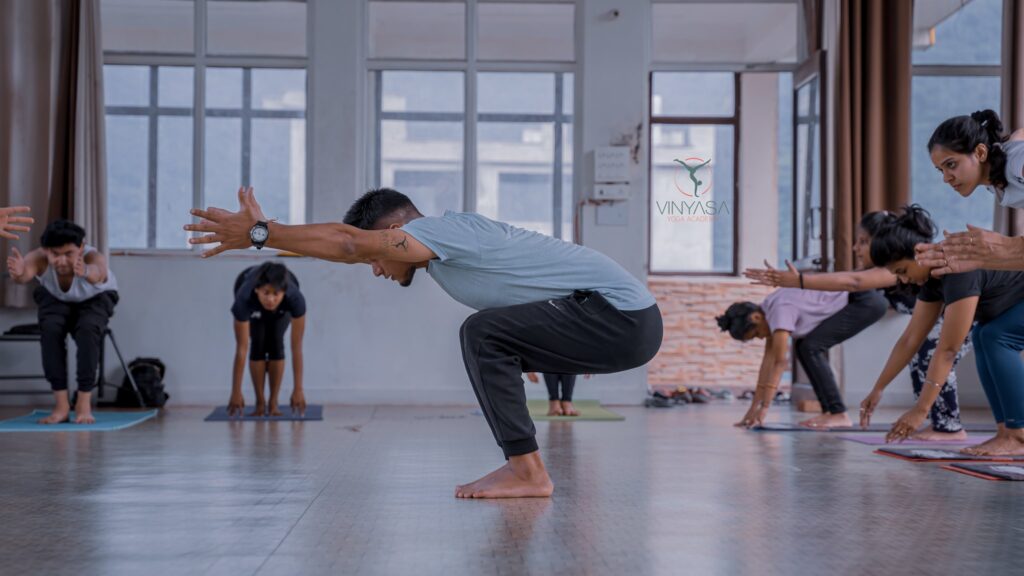
Chair Pose is basically a yoga squat — and it burns. It targets the quads, glutes, and lower back while also challenging your breathing and mental focus. It’s a pose that looks easy from the outside but challenges you deeply within seconds.
How to Do It
- Hold for 30–60 seconds. Breathe deeply and stay with it.
- Stand with feet together or hip-width apart.
- Inhale and raise your arms overhead, palms facing each other.
- Exhale and bend your knees as if sitting back into an imaginary chair.
- Keep your chest lifted and your weight in your heels.
Best Yoga Asanas for Improving Flexibility
Tight hamstrings, stiff hips, or a rigid back — yoga has a pose for every stubborn area of your body. The key to flexible work is consistency and patience. You don’t need to push hard into a stretch. You need to breathe, hold, and let your body open at its own pace.
1. Downward-Facing Dog
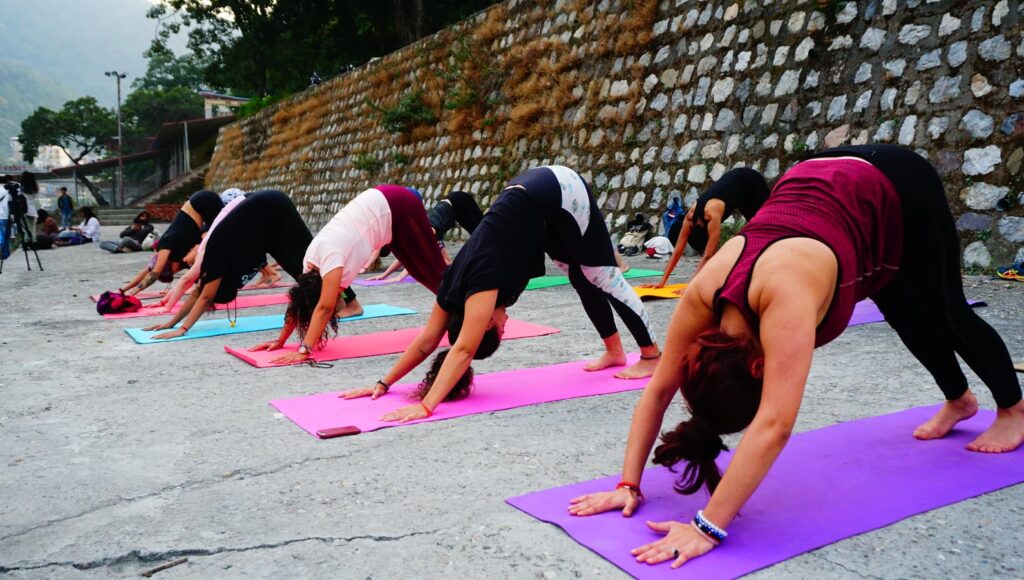
Downward Dog is the backbone of almost every yoga class. It stretches the hamstrings, calves, spine, and shoulders all in one go. With regular practice, it also starts to feel like a rest pose, which tells you how much your body has opened up.
How to Do It
- Hold for 5–10 deep breaths.
- Start on all fours, hands shoulder-width apart, knees hip-width apart.
- Tuck your toes and lift your hips up and back to form an inverted V-shape.
- Press your hands firmly into the mat and try to lengthen your spine.
- Gently pedal your heels, bending one knee then the other, to warm up the hamstrings.
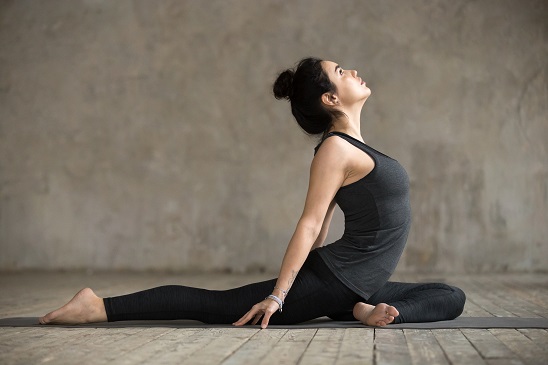
2. Pigeon Pose
Pigeon Pose is one of the deepest hip openers in yoga. If you sit at a desk all day, your hip flexors are probably tight, and you may not even know it. This pose will tell you exactly how tight they are – and over time, it’ll fix it. Go slowly, and breathe through any discomfort.
How to Do It
- Start in Downward Dog, then bring your right knee forward toward your right wrist.
- Let your right shin rest on the mat at an angle, and extend your left leg straight back.
- Square your hips to the mat as much as possible.
- Either stay upright on your hands or fold forward and rest on your forearms.
- Hold for 1–3 minutes on each side. Breathe deeply and don’t rush.
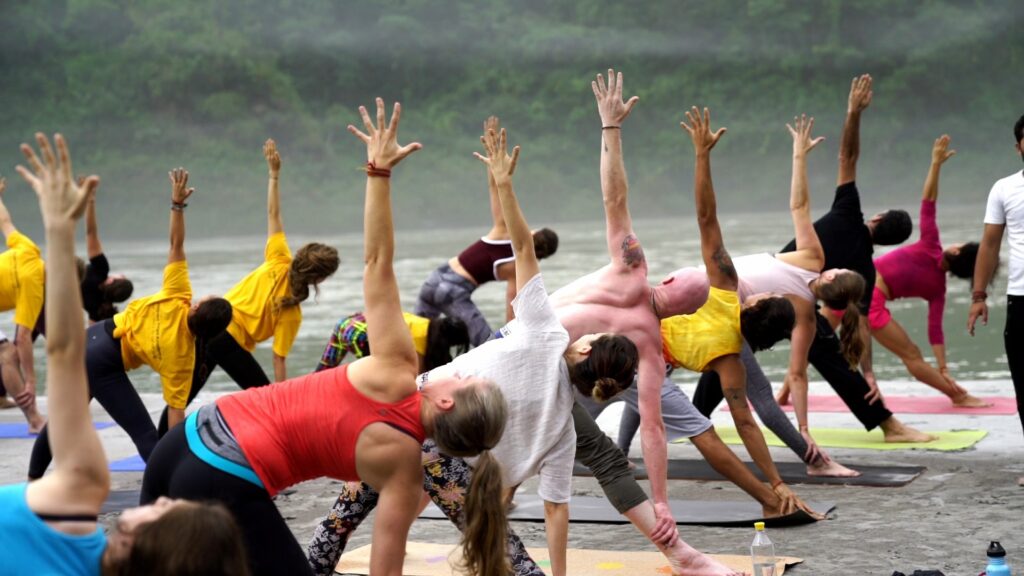
3. Triangle Pose
Triangle Pose is one of the most complete standing stretches in yoga. It works your hamstrings, inner thighs, spine, chest, and shoulders simultaneously. It also improves your sense of balance and body awareness.
How to Do It
- Stand with feet 3–4 feet apart. Turn your right foot out 90 degrees, left foot slightly in.
- Extend your arms out wide and hinge sideways from the hip over your right leg.
- Bring your right hand down to your shin, ankle, or a block on the floor.
- Extend your left arm straight up toward the ceiling and look up at your raised hand.
- Hold for 5–8 breaths. Repeat on the left side.
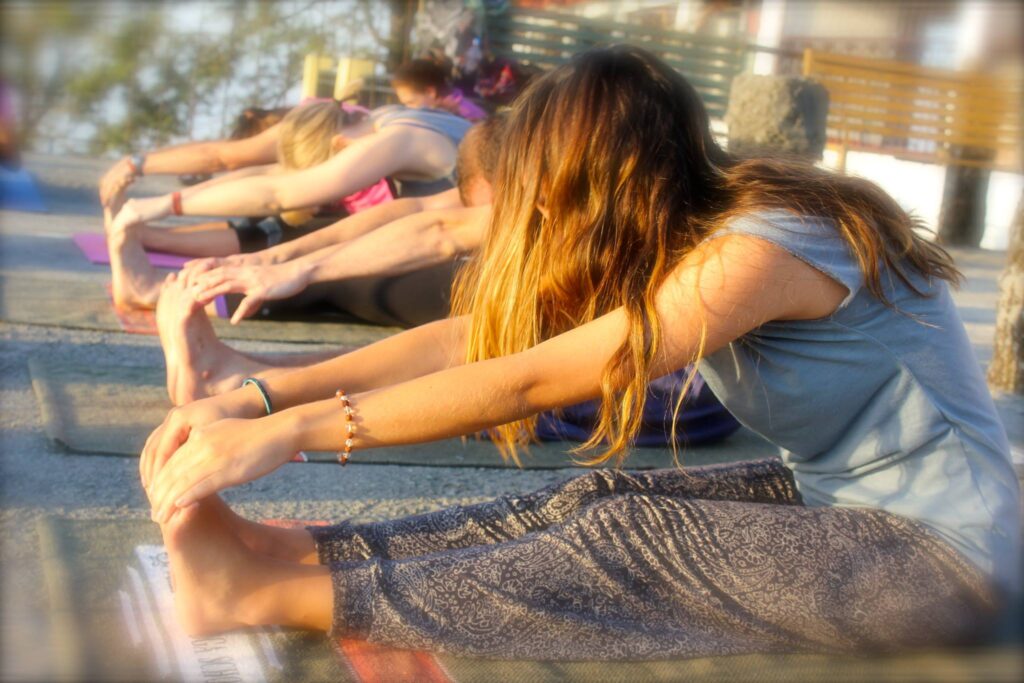
4. Seated Forward Bend
This classic pose stretches the entire back of your body — from the heels all the way up the spine. It’s also deeply calming for the nervous system, making it one of the rare poses that works on both flexibility and stress relief at the same time.
How to Do It
- Sit on the mat with legs extended straight in front of you.
- Inhale and lengthen your spine upward.
- Exhale and hinge forward from the hips — not the waist — and reach for your feet.
- Hold onto your shins, ankles, or feet — wherever your hands reach without rounding your back too much.
- Hold for 5–10 slow, deep breaths. Let your body fold a little deeper with each exhale.
Yoga Asanas at a Glance
| Pose Name (Sanskrit) | Goal | Best For | Difficulty |
|---|---|---|---|
| Plank (Phalakasana) | Strength | Core, arms, shoulders | Beginner |
| Warrior II (Virabhadrasana II) | Strength | Legs, hips, stamina | Beginner |
| Boat Pose (Navasana) | Strength | Core, hip flexors | Intermediate |
| Chair Pose (Utkatasana) | Strength | Quads, glutes | Beginner |
| Downward Dog (Adho Mukha Svanasana) | Flexibility | Hamstrings, spine | Beginner |
| Pigeon Pose (Eka Pada Kapotasana) | Flexibility | Hips, hip flexors | Intermediate |
| Triangle Pose (Trikonasana) | Flexibility | Hamstrings, chest | Beginner |
| Seated Forward Bend (Paschimottanasana) | Flexibility + Calm | Back body, nervous system | Beginner |
| Child’s Pose (Balasana) | Calm | Back, hips, stress | Beginner |
| Legs Up the Wall (Viparita Karani) | Calm | Recovery, anxiety | Beginner |
| Corpse Pose (Savasana) | Calm | Full body relaxation | Beginner |
Best Yoga Asanas for Inner Calm & Stress Relief
Yoga isn’t just about the body. It’s one of the most well-researched tools for calming the mind. These poses activate your parasympathetic nervous system — the “rest and digest” mode — which lowers cortisol levels, slows your heart rate, and brings you back to a quiet, centred state. These are the poses you need at the end of a long day.
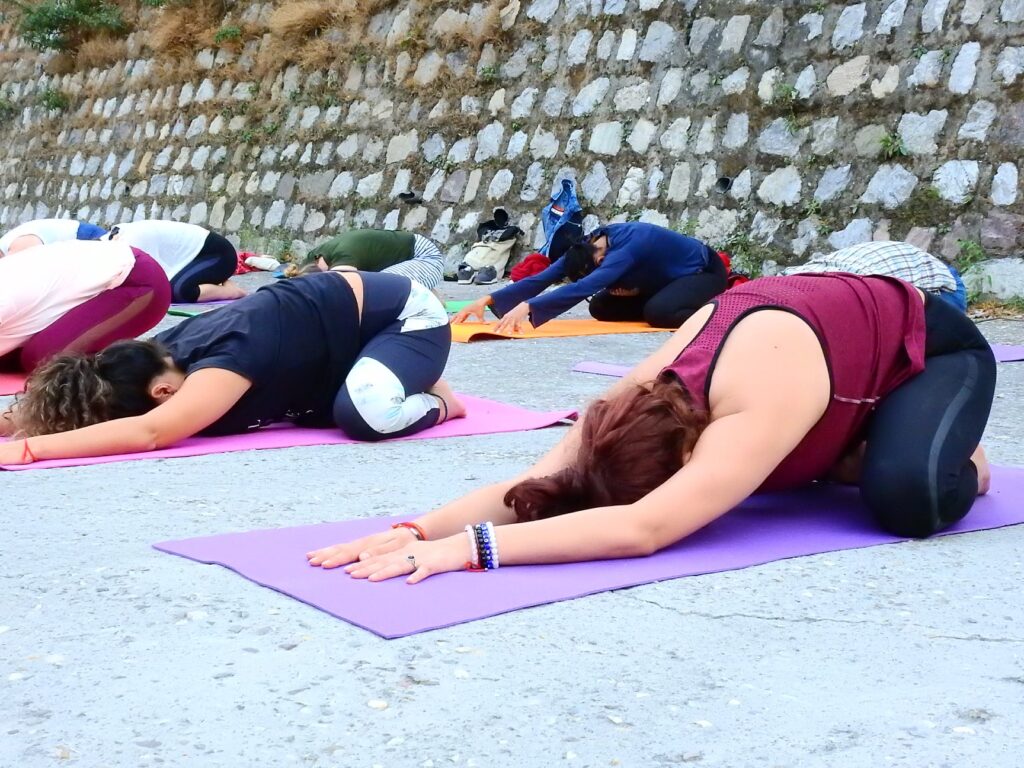
1. Child’s Pose
Child’s Pose is the ultimate resting pose in yoga. It gently stretches the lower back, hips, and thighs, while simultaneously calming the nervous system. Whenever you feel overwhelmed — on or off the mat — you can always return to this pose.
How to Do It
- Stay here for 1–5 minutes. Simply breathe. Let everything go.
- Kneel on the mat and sit back on your heels.
- Separate your knees about hip-width apart, or keep them together for a deeper lower-back stretch.
- Fold forward and extend your arms in front of you on the mat.
- Rest your forehead on the mat or a folded blanket.
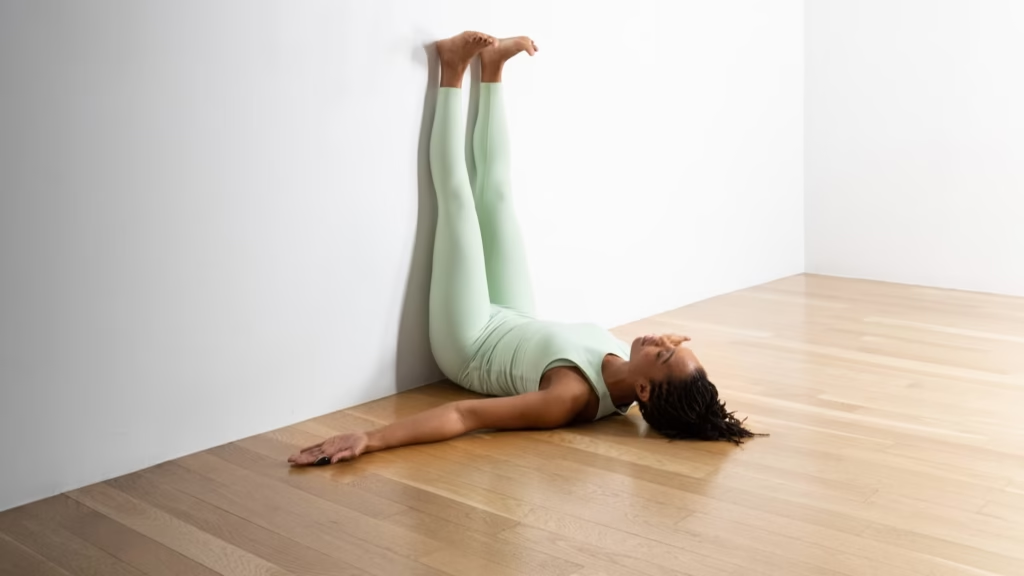
2. Legs Up the Wall
This is one of the most underrated poses in yoga, and one of the most powerful for stress and recovery. It reverses blood flow, reduces swelling in the legs, and calms the entire nervous system. Even 5 minutes in this pose can feel like a full hour of sleep.
How to Do It
- Sit sideways next to a wall, then swing your legs up and lie on your back.
- Your legs should rest against the wall, with your body forming an L-shape.
- Place your arms comfortably at your sides, palms facing up.
- Close your eyes and breathe naturally and slowly.
- Stay for 5–15 minutes. This is pure restoration.
3. Corpse Pose
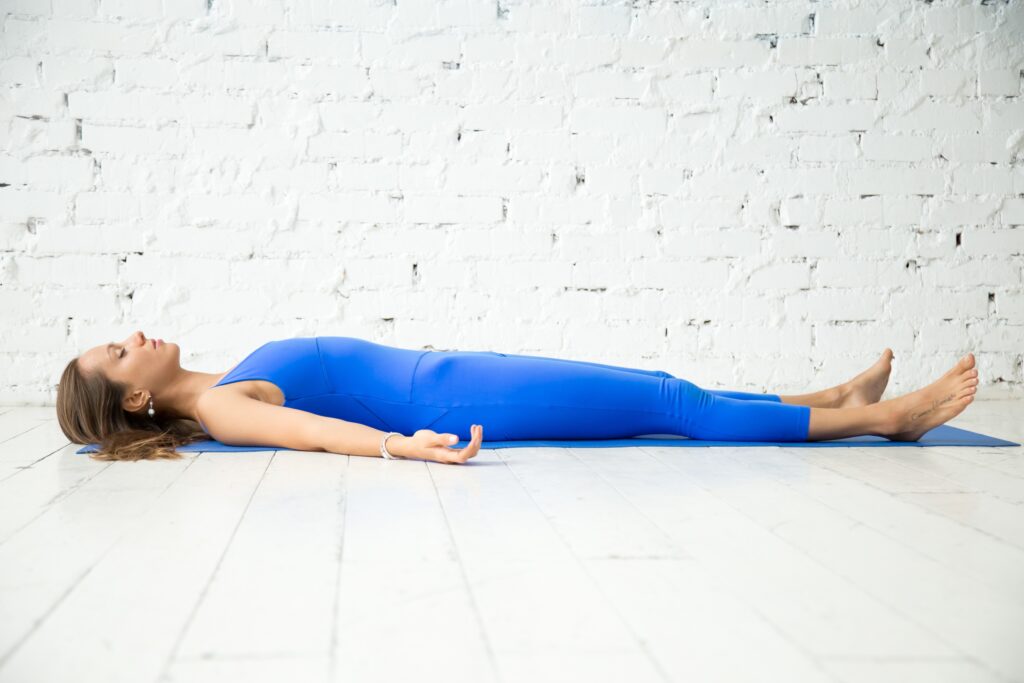
Savasana may look like just lying on the floor, but it’s considered the most important pose in any yoga practice. It gives your body the time to absorb everything you’ve done, and it trains your mind to be still without distraction. Don’t skip it. Ever.
How to Do It
- Lie flat on your back with your legs slightly apart and arms at your sides.
- Turn your palms to face upward. Close your eyes.
- Consciously relax every part of your body, starting from your feet and working your way up.
- Breathe naturally. Let your thoughts come and go without holding on to them.
- Stay for at least 5–10 minutes. Longer if you can.
Interestingly, these powerful yoga poses are covered in detail during the 200 hour Yoga Teacher Training in Rishikesh at Vinyasa Yoga Academy, helping students understand alignment, breath, and flow more deeply.
How to Build Your Practice Around These Three Goals
You don’t need to do all 11 poses every day. Here’s a simple weekly structure to get the most out of this guide:
- Monday / Wednesday / Friday – Strength Focus: Start with 5 minutes of warm-up breathing, then move through Plank, Warrior II, Chair Pose, and Boat Pose. Hold each pose for 30–60 seconds, rest, and repeat twice. Finish with Child’s Pose and Savasana.
- Tuesday / Thursday / Saturday – Flexibility & Calm Focus: Begin with Downward Dog, move into Triangle Pose, then Pigeon Pose, and finish with Seated Forward Bend. Cool down with Legs Up the Wall and Savasana. Hold flexibility poses for longer, 1 to 3 minutes each.
- Sunday – Rest or Full Restoration: Just do Child’s Pose, Legs Up the Wall, and Savasana for 20–30 minutes. Let your body fully recover.
5 Simple Tips to Get the Most from Yoga Asanas
- Breathe through everything. Your breath is your best guide. If you can’t breathe smoothly in a pose, you’ve gone too far. Back off slightly and breathe first.
- Consistency beats intensity. Thirty minutes of yoga every day will always outperform a two-hour session once a week. Keep it regular, even if it’s short.
- Warm up before deep stretches. Never try to go into a deep hip opener or hamstring stretch when your body is cold. Do 5–10 minutes of gentle movement first.
- Use props without shame. Blocks, blankets, and straps are not for beginners only — they help you get into correct alignment regardless of your flexibility level.
- Don’t compare your practice to anyone else’s. Your body is different. Your progress is your own. The only competition in yoga is with the version of yourself from yesterday.
Frequently Asked Questions
Q1. Which yoga asanas are best for building strength?
Ans: Plank Pose (Phalakasana), Warrior II (Virabhadrasana II), Chair Pose (Utkatasana), and Boat Pose (Navasana) are the most effective yoga asanas for building functional strength in the core, legs, and upper body.
Q2. Which yoga poses improve flexibility the fastest?
Ans: Downward Facing Dog, Pigeon Pose, Triangle Pose, and Seated Forward Bend are among the most effective for improving flexibility — especially in the hamstrings, hips, and spine. Consistency matters more than how deep you go.
Q3. Which yoga asanas help with stress and anxiety?
Ans: Child’s Pose (Balasana), Legs Up the Wall (Viparita Karani), and Corpse Pose (Savasana) are the three best yoga asanas for activating the parasympathetic nervous system and reducing stress and anxiety.
Q4. How long does it take to see results from yoga asanas?
Ans: Most practitioners begin noticing improved flexibility and reduced stress within 3 to 4 weeks of consistent practice (3–5 sessions per week). Visible strength improvements typically come within 6 to 8 weeks.
Q5. Can beginners practice these yoga asanas safely?
Ans: Yes. All poses in this guide are beginner-friendly and include modifications. Focus on alignment and breath rather than depth. If you’re new to yoga, consider starting with a certified teacher to learn the foundations properly.
Q6. What is the best time to practice yoga asanas?
Ans: Early morning (before breakfast) is traditionally considered the best time for yoga, as the mind is calm and the body is ready to wake up. However, consistency matters more than timing — practice when you can show up regularly.