







Adventure Activities in Rishikesh and Mussoorie Guide: Rafting, Bungee Jumping, Treks 2026
Table of Contents
- Who Is This Adventure Guide For?
- Why Rishikesh & Mussoorie Are India’s Adventure Capital
- Rishikesh: Four Adrenaline Experiences That Define the Adventure Capital
- Grade III–IV White-Water Rafting: Shivpuri to Nim Beach (16 km)
- Bungee Jumping in Rishikesh at Mohan Chatti
- Cliff Jumping + Kayaking Combo
- Flying Fox + Giant Swing at Mohan Chatti
- Mussoorie: Four Adrenaline Escapes Beyond Mall Road
- Lal Tibba Summit Trek
- Nag Tibba Overnight Trek
- Scooty Trail: Mussoorie to Dhanaulti
- Kempty Waterfall Gorge Swim
- Sample 4-Day Adventure Itinerary: Rishikesh + Mussoorie
- Practical Notes for Adventure Travellers
- Frequently Asked Questions
- Ready for Your Next Adventure?
Written by Manish, associated with Vinyasa Yoga Academy in Rishikesh — with 15+ years guiding international travellers through Rishikesh’s ashram and meditation circuit.
If your idea of a good holiday involves a life jacket, a harness, or a pair of trekking boots, Rishikesh and Mussoorie are the two towns built for you. This guide covers the complete list of adventure activities in Rishikesh and Mussoorie for travellers who want river rapids, a free-fall jump, and a mountain summit on the same trip — not a slow sightseeing itinerary. Whether you’re searching for river rafting in Rishikesh, bungee jumping in Rishikesh, or the best adventure activities near Mussoorie, this Rishikesh Mussoorie adventure trip guide is built around exactly that.
Who Is This Adventure Guide For?
You’d rather paddle a Grade III rapid than sip coffee on Mall Road. You want your itinerary to include a free-fall, not a shopping stop. Cold water, steep trails, and an early alarm don’t put you off — they’re the point. If that’s you, this Rishikesh and Mussoorie adventure sports guide is built around your kind of holiday.
Quick facts for adventure travellers:
| Detail | Information |
| Nearest airport | Dehradun (Jolly Grant, DED) — 35–45 min to Rishikesh, about 55 km to Mussoorie |
| Nearest rail hub | Haridwar Junction (approx. 45 min to Rishikesh) or Dehradun Railway Station (approx. 1 hr to Mussoorie) |
| Best season — river & bungee | October to June (most operators pause activities in the July–September monsoon due to high water levels) |
| Best season — trekking | October to March for clear Himalayan views; Nag Tibba stays open through winter |
| Indicative budget | Rafting from ₹1,000–1,500 (16 km Shivpuri to Nim Beach); bungee jump from ₹3,700; bungee + giant swing + flying fox combo roughly ₹8,200–9,400; a 2-day/1-night Nag Tibba trek package from ₹2,500–3,500 per person |
| Difficulty spread | Easy (scooty trail, Lal Tibba) to Moderate (Nag Tibba trek, Grade III–IV rafting) |
| Language | Hindi is the local language; English is widely spoken at adventure camps, rafting offices, and trek operators |
Why Rishikesh & Mussoorie Are India’s Adventure Capital
Rishikesh sits exactly where the Ganga rushes out of the Himalayan foothills, which is why it carries the informal title of India’s adventure capital — Grade III and IV rapids, a fixed bungee platform among the highest in the country, and zip-lines that run across an entire valley. Mussoorie, a few hours uphill, adds a different kind of adrenaline: summit treks, forested scooty trails, and gorge pools well past where the tourist buses stop. Together, they form a complete adventure circuit, and most travellers doing adventure sports in Rishikesh naturally extend into two or three more days of trekking and riding in Mussoorie.
Rishikesh: Four Adrenaline Experiences That Define the Adventure Capital
Rishikesh’s adventure scene is genuinely built for repeat visits, but these four experiences are the ones every serious adrenaline traveller should book first.
Grade III–IV White-Water Rafting: Shivpuri to Nim Beach (16 km)
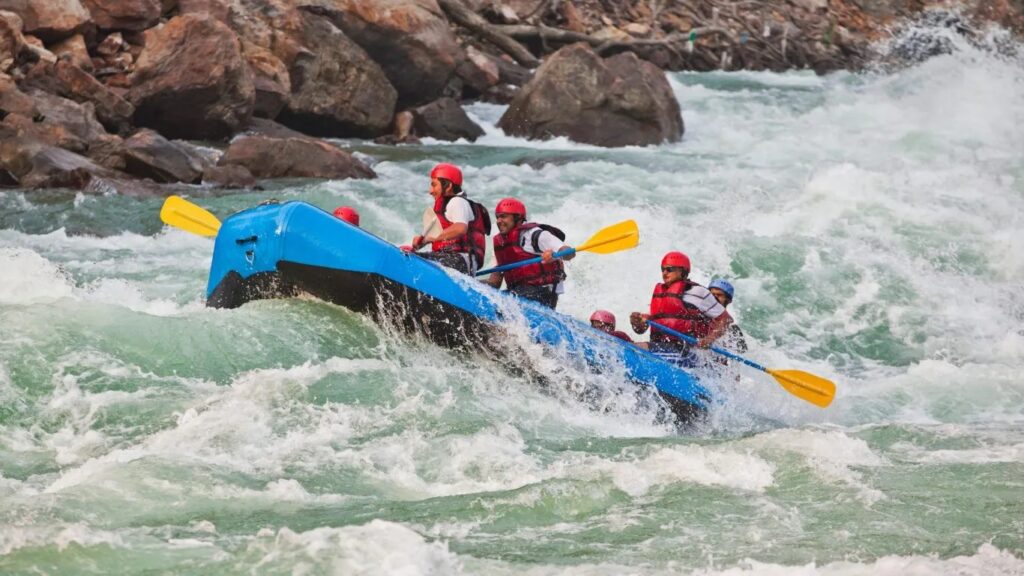
This is the gold-standard stretch for river rafting in Rishikesh — a 16 km run from Shivpuri to Nim Beach past named rapids like Roller Coaster, Golf Course, and Club House, most rated Grade III to III+. Recovery pools after each rapid make it manageable even for first-timers and non-swimmers wearing a high-buoyancy life jacket, while the rapids themselves are strong enough to satisfy anyone chasing a real adrenaline rush. The stretch takes roughly two to three hours, costs approximately ₹1,000–1,500 per person, and usually includes a stop for cliff jumping and body surfing on the calmer water.
Adventure tip: Book with a government-registered operator that runs safety kayakers alongside the raft, and travel between October and June — the river runs at flood-grade levels through the July–September monsoon and most operators pause trips during that window.
Bungee Jumping in Rishikesh at Mohan Chatti
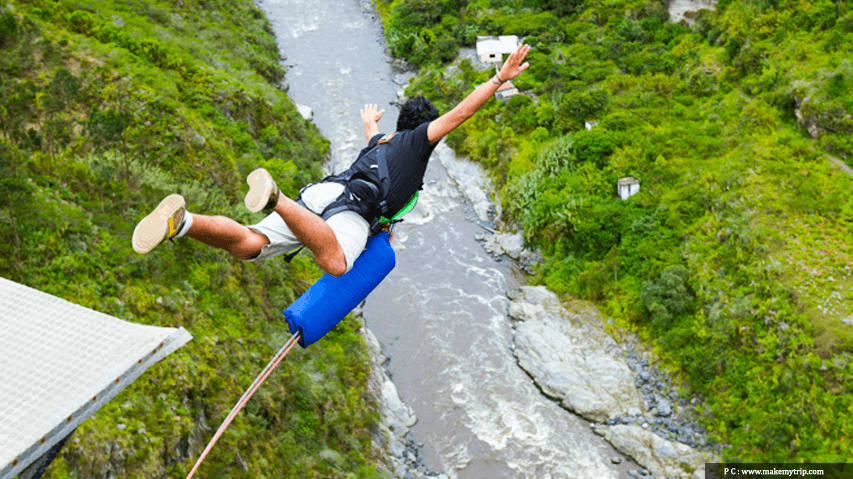
Bungee jumping in Rishikesh happens at Mohan Chatti, a village on the Rishikesh–Badrinath highway, off an 83-metre fixed cantilever platform — among the highest fixed bungee jumps in the country. Certified jump masters run a full safety briefing and gear check before every jump, and the base price for a single jump is around ₹3,700, with combo tickets that add the giant swing and flying fox running closer to ₹8,200–9,400 per person.
Adventure tip: Slots are managed in small batches for safety, so weekend capacity fills up fast — book at least a day ahead. The minimum age is around 12 years and the upper limit is roughly 45–55 depending on fitness; participants with heart, back, or blood-pressure conditions, and pregnant travellers, are not permitted to jump.
Cliff Jumping + Kayaking Combo
For travellers who want two different kinds of adrenaline in one session, operators near Brahmpuri and Shivpuri pair a cliff jump off the Ganga’s rock faces with a short solo or tandem kayak run through the gentler rapids downstream. It’s usually added on to a rafting trip or booked as a standalone half-day session at the rafting camps.
Adventure tip: Morning slots mean calmer water and a lot less crowd noise around the jump points — go straight after the rafting office opens rather than in the afternoon rush.
Flying Fox + Giant Swing at Mohan Chatti
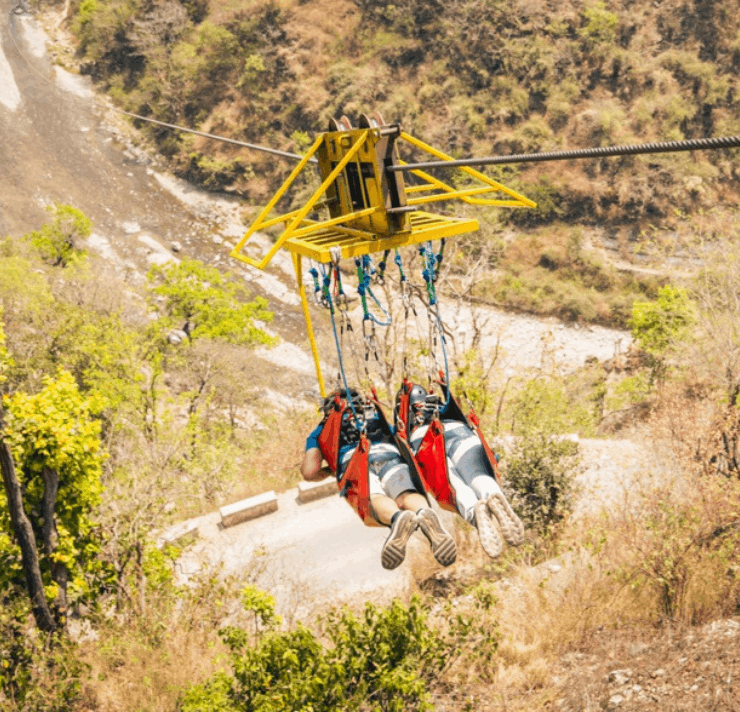
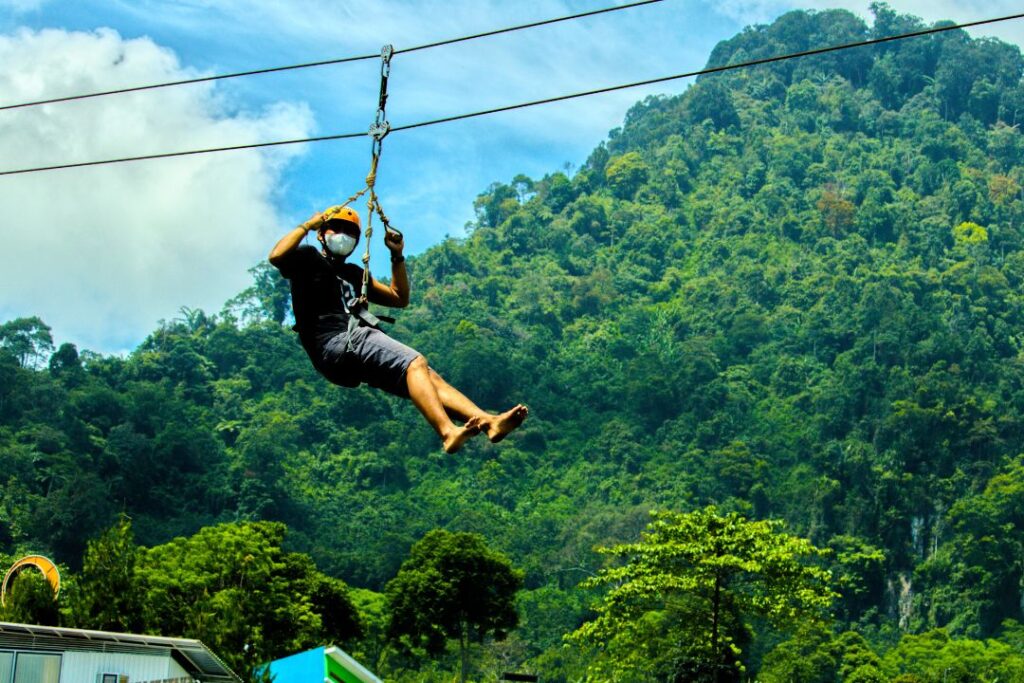
The same Mohan Chatti adventure zone that hosts the bungee jump also runs one of Asia’s longest flying fox zip-lines, stretching close to a kilometre across the valley at speeds that make the free-fall jump feel almost gentle by comparison. Pair it with the giant swing — an arc-swing harness ride over the river gorge — for a back-to-back combo, and complete all three (bungee, swing, flying fox) for the operator’s “valley conqueror” certificate.
Adventure tip: Unlike rafting and trekking, this activity runs almost every day of the year except during heavy monsoon rain — a good backup plan if river levels are too high for rafting on the day you arrive.
Mussoorie: Four Adrenaline Escapes Beyond Mall Road
Mussoorie’s reputation is Mall Road shopping and honeymoon hotels, but a short drive from all of that sits a genuinely thrilling side of the hill station — summit treks, forest scooty rides, and a waterfall gorge most tourists never reach.
Lal Tibba Summit Trek
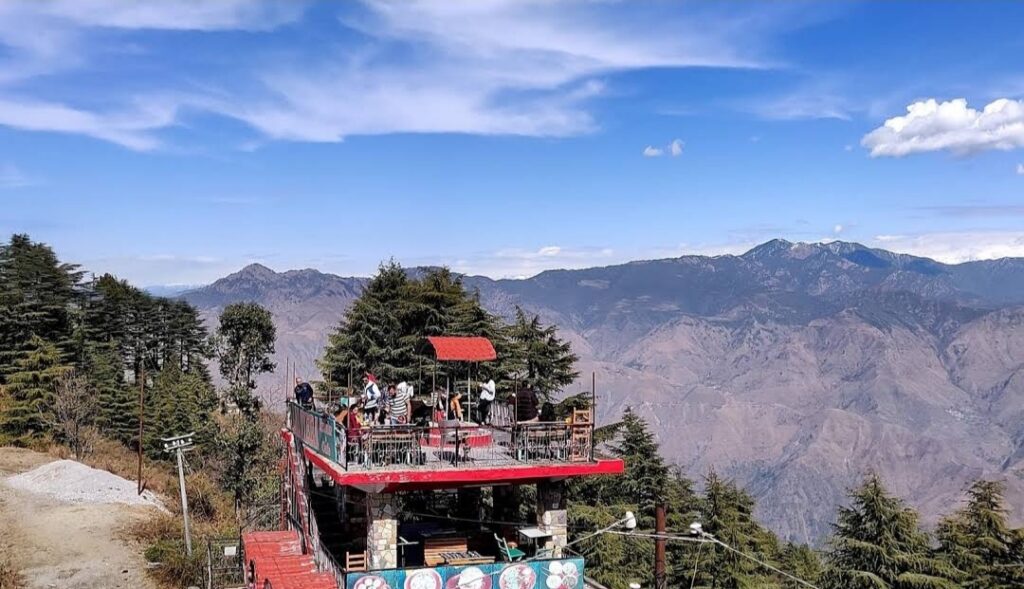
Lal Tibba is the highest point in Mussoorie, reached by a short, moderate climb from Landour. An army-installed telescope at the summit gives clear-day views of the Bandarpunch, Kedarnath, and Gangotri ranges, making it one of the best short adventure activities near Mussoorie for travellers short on time.
Adventure tip: Go in the morning — Himalayan peaks are usually visible before 10–11 AM, when afternoon haze and cloud cover typically roll in.
Nag Tibba Overnight Trek
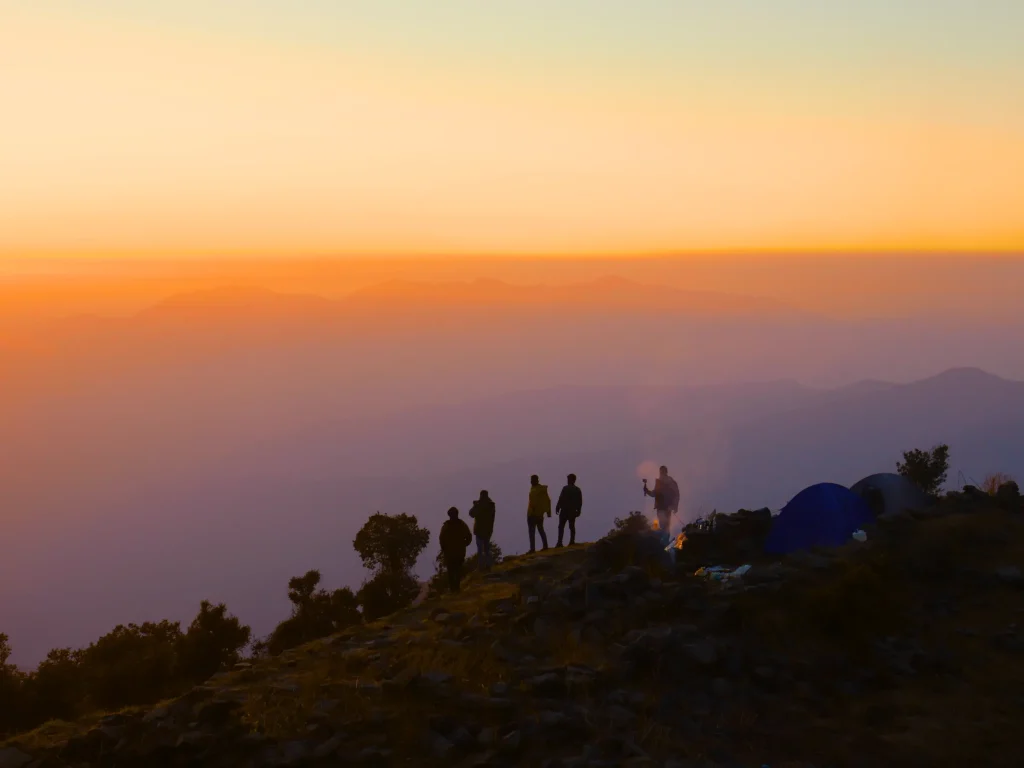
Nag Tibba, at roughly 3,022 metres (9,915 ft), is the highest peak in the Nag Tibba range and one of the most popular weekend treks near Mussoorie and Dehradun. The trek starts from Pantwari village, about 85–100 km (roughly 3–3.5 hours by road) from Mussoorie, and covers approximately 14–16 km round trip through oak and rhododendron forest over two days, with a summit camp under genuinely dark, star-filled skies. It’s rated easy-to-moderate and considered one of the more beginner-friendly Himalayan treks in India — and unusually, it stays open even through winter, when most other Himalayan treks close for snow.
Adventure tip: October to March is ideal for clear skies and snow views; April to June works well too. Carry warm layers regardless of season — nights at the summit camp drop well below daytime temperatures, and mobile signal disappears completely near the top.
Scooty Trail: Mussoorie to Dhanaulti
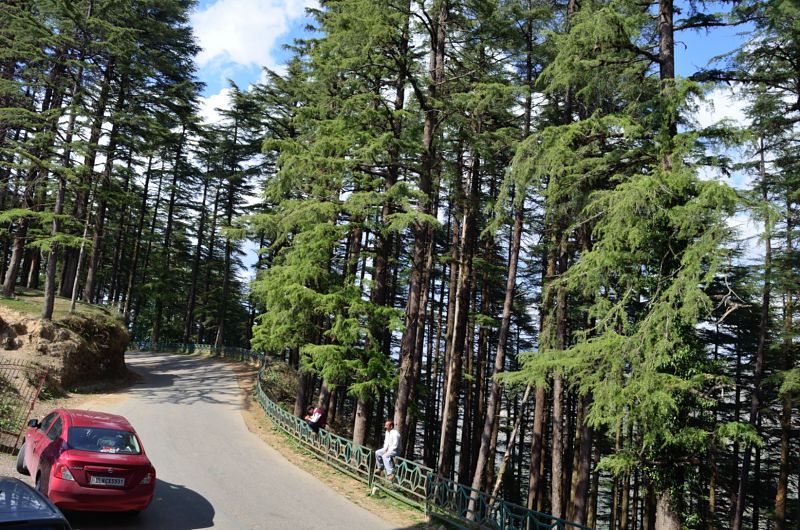
For self-driven thrill rather than a guided activity, rent a scooter and ride the roughly 30 km hill road from Mussoorie to Dhanaulti — tight curves, dense pine and cedar canopy, and stretches with no guardrails that reward a confident rider with genuinely spectacular views.
Adventure tip: Start in the morning before the fog rolls in and traffic builds, carry a valid driving licence, and wear a helmet regardless of what the rental operator provides by default.
Kempty Waterfall Gorge Swim
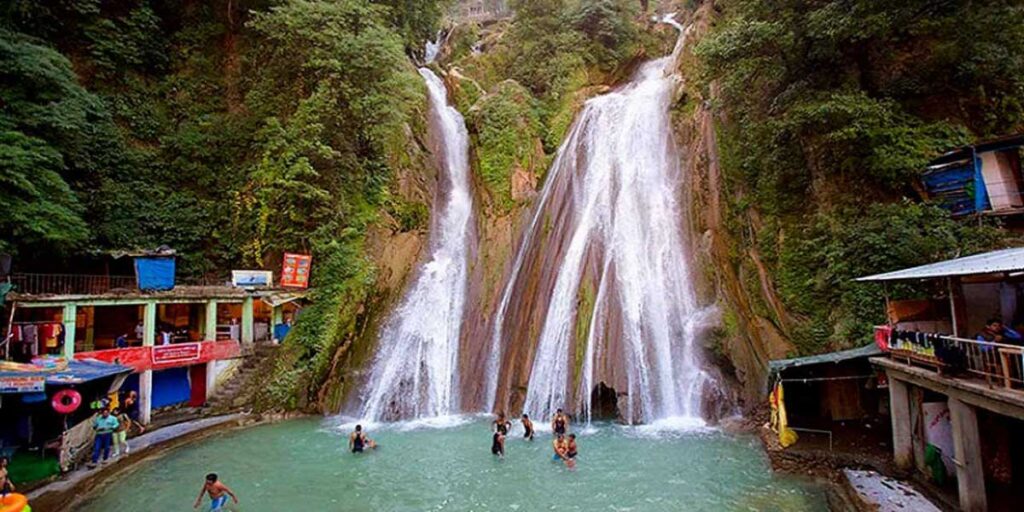
Skip the crowded main pool at Kempty Falls and ask a local guide to take you to the upper gorge instead — a colder, more remote pool reached by a short scramble upstream, with almost none of the crowd or noise of the main tourist section.
Adventure tip: Go early morning for the quietest water and always swim with a local guide who knows the current — the upper gorge has no lifeguard cover.
Sample 4-Day Adventure Itinerary: Rishikesh + Mussoorie
| Day | Focus | Key activities |
| Day 1 | Rishikesh — River Day | Arrive by late morning. Afternoon river rafting from Shivpuri to Nim Beach (16 km) with cliff jumping and body surfing. Evening rest by the Ganga. |
| Day 2 | Rishikesh — Free-Fall Day | Morning bungee jump, giant swing, and flying fox trilogy combo at Mohan Chatti. Afternoon cliff jumping + kayaking combo if energy allows. |
| Day 3 | Rishikesh to Mussoorie — Transition | Morning drive to Mussoorie (3–4 hrs). Afternoon Lal Tibba summit walk for sunset views. Evening scooty trail warm-up ride around Mall Road outskirts. |
| Day 4 | Mussoorie — Trek & Gorge | Early start for the Nag Tibba overnight trek (or, for a shorter trip, a half-day Kempty waterfall gorge swim followed by a scooty ride to Dhanaulti). Depart the next morning. |
For a longer trip: Add a fifth day to complete the full Nag Tibba overnight trek round trip rather than compressing it into Day 4 — the summit camp under the stars is worth the extra day, and most operators run it as a proper 2-day/1-night package from Pantwari.
Practical Notes for Adventure Travellers
- Booking: River rafting and bungee jumping slots fill up fast on weekends and holidays — book at least a day in advance, and expect more flexibility on weekdays.
- Season: October to June is best for rafting, bungee, flying fox, and the giant swing; most operators pause river-based activities during the July–September monsoon due to flood-level water. Nag Tibba trekking works nearly year-round, including winter.
- Fitness & health: Rafting and bungee jumping are not recommended for travellers with heart conditions, high blood pressure, recent surgery, or back problems, and pregnant travellers are excluded from every activity in this guide.
- Budget: Multi-activity combos (bungee + swing + flying fox, or rafting + cliff jumping) generally work out cheaper per activity than booking each one separately.
- Safety: Choose government-registered or Ministry of Tourism-certified operators, confirm safety-kayaker backup for rafting, and check jump-master certification before booking bungee jumping in Rishikesh.
- What to carry: Quick-dry clothing and sports shoes for river activities (no flip-flops, sarees, or loose clothing for rafting or bungee), warm layers for Mussoorie treks, and a reusable water bottle.
- Connectivity: Mobile signal is patchy to non-existent near the Nag Tibba summit and on the deeper river stretches — let someone know your day’s plan in advance.
Frequently Asked Questions
What is the best time for river rafting in Rishikesh?
October to June is best, with peak conditions in March–May and September–November. Most operators pause rafting during the July–September monsoon because the river runs at flood-grade levels.
How much does bungee jumping cost in Rishikesh?
A single jump from the 83-metre fixed platform at Mohan Chatti costs around ₹3,700. Combo packages adding the giant swing and flying fox typically run ₹8,200–9,400 per person.
Is the Nag Tibba trek good for beginners?
Yes. Nag Tibba is widely rated one of the most beginner-friendly Himalayan treks near Mussoorie and Dehradun — a moderate 14–16 km round trip over two days, with a well-marked trail and no technical climbing involved.
What is Lal Tibba in Mussoorie known for?
Lal Tibba is the highest point in Mussoorie, known for its army-installed telescope and clear-day views of the Bandarpunch, Kedarnath, and Gangotri Himalayan ranges — best visited in the morning before cloud cover sets in.
Can non-swimmers do river rafting in Rishikesh?
Yes. The Shivpuri to Nim Beach stretch includes calm recovery pools after each rapid, and every participant wears a high-buoyancy life jacket, which makes it manageable for non-swimmers as long as they inform their guide beforehand.
Is Kempty Falls good for swimming, or just sightseeing?
The main pool at Kempty Falls is mostly a sightseeing and paddling spot due to crowds, but the upper gorge — reached with a local guide — offers a genuine, quieter swimming experience for more adventurous travellers.
Ready for Your Next Adventure?
Once the adrenaline of rafting, bungee jumping, and mountain treks winds down, most travellers add a few days of deliberate stillness before flying home — and Rishikesh, as the Yoga Capital of the World, is built for exactly that. A short retreat or a full 200-hour Yoga Teacher Training in Rishikesh, such as the programs run by Vinyasa Yoga Academy, is a natural way to close out an adventure-heavy trip with a few days of recovery, reflection, and proper rest before you leave India. Explore Rishikesh’s YTTC and retreat options to plan the next step of your trip.
This article is for general information and is not medical advice. If you have a respiratory or heart condition, are pregnant, or are unsure whether these practices suit you, please speak to your doctor before beginning.