Tadasana (Mountain Pose): Meaning, Steps, Benefits, Variations and Contraindications
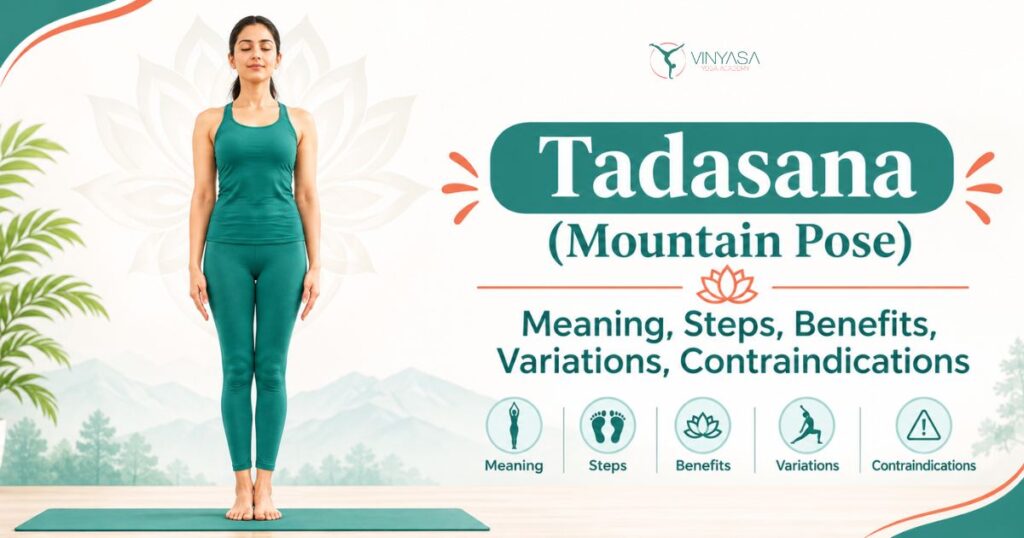
Table of Contents
- What Is Tadasana? Meaning and Definition
- Tadasana (Mountain Pose) at a Glance
- How to Do Tadasana: Step by Step
- Common Mistakes to Avoid
- Tadasana Benefits: Why Mountain Pose Is Worth Your Time
- Physical Benefits
- Mental & Emotional Benefits
- Does Tadasana Increase Height?
- Tadasana (Mountain Pose) Contraindications and Precautions
- Tadasana Variations: Same Roots, Different Expressions
- 1. Urdhva Tadasana (Arms-Raised Mountain Pose)
- 2. Supta Tadasana (Reclined Mountain Pose)
- 3. Seated Mountain Pose (Chair Tadasana)
- 4. Tiryaka Tadasana (Swaying Palm Tree Pose)
- How Tadasana Fits Into Your Yoga Practice
- 1. As Your Starting Pose
- 2. As a Reset Between Postures
- 3. In Sun Salutation (Surya Namaskar)
- 4. Off the Mat Too
- Final Thoughts
- Frequently Asked Questions About Tadasana
- What is the Mountain Pose, or Tadasana?
- What are the main advantages of Tadasana?
- What is the difference between standing and performing Tadasana?
- What is Urdhva Tadasana?
- What is Supta Tadasana?
- For how long should you hold Tadasana?
- Are Tadasana and Samasthiti the same thing?
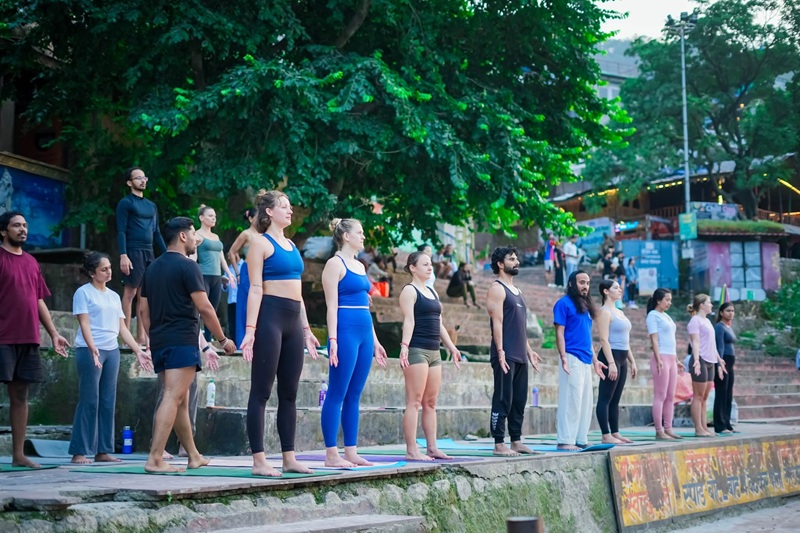
Think about what a mountain actually is. Unmoved by the wind. Rooted deep into the earth. Tall and steady on top. It’s the same energy Tadasana asks you to bring into your body. A sense of being completely grounded, upright, and still without being tense.
Tadasana looks like just standing. But in yoga, it’s considered one of the most important poses you’ll ever practice. From fixing your posture to calming a busy mind, Tadasana yoga benefits go far deeper than most people realise.
You’ve probably been standing your whole life. But have you ever truly stood? The question Tadasana, or Mountain Pose, asks every time you step onto the mat.
What Is Tadasana? Meaning and Definition
The word ‘Tadasana‘ comes from Sanskrit. ‘Tada’ means “mountain“, and ‘asana’ means “posture” or “pose“. Put together, Tadasana literally means ‘Mountain Pose,’ a posture that carries the stillness, stability, and quiet strength of a mountain.
Tadasana is the foundational pose of almost every standing sequence in yoga. It’s where you begin. It’s where you return. And when done right, it’s much more than just standing still (you’ll feel it). In Iyengar yoga, Ashtanga, Vinyasa, and almost every other style, Tadasana, or Mountain Pose, is considered the mother of all standing postures.
Some yoga traditions translate ‘tada‘ as “palm tree” rather than “mountain,” pointing to the vertical lift and lightness of the pose. Either way, mountain or palm tree, both capture the same idea of being grounded, yet tall and steady throughout.
Tadasana (Mountain Pose) at a Glance
| Sanskrit Name | Tadasana (ताडासन) |
| Also Known As | Mountain Pose, Samasthiti |
| Type | Standing, Foundational |
| Level | Beginner to All Levels |
| Duration | 30 seconds to 2 minutes |
| Focus Areas | Spine, legs, core, posture, balance |
| Best Time to Practice | Morning, before meals, or as a reset during practice |
| Drishti (gaze) | Nasagra or tip of the nose (in Ashtanga tradition) |
Tadasana is also closely related to Samasthiti, a term used in Ashtanga yoga that means ‘equal standing.’ The two are often used synonymously, though Samasthiti carries a slightly stronger emphasis on stillness and equal distribution of weight.
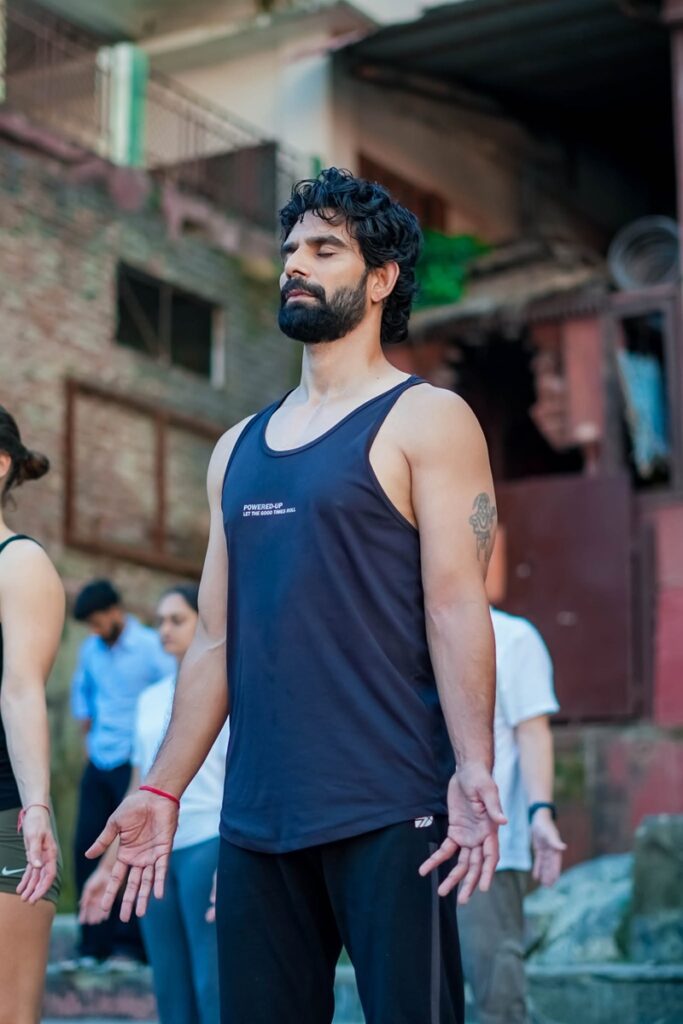
How to Do Tadasana: Step by Step
Tadasana is a posture correction asana, a breathing exercise, a balance trainer, and a quiet moment of body awareness — all wrapped into one simple standing position.
– Guru Yogi Vishnu Panigrahi
How to do Tadasana may look simple on paper. And it is, once you understand what each body part actually does. But before you begin, if you’re jumping straight into Tadasana first thing in the morning, start with a few neck rolls and ankle rotations so your body isn’t completely cold. Tadasana works best when you’re calm, ready, and present, not rushed.
Tadasana Steps:
- Stand with your feet together (or slightly apart if you’re a beginner).
- Let your arms hang naturally at your sides, palms facing forward.
- Press all four corners of your feet firmly into the floor. Feel grounded.
- Engage your thigh muscles and gently lift your kneecaps. Don’t lock your knees; keep a very soft, micro-bend.
- Draw your lower belly in slightly.
- Tuck your tailbone a little without flattening the natural curve of your lower back.
- Lift your chest. Imagine someone slowly pulling the crown of your head toward the ceiling.
- Broaden your collarbone by moving your shoulders back and down, away from your ears.
- Relax your jaw, your face, and your eyes.
- Breathe slowly and deeply. Hold for 30 seconds to 1 minute.
Pro tip: Close your eyes while in the pose for 10 seconds. You’ll immediately feel how your body subtly moves. This sensation is your nervous system adjusting its balance. It’s surprisingly powerful.
Common Mistakes to Avoid
- Locking the Knees: Jams the joint and cuts off circulation. Keep them soft.
- Bringing the Chin Forward: Most people do this without knowing. Keep it back just a little.
- Letting the Weight Fall to the Heels: Distribute it evenly across the whole foot.
- Holding the Breath: Tadasana without breath is just standing. The breath is the practice.
- Tensing the Shoulders Up Toward the Ears: Consciously drop them every time you notice it.
Tadasana Benefits: Why Mountain Pose Is Worth Your Time
Tadasana benefits are both physical and mental. The advantages of Tadasana go much deeper than just standing up straight. Here’s a breakdown of what happens in your body and mind when you practice it regularly.
Physical Benefits
| Benefit | What It Does |
| Foundation for Other Poses | Stronger tadasana means stronger, safer, and better aligned standing asanas |
| Better Posture | Realigns your spine, shoulders, neck and hips to their natural position |
| Spinal Length | Creates space between vertebrae, relieving compression from long sitting |
| Stronger Legs | Engages thighs, calves, and feet with steady, low-effort strength training |
| Improved Balance | Trains your body to distribute weight evenly |
| Core Activation | Constant engagement of the abdominal muscles supports the lower back |
| Body Awareness | You start noticing problems in your own posture and movement |
By distributing your body weight perfectly across the four corners of your feet, you pull your mind back to the exact centre of the present moment.
– Guru Yogi Vishnu Panigrahi
Mental & Emotional Benefits
- Calms a restless, scattered mind by bringing attention to the body
- Mindful standing stabilises the nervous system and reduces cortisol
- Builds confidence
- Helps manage anxiety through slow, conscious breathing
- Develops concentration and consciousness over time
- Prepares you mentally for deeper yoga practice
Therapy connection: Thanks to its focus on controlled breath and upright posture, Tadasana is used as a therapeutic support pose for people managing Parkinson’s disease and COPD (chronic obstructive pulmonary disease).
Does Tadasana Increase Height?
This is probably the most searched question about Tadasana, especially among teenagers and young adults. Mountain Pose yoga does not make your bones grow longer, as height is determined by genetics and bone growth that happens at growth plates that close after puberty. However, Tadasana can absolutely make you look and feel taller.
Years of sitting, slouching, and poor posture clog the discs between the vertebrae. Your spine curves and your back shortens. Tadasana reverses these effects by decompressing spine, strengthening the muscles that hold it upright, and training your body to stand in its full natural height.
Many people find they’re standing taller simply by correcting their posture. For younger practitioners still in their growth phase, studies suggest that regular spinal stretching and good posture habits may support the growth process indirectly.
Bottom line: Practice Tadasana for what it genuinely gives you, i.e., better posture, stronger back, and the confidence that comes from standing in your full height.
Read More: Yoga Asanas For Strength Flexibility & Inner Calm
Tadasana (Mountain Pose) Contraindications and Precautions
Tadasana is one of the safest poses in yoga. But safe doesn’t mean for absolutely everyone without any thought or caution. Here’s when to be careful:
Who Should Avoid or Modify Tadasana
- Low Blood Pressure (hypotension): Standing still for extended periods can cause dizziness. Practice by keeping eyes open and holding the pose for shorter durations.
- Flat Feet or Foot Injury: You may find it difficult to distribute weight evenly. A rolled towel under the arches can help during recovery.
- Headache or Migraine: The balancing act requires a calm nervous system. Skip or shorten it during the headache period.
- Chronic Dizziness: Use a wall behind you for support and keep your feet hip-width apart for a stable base.
- Recent Surgery or Serious Illness: Keep practice supervised and very brief. Listen to your body carefully.
- Later Stages of Pregnancy: How would you balance significant changes? However, widen your feet and use a wall for support if you wish to practice.
Tadasana Precautions
If you’re unsure whether Tadasana (Mountain Pose) is appropriate for your health situation, speak with a certified yoga teacher or your doctor.
If something hurts or feels wrong while you’re in the pose, come out of it. Yoga is not about pushing through pain (like gymming). Modify, rest, or seek help from a teacher.
Tadasana Variations: Same Roots, Different Expressions
All the variations of Tadasana have the same principles of grounded feet, long spine and open chest, but they change something so as to reveal a different dimension of the pose. Once you are comfortable with the classic Tadasana pose, you can add variations to bring challenge and richness to your practice.
1. Urdhva Tadasana (Arms-Raised Mountain Pose)
Urdhva means “upward” in Sanskrit. This extended version of the Mountain Pose deepens the spinal stretch, opens the chest wide, and brings a feeling of lightness to the pose. Urdhva Tadasana is often the gateway to poses like Warrior I, and it’s one of the key positions in Surya Namaskar (Sun Salutation).
How to do Urdhva Tadasana: In Urdhva Tadasana, you begin in standard Mountain Pose and then inhale, moving your arms overhead. Your palms face each other or touch at the top. Stretch actively through your fingertips as you press down through your feet.
2. Supta Tadasana (Reclined Mountain Pose)
Supta means “reclined” or “lying down.” This Tadasana variation is best for people who can’t stand for long or for rest poses between sequences. Supta tadasana brings the same alignment fundamentals of Mountain Pose yoga into a horizontal position.
How to do Supta Tadasana: Lie flat on your back, extend both legs with heels together and toes pointing up. Keep a natural curve in your lower back and the back of your neck (neither should be pressed hard into the floor). Arms rest slightly away from the body, with palms facing up. Keep your core gently engaged and breathe.
3. Seated Mountain Pose (Chair Tadasana)
The Seated Mountain Pose brings the Tadasana pose to a chair. It is the same pose with the same intention, the same alignment, and the same awareness — just seated. It works optimally for office practice, older people, those recovering from injuries, and anyone who needs the grounding of Mountain Pose without the standing.
How to do Chair Tadasana: Sit toward the front edge of your seat. Do not lean into the back. Place your feet flat on the floor, knees at 90 degrees, and hip-width apart. Sit tall, spine long, and shoulders back and down. Breathe.
4. Tiryaka Tadasana (Swaying Palm Tree Pose)
Tiryaka means “swaying” or “lateral.” Tiryaka Tadasana increases spinal flexibility in the lateral plane and is commonly used in therapeutic yoga for lower back stiffness.
How to do Tiryaka Tadasana: From Urdhva Tadasana with fingers interlaced and palms together upward, you slowly bend your torso to the left and then to the right (one side at a time). This sideways extension targets the muscles in the areas that rarely get attention in most yoga practices.
Mountain Pose Variation Table:
| Variation | What’s Different | Best For |
| Classic Tadasana | Arms at sides, standing tall | Foundation, posture reset |
| Urdhva Tadasana | Arms raised overhead | Chest opening, morning energy, Sun Salutation |
| Supta Tadasana | Performed lying down | Limited mobility, rest poses |
| Seated Mountain Pose | Done on a chair | Office, seniors, recovery |
| Tiryaka Tadasana | Side bends added | Spinal flexibility, side body |
How Tadasana Fits Into Your Yoga Practice
Tadasana, or Mountain Pose, isn’t just one asana among many. It’s the spine of your standing practice. Here’s how it works throughout a well-rounded yoga session.
1. As Your Starting Pose
Most yoga classes that include standing work begin in Tadasana. It’s an invitation to arrive on your mat and in the present moment. Before the movement or the sequence, the Mountain Pose yoga asana asks you, “Where is your body right now?” “How are you holding yourself?” “What does your breath feel like?”
2. As a Reset Between Postures
Tadasana is the perfect neutral pose to return to between challenging asanas. After a deep sequence or a long pose, returning to Mountain Pose gives your body a moment to regroup. Teachers often cue this specifically to realign before the next pose and prevent compensation patterns from building up across practice.
3. In Sun Salutation (Surya Namaskar)
Tadasana is the starting and ending position of every Surya Namaskar sequence. In the Ashtanga tradition, the specific standing form is Samasthiti. In most Vinyasa classes, the Mountain Pose serves the same purpose. Every Sun Salutation you’ve ever done began and ended with Tadasana, even if you didn’t know it had a name.
4. Off the Mat Too
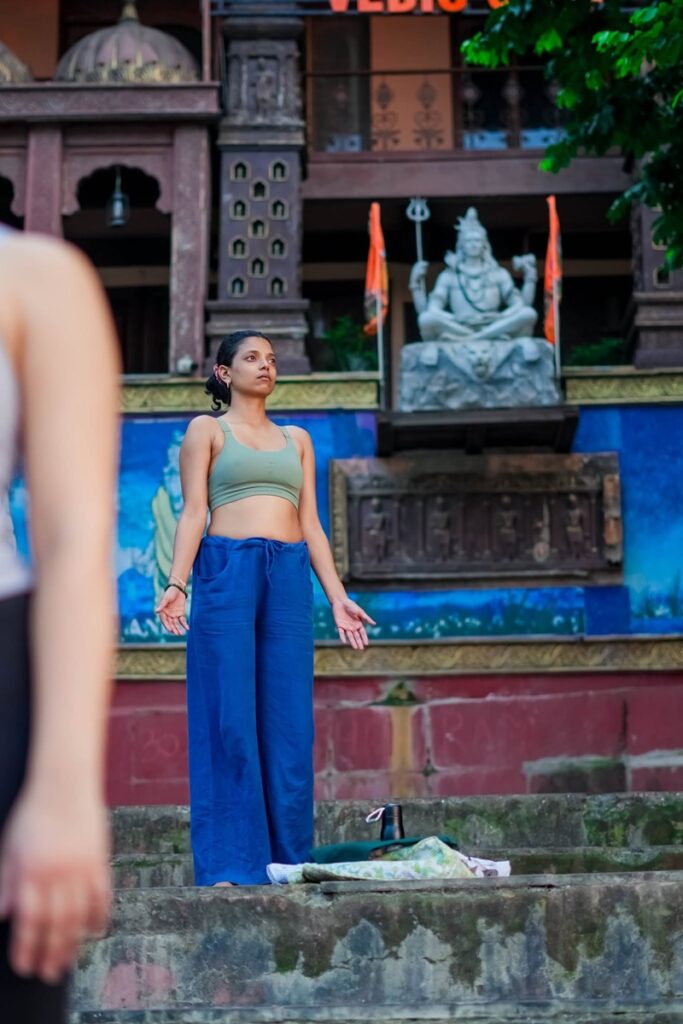
You don’t need a yoga mat to practice Tadasana. Try it while waiting for coffee to brew, standing in a queue, or taking a break from your desk. One minute of conscious, aligned standing is a genuine reset for your body and mind. And nobody around you will even know you’re practicing yoga.
Final Thoughts
There’s a reason every yoga tradition in the world has a version of Mountain Pose. Standing tall, breathing freely, feeling grounded aren’t complicated ideas. They’re the ones most of us have forgotten in the rush of daily life. Tadasana is the reminder. A pose that asks you to come back to yourself, stand steady, breathe and begin.
Start Your Journey with Vinyasa Yoga Academy
At Vinyasa Yoga Academy, we give foundational poses like Tadasana the respect they deserve. In our yoga teacher training in India and Bali, you don’t just learn how to do the poses. You learn why they work, what they’re building, and how to teach others with safety and confidence.
Whether you’re starting your first 200-hour YTTC or deepening your practice on a yoga retreat, let Tadasana be where your journey starts. Join us and learn to stand tall.
Read More: 17 Types Of Yoga: Find The Best Match For Yourself
Frequently Asked Questions About Tadasana
What is the Mountain Pose, or Tadasana?
The name Tadasana is a combination of two Sanskrit words, ‘tada‘, meaning “mountain,” and ‘asana,’ meaning “pose”; together, they form the Mountain Pose. It represents the grounded, still, tall, and upright appearance of a mountain.
What are the main advantages of Tadasana?
Tadasana benefits are better posture, stronger legs and core, improved balance and coordination, spinal decompression, deeper breathing, and a calmer, more focused mind.
What is the difference between standing and performing Tadasana?
Casual standing typically indicates slouching, uneven weight distribution, and shallow breathing. Tadasana is standing consciously. Feet grounded, legs engaged, chest elevated, and breath even. The difference is awareness and that changes everything.
What is Urdhva Tadasana?
Urdhva Tadasana is the raised-arms variation of Mountain Pose. From Tadasana, you inhale and lift both arms overhead, reaching through the fingertips. It deepens the spinal stretch and opens the chest.
What is Supta Tadasana?
Supta Tadasana means Reclined Mountain Pose. You practice the same alignment principles while lying on your back. Great for those with limited standing ability or as a mindful rest during a sequence.
For how long should you hold Tadasana?
Hold for 30 seconds to 2 minutes. Beginners can initially start with 30 seconds. Later, increasing time as the routine develops. Try focusing on breath and body awareness rather than time if you’re a beginner.
Are Tadasana and Samasthiti the same thing?
They’re closely related. Samasthiti is a term used in Ashtanga yoga for equal, steady standing. Tadasana is the same base posture (sometimes with raised arms). In many traditions, the two terms are used interchangeably.
This article is for general information and is not medical advice. If you have a respiratory or heart condition, are pregnant, or are unsure whether these practices suit you, please speak to your doctor before beginning.