Sukhasana (Easy Pose): The Myth, The Meaning and The Method
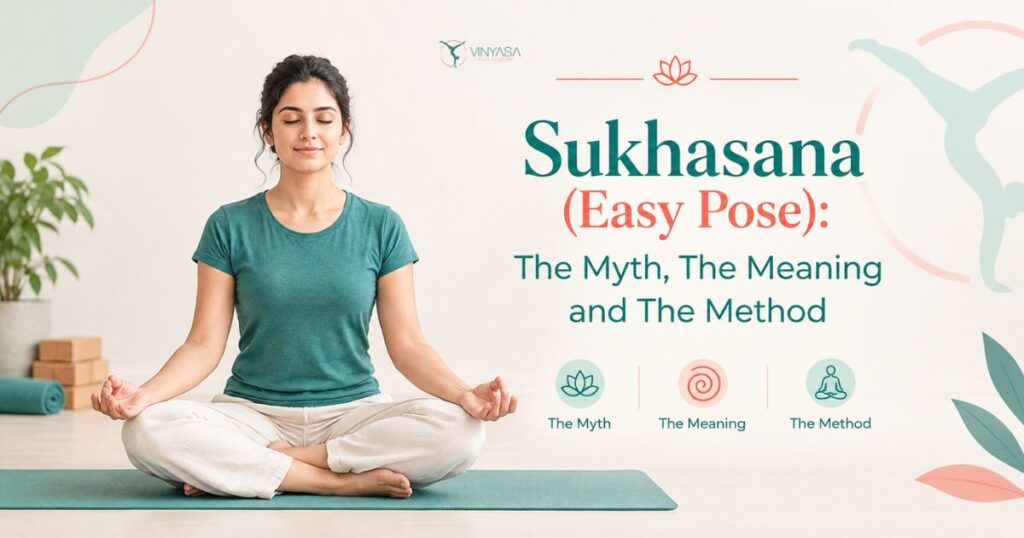
Table of Contents
- What Is Sukhasana? The Meaning Behind the Name
- Sukhasana: Fast Facts at a Glance
- Sukhasana vs Siddhasana: What’s the Difference?
- 7 Sukhasana Benefits: What The Easy Pose Actually Does
- 1. Opens the Hips (Without Force)
- 2. Lengthens the Spine
- 3. Builds a Foundation for Meditation and Pranayama
- 4. Calms the Nervous System
- 5. Improves Posture Over Time
- 6. Supports Digestion and Circulation in the Lower Body
- 7. Reduces Mental Chatter
- Sukhasana Procedure: How to Do The Easy Pose Step-by-Step
- Step 1: Sit On Your Mat
- Step 2: Cross Your Shins
- Step 3: Find Your Sitting Bones
- Step 4: Lengthen the Spine
- Step 5: Ease the Shoulders
- Step 6: Place Your Hands
- Step 7: Soften the Face
- Sukhasana And The Chakra System
- Varieties of Sukhasana: Ways to Deepen Your Practice
- A Closer Look at Supta Sukhasana (Supine Sukhasana)
- Parivrtta Sukhasana (Twisted Easy Pose)
- Precautions And Contraindications Of Sukhasana (Easy Pose)
- Beyond the Mat: Cultivating Stillness Every Day
- Final Thought: The Pose That Holds Everything Else
- Frequently Asked Questions About Sukhasana
- What is Sukhasana in English?
- What do you mean by Sukhasana?
- Can Sukhasana reduce belly fat?
- What is Supta Sukhasana?
- Can beginners do Sukhasana?
- What are the contraindications of Sukhasana?
- Is Sukhasana good for anxiety?
We live our lives at a strict 90-degree angle, shaped by office chairs, car seats, and couches. Most people, when they hear ‘easy pose,’ think, ‘That’s the first pose I’ll do on my day one.’ Just sit cross-legged on the floor and breathe? No complicated leg locks? No balancing acts? No sweat, right?
But when you step onto a yoga mat and expect your hips to magically open up into Sukhasana (Easy Pose), you hit a literal wall of resistance. It asks nothing dramatic from your body, but gives a great deal back.
Here we’ll cover everything you need to know about Sukhasana: its meaning, its benefits, how to sit in Sukhasana correctly, which chakra it connects to, its variations and who should avoid it.
Whether you’re brand new to yoga or have been practising for years, there’s something here that will deepen how you experience this quite simple seat.
What Is Sukhasana? The Meaning Behind the Name
Sukhasana comes from two Sanskrit words: ‘Sukha‘ (सुख), meaning ‘ease‘, ‘joy‘, or ‘comfort‘, and ‘Asana‘ (आसन), meaning ‘seat‘ or ‘posture‘. Together, it means ‘the comfortable seat‘ or more loosely, ‘the joyful posture‘.
In Hindi, the word ‘Sukha‘ is used in contrast to ‘Dukha’ (suffering). This pairing runs deep in yogic philosophy. A steady, comfortable seat isn’t just physical comfort. It is the starting point for turning inward, for pratyahara (withdrawal of the senses), and for meditation to become possible.
In the Yoga Sutras of Patanjali, the definition of any asana is ‘Sthira Sukham Asanam,’ i.e., the posture should be steady and comfortable. Sukhasana indeed embodies that definition in physical form. It is a posture named for how every posture should feel.
Sthira Sukham Asanam, or the posture should be steady and at ease.
– Patanjali, Yoga Sutras: 2.46
In English, it is commonly called the Easy Pose or the Pleasant Sitting Pose. Occasionally, you’ll find it referred to as a simple cross-legged position, but that description undermines what it actually does when practised with awareness.
Sukhasana: Fast Facts at a Glance
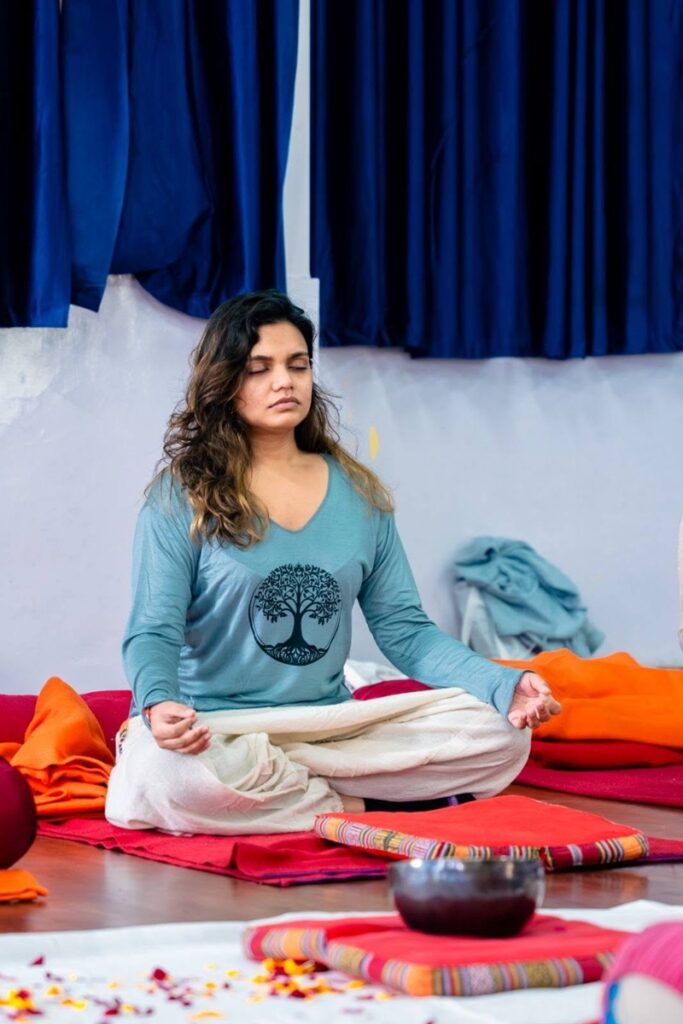
Sukhasana, or the Easy Pose yoga, is not the same as Padmasana (Lotus Pose) or Siddhasana, though all three are seated meditation asanas.
In Sukhasana, the ankles cross simply and the shins are placed loosely under the opposite knee. Also, there is no heel pressing into the perineum and no foot placed on the thigh. It is the most convenient of the three, which is why it tends to be taught first.
| Sanskrit Name | Sukhasana (सुखासन) |
| English Name | Easy Pose / Pleasant Sitting Pose |
| Pose Type | Seated, Meditative |
| Difficulty | Beginner-Friendly |
| Duration | 5 to 30 minutes (or longer in meditation) |
| Chakra | Muladhara (Root Chakra) |
| Muscles Worked | Hip flexors, inner thighs, lower back, spine |
| Best Time | Morning (empty stomach) or before meditation/pranayama |
Sukhasana vs Siddhasana: What’s the Difference?
This question comes up frequently, especially among students beginning to explore yoga, pranayama, and meditation.
In the Sukhasana yoga pose, the ankles are simply crossed. The feet are relaxed below the opposite shins. And no specific heel placement is required, making it accessible to most body types.
Whereas, in Siddhasana (Adept’s Pose), one heel presses into the perineum or the space just below it, and the other heel is kept directly in front of the first one, placed against the pubic bone or the area above the genitals. This position creates a very specific energetic lock at the base of the spine, which is why Siddhasana is considered more potent for pranayama and meditation in classical texts.
Sukhasana is where most students begin. Siddhasana is where many arrive after months or years of practice. Neither is superior; it’s just that they serve different stages of the journey.
7 Sukhasana Benefits: What The Easy Pose Actually Does
The true genius of Sukhasana lies in how it systematically unties the knots of modern lifestyle habits.
– Guru Yogi Vishnu Panigrahi
The benefits of Sukhasana go well beyond sitting quietly. Here’s what consistent practice delivers to practitioners:
1. Opens the Hips (Without Force)
Modern sitting posture keeps the hips in a constant state of fixation. The hip flexors shorten and the inner thigh muscles tighten. Sukhasana reverses that pattern. The crossed-leg position externally rotates the femur bones, gently creating space in the hip socket and stretching the inner thighs.
Unlike Pigeon Pose or Lizard Pose, this opening happens slowly and without strain, which is how the biggest change occurs.
2. Lengthens the Spine
When you sit in Easy Pose (Sukhasana) with awareness, the spine naturally decompresses and relaxes. Each inhale can be used to grow taller, each exhale to settle deeper. Over weeks of practice, people often notice reduced tension between the shoulder blades and a more natural lumbar (lower back) curve.
3. Builds a Foundation for Meditation and Pranayama
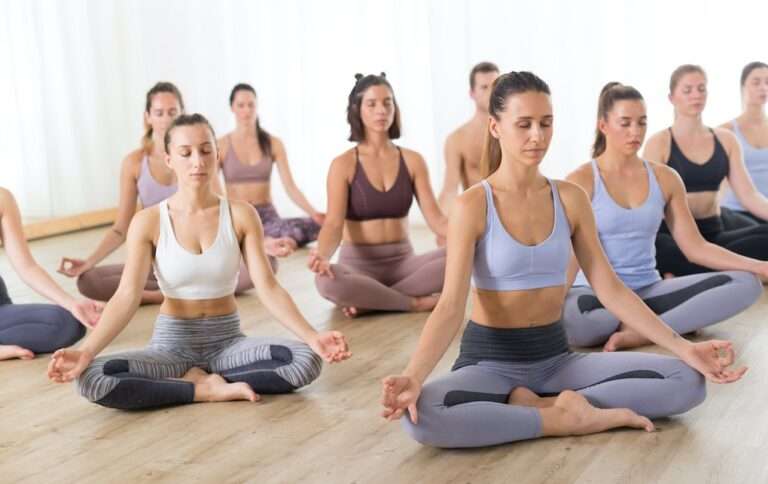
One reason meditation teachers consistently bring students into Sukhasana is that it creates a stable triangular base (the two knees and the sitting bones form a tripod). This ground-down quality frees the upper body to remain upright without any muscular effort. The chest stays open, the diaphragm moves freely, and the breath can deepen without restriction.
4. Calms the Nervous System
Sitting close to the earth, with the weight of the legs dropped down, activates a grounding response in the body. Combined with slow breathing in this position, the parasympathetic nervous system (responsible for rest, digestion, and recovery) is brought into activity.
For people dealing with anxiety, chronic stress, or a busy mind, even ten minutes of Sukhasana with conscious breathing can shift the internal state noticeably.
5. Improves Posture Over Time
So much of daily life collapses the thoracic spine forward. The upright, balanced form of Sukhasana yoga teaches the body what a neutral spine actually feels like. Regular time in this posture, especially when paired with breath awareness, retrains posture and reminds the body of its natural architecture.
6. Supports Digestion and Circulation in the Lower Body
The light compression of the lower body in Sukhasana, along with breathing (through diaphragm), mildly stimulates the digestive organs and encourages lymphatic flow in the pelvic area and legs. It is one reason why many Ayurvedic practitioners recommend sitting cross-legged during meals. The posture itself supports a relaxed, well-oxygenated digestive environment.
7. Reduces Mental Chatter
This Sukhasana benefit is harder to measure but easy to feel. Sitting low, grounded, with the legs folded beneath you, quiets the thinking mind. The posture communicates stability to the nervous system. Add it with a drishti (a soft gaze) or closed eyes, and mental activity tends to settle on its own rhythm.
Sukhasana Procedure: How to Do The Easy Pose Step-by-Step
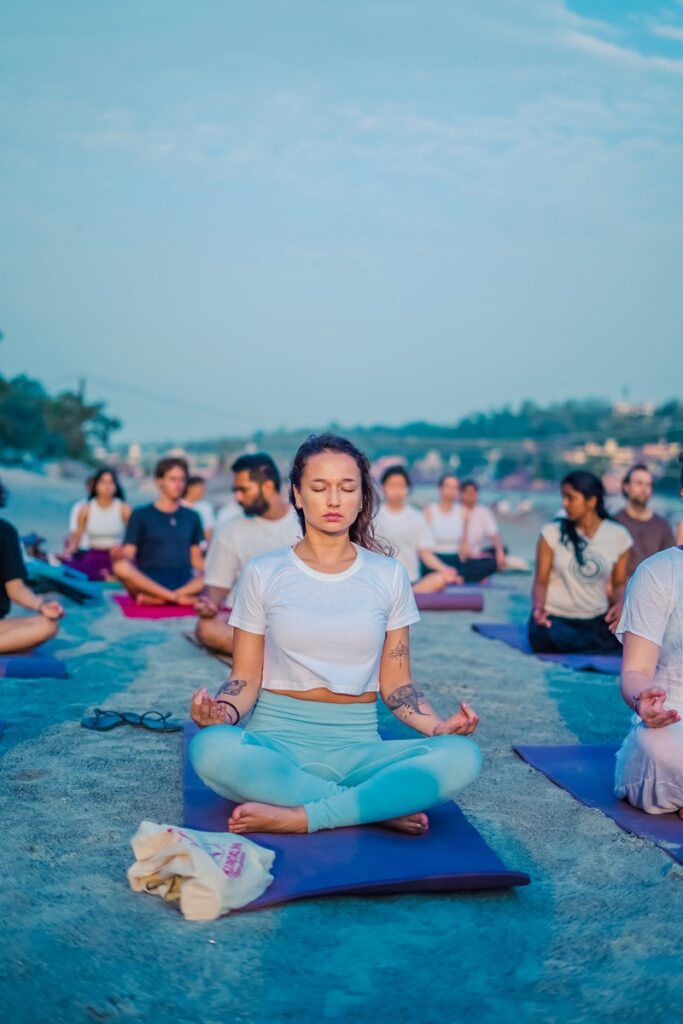
Getting the alignment right makes a significant difference in both comfort and the depth of the benefits you’ll receive.
Step 1: Sit On Your Mat
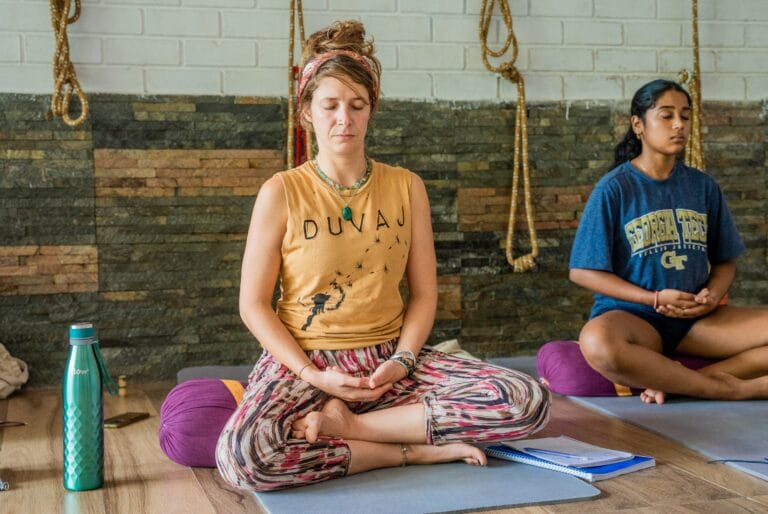
If your hips are tight and your knees lift higher than your hip bones, place a folded blanket or firm cushion under your sitting bones.
Step 2: Cross Your Shins
Let one ankle rest beneath the opposite knee, and the other ankle in front of it. Your feet should be relaxed under the shins.
Step 3: Find Your Sitting Bones
Move side to side slowly until you can feel the two bony points of your pelvis making contact with the support beneath you. This helps you sit on top of the pelvis, not anywhere else.
Step 4: Lengthen the Spine
Imagine a thread attached to the crown of your head and someone pulling you upward. Let the lower back find its natural inward curve. Broaden the upper back, and keep the chin slightly back so the neck stays long.
Step 5: Ease the Shoulders
Shoulders have a tendency to incline toward the ears, especially during breath work. Let them drop, and widen the collarbones so the chest stays naturally open.
Step 6: Place Your Hands
The placement of hands plays a key role in the intention you set. For example, use palms down on knees for grounding, palms up in Chin Mudra or Jnana Mudra for receptivity, or hands placed on your lap in Dhyana Mudra for meditation.
Step 7: Soften the Face
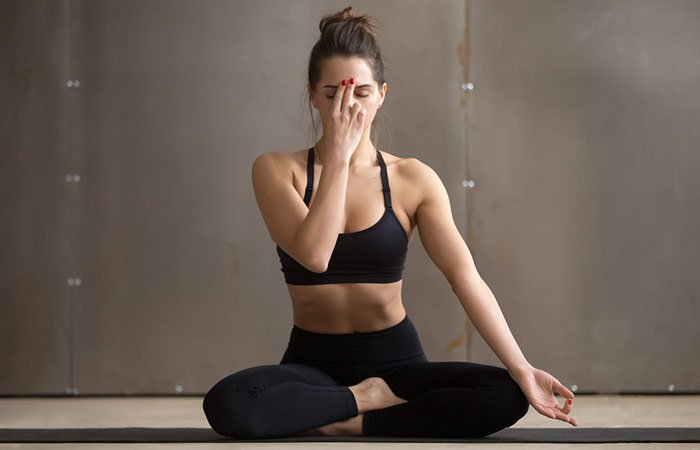
Jaw relaxed, tongue off the roof of the mouth, eyes closed or soft. Breathe through the nose. Stay for as long as your posture remains upright and your breath stays calm.
One small tip: Alternate which shin is in front each time you sit in Sukhasana. Most people default to the same cross every day, which creates uneven hip opening. Changing sides keeps the hips balanced long-term.
Sukhasana And The Chakra System
Sukhasana is most directly associated with Muladhara, or the Root Chakra, located at the base of the spine. Sitting in this pose, particularly on the earth, activates and stabilises this chakra.
In yogic anatomy, Muladhara governs our sense of safety, groundedness, belonging, and stability. It is the energetic foundation upon which all higher consciousness rests. When it is balanced, you feel present, secure, and rooted. When it is out of balance, you may feel dominated by restlessness, anxiety, and a sense of dissociation.
The seated, earthbound virtue of Sukhasana is a direct physical expression of what Muladhara represents.
– Guru Yogi Vishnu Panigrahi
Some traditions also connect Sukhasana with Svadhisthana (Sacral Chakra) because of the hip-opening component. But the primary energetic association remains with Muladhara, the first Chakra, the seat of foundation.
If you are keen to work with Muladhara intentionally during Sukhasana (Easy Pose), try these additions:
- Breathe down into the base of the spine on the inhale,
- Chant the seed mantra LAM silently, or
- Visualise the colour red at the base of your tailbone while you sit.
Varieties of Sukhasana: Ways to Deepen Your Practice
| Variation | Key Difference | Best For |
| Classic Sukhasana | Ankles crossed, shins curled under opposite knee | Beginners, meditation |
| Supta Sukhasana | Same leg position but lying on the back | Hip opening, relaxation |
| Parivrtta Sukhasana | Adds a seated spinal twist to the right or left | Spine mobility, detox |
| Sukhasana with Anjali Mudra | Hands at heart center in prayer position | Pranayama, focus |
| Sukhasana Forward Fold | Torso folds forward over crossed legs | Deep hip stretch |
A Closer Look at Supta Sukhasana (Supine Sukhasana)
Supta Sukhasana (‘Supta’ means ‘lying down’) takes the same crossed-leg position on the back. Lying with the legs crossed and hands resting on stomach or extended to the sides, the Supta Sukhasana variation allows gravity to keep the knees to the floor, helping create a passive hip stretch with zero effort from the muscles.
Supta Sukhasana benefits:
- It is excellent for hip opening without lower back pressure
- Helpful for people who cannot sit upright for long periods
- Deeply relaxing as a restorative or end-of-class pose
- It also makes pranayama easier for those whose spines are not yet comfortable in the upright (sitting) position
Parivrtta Sukhasana (Twisted Easy Pose)
From the base of Sukhasana, place one hand on the opposite knee and the other hand behind you on the floor. On an inhale, grow tall. On the exhale, rotate the torso. Your gaze shall follow the twist. Hold five to eight breaths per side.
This intermediate-level variation of Sukhasana introduces spinal rotation, which stimulates the organs of digestion, releases thoracic (spinal) tension, and adds motion to a pose that is otherwise mainly about stillness.
Precautions And Contraindications Of Sukhasana (Easy Pose)
Sukhasana is generally safe for most people, but a few conditions do require care:
- Knee Injuries: If there is pain, swelling, or instability in the knee joint, avoid forcing the cross-legged position. Sit on a higher surface, use more support under the hips, or practise in Dandasana (Staff Pose) instead.
- Recent Hip Surgery or Hip Replacement: Check with your surgeon before sitting in Sukhasana. External rotation of the hip femur can conflict with post-surgical restrictions.
- Sciatica: If sitting on the floor aggravates sciatic nerve pain, raise the hips (through support). Some people find Sukhasana helps with sciatica; others find it worsens it. Listen closely to your body and proceed with caution.
- Lower Back Pain: Without adequate hip flexibility, the pelvis tilts backward in Sukhasana, which rounds the lower back and puts a load on the lumbar spine. Use a blanket or block under your hips if the lower back is an issue.
- Pregnancy (third trimester): The pose is generally fine, but comfort and breathing ease should indicate how long you stay. Sitting against a wall for back support is a practical modification you can opt for.
Beyond the Mat: Cultivating Stillness Every Day
Mastering Sukhasana is less about how you close your knees or get to the earth and more about how open and spacious you feel inside your mind. It is a posture that connects physical movement with deep meditation.
At Vinyasa Yoga Academy, our daily practice always returns to this foundational seat. We build strength in vinyasa and flexibility in twists, not to collect and share advanced asanas like candies, but simply so we can sit and practise together in stillness, free from physical or mental distractions.
So, the next time you cross your legs on your mat, don’t rush through the moment. And for deeper knowledge into the ideals, postures, alignment, and philosophy of yoga and Ayurveda, we welcome you to enrol in our immersive Yoga Teacher Training in Rishikesh, India, and Ubud, Bali and Retreats in Rishikesh, India, and Ubud, Bali.
Final Thought: The Pose That Holds Everything Else
The body is your first teacher. Sit with it long enough, and it will show you things the mind never could.
– Guru Yogi Vishnu Panigrahi
There is a reason that across traditions, from Vipassana meditation to Zen to classical Hatha yoga, practitioners return again and again to a simple, cross-legged seat on the floor.
To experience its deep grounding benefits and prep our nervous system for meditation, we have to stop treating the Easy Pose (Sukhasana) like a passive rest pose and start approaching it as an active, intelligent alignment of the human body.
In a world that rewards speed, struggle, and constant output, sitting in the Easy Pose is a small act of resistance, a way to say, ‘I am not going anywhere. I am here. I am paying attention.’
Frequently Asked Questions About Sukhasana
What is Sukhasana in English?
Sukhasana is called Easy Pose or the Pleasant Sitting Pose in English. ‘Sukha‘ means ‘ease’ or ‘joy’, and ‘asana‘ means ‘seat’. So literally in English, Sukhasana means ‘the easy seat’.
What do you mean by Sukhasana?
Sukhasana is a basic seated yoga asana where the shins are crossed, the spine is upright, and the body rests in a stable, grounded position. It is primarily used for meditation, pranayama (breathwork), and as a starting point for many seated practices in yoga.
Can Sukhasana reduce belly fat?
Sukhasana by itself does not directly burn fat, but it supports digestion and reduces cortisol levels when combined with breathwork. All of these contribute to better metabolic health over time. It is not a fat-burning yoga pose, but it supports the holistic conditions for a healthy body and brain as well.
What is Supta Sukhasana?
Supta Sukhasana is the reclined version of Easy Pose or Sukhasana. You form the same crossed-leg position but lie on your back. It’s used for passive hip opening, relaxation, and as a restorative variation for people who find sitting straight uncomfortable for long periods.
Can beginners do Sukhasana?
Yes. Sukhasana is one of the most beginner-friendly yoga poses. If your knees rise above your hip bones when you first start, just sit on a folded blanket or a yoga block. This adjustment alone makes the pose comfortable for most people, regardless of flexibility.
What are the contraindications of Sukhasana?
Sukhasana should be approached with care in cases of knee injuries, hip replacement surgery, severe sciatica, or persistent lower back pain. Props and modifications can make the pose accessible in many of these situations, but do not force the crossed-leg position if the body resists.
Is Sukhasana good for anxiety?
Yes. Sitting in Sukhasana with slow, conscious breathing activates the parasympathetic nervous system (the body’s rest-and-recover mode). The grounded position and breath awareness are some of the simplest approaches available for reducing anxiety and mental restlessness.
This article is for general information and is not medical advice. If you have a respiratory or heart condition, are pregnant, or are unsure whether these practices suit you, please speak to your doctor before beginning.