








Pawanmuktasana: Yoga Pose for Digestion & Deep Relaxation
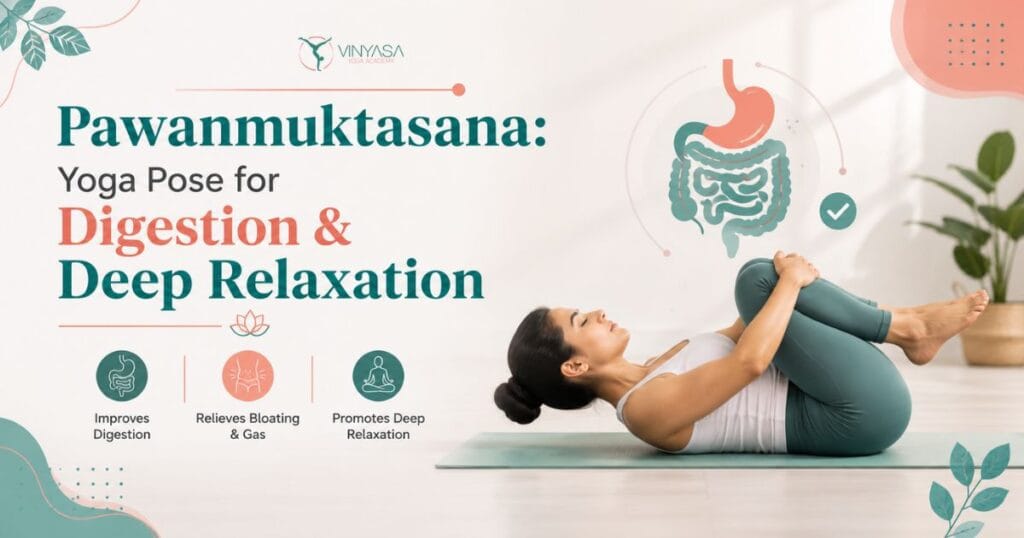
Table of Contents
- History of Pawanmuktasana
- How to Do Pawanmuktasana?
- Benefits of Pawanmuktasana
- 1. Relieves Gas and Bloating Naturally
- 2. Improves Digestion and Gut Health
- 3. Reduces Lower Back Pain and Spinal Tightness
- 4. Massages the Internal Abdominal Organs
- 5. Improves Blood Circulation in the Lower Body
- 6. Calms the Nervous System and Reduces Stress
- 7. Improves Flexibility in the Hips, Thighs and Lower Back
- 8. Prepares the Body for Deep, Restful Sleep
- Variations of Pawanmuktasana
- Precautions While Practising Pawanmuktasana
- Final Thought
- Frequently Asked Questions
- Does Pawanmuktasana really help release gas?
- Can Pawanmuktasana cure constipation?
- Is Pawanmuktasana good for belly fat?
- How many times should I do Pawanmuktasana?
- Can I do Pawanmuktasana after eating?
- Related Reading
Have you ever felt that uncomfortable heaviness in your stomach after a meal or woken up with a bloated belly and a stiff lower back? You are not alone, and the good news is there is a simple, gentle yoga pose that has been helping people find relief for thousands of years.
Known as the Wind Relieving Pose, Pawanmuktasana is one of yoga’s most trusted therapeutic postures, widely practised for supporting digestion and relieving bloating. In fact, leading wellness publications such as The Times of India have also highlighted Pavanmuktasana as a beneficial yoga pose for constipation, trapped gas and digestive discomfort.
In this guide, you will discover what this pose is, how to do it correctly, its top benefits, variations for every body type, and everything you need to practise it safely and confidently.
History of Pawanmuktasana
Pawanmuktasana, also known as the Wind Relieving Pose, comes from three Sanskrit words: ‘pawan’ meaning ‘wind’, ‘mukta’ meaning ‘release’ and ‘asana’ meaning ‘posture’. The name itself describes exactly what the pose does: it releases trapped wind and removes blockages in the body’s energy flow.
Unlike ancient postures such as Padmasana or Siddhasana, Pavanmuktasana does not appear in the major mediaeval Hatha yoga texts. It is best understood as a modern therapeutic posture that became widely known in the 20th century.
The pose gained its greatest recognition through Swami Satyananda Saraswati, founder of the Bihar School of Yoga, who developed the Pavanmuktasana Series as a preparatory practice before major asanas designed to open joints, relax muscles and prepare the body and mind for deeper yoga practice.
In his text Asana Pranayama Mudra Bandha, the series is divided into three groups: the anti-rheumatic group, the digestive and abdominal group, and the shakti bandha group. The Wind-Relieving Pose belongs to the digestive group because of its gentle pressure on the abdomen.
Today, it is practised worldwide for digestion, gas relief, back relaxation, and body awareness—a pose that may be modern in form but deeply rooted in traditional yogic values of cleansing, energy flow, and inner preparation. At Vinyasa Yoga Academy, this pose is introduced early in the curriculum precisely because of its powerful therapeutic value and its ability to prepare students for deeper asana work.
How to Do Pawanmuktasana?
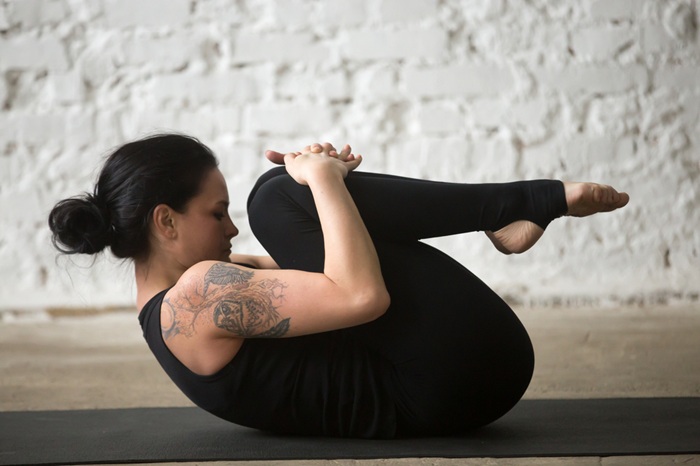
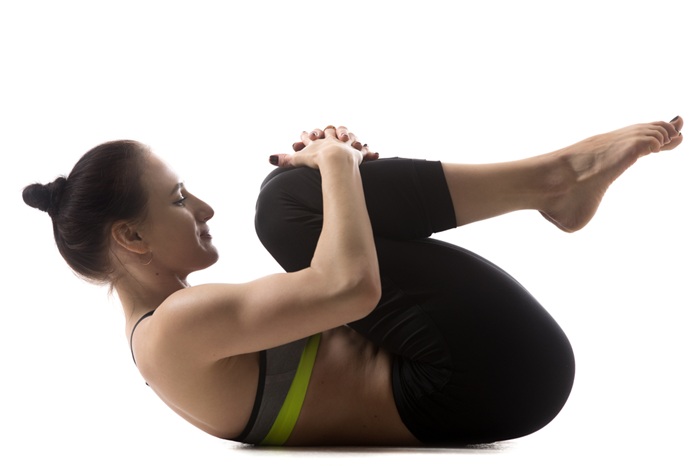
- Start by lying flat on your back on a mat. Let your legs stretch out naturally, rest your arms beside your body, and gently close your eyes. Take 2 to 3 slow, deep breaths and allow your entire body to relax; there is no rush here.
- Take a comfortable breath in. As you exhale, bend both knees together and slowly draw them toward your chest. Let the movement be smooth and gentle, never forced.
- Wrap both arms around your shins and interlock your fingers just below the knees. Gently press your thighs against your abdomen and feel the soft compression begin.
- On your next exhale, slowly lift your head off the mat and try to bring your nose or chin as close to your knees as feels natural.
- Stay here for 30 to 60 seconds. With every exhale, gently squeeze your knees a little closer to your chest. As you inhale, allow your grip to soften slightly.
- On a final deep exhale, slowly lower your head back to the mat.
Repeat 2 to 3 rounds for the best results.
Benefits of Pawanmuktasana
Practising Pawanmuktasana daily, even for just five minutes, offers a wide range of physical, mental and digestive benefits. Here are the most important ones.
1. Relieves Gas and Bloating Naturally
Pawanmuktasana is best known for relieving gas and bloating, and for good reason. The gentle pressure on the abdomen helps push trapped gas through the digestive tract naturally, following the colon’s own path from right to left. Most people feel the relief almost immediately; that uncomfortable heaviness and tightness in the stomach simply melt away within a single practice. This is exactly why the Wind-Relieving Pose is trusted and recommended in both yoga therapy and Ayurvedic wellness routines across the world. If bloating is your main concern, explore more yoga poses for bloating that work just as effectively.
2. Improves Digestion and Gut Health
The gentle compression in this pose works like a soft massage for your stomach, intestines, and liver, stimulating digestive enzymes and activating peristalsis (the natural wave-like movement of the gut that pushes food forward). If you regularly deal with sluggish digestion, irregular bowel movements or heaviness after meals, this pose is one of the simplest and most effective daily tools you can use. Practise it consistently and your gut will simply work better.
3. Reduces Lower Back Pain and Spinal Tightness
When you draw your knees toward your chest, the lower spine gently stretches and decompresses, tight back muscles begin to soften, and the hips release built-up tension. This makes Pavanmuktasana especially helpful for desk workers, drivers and anyone who spends long hours sitting. It does not just mask the discomfort; it works on the actual root cause, leaving your back feeling looser and genuinely relieved after every practice. To go deeper, read how you can heal your lower back pain with yoga.
4. Massages the Internal Abdominal Organs
This is the benefit most people overlook and it may be the most powerful one. The compression in this pose directly stimulates the stomach, intestines, liver, and pancreas, improving blood flow, encouraging lymphatic drainage, and waking up sluggish organ function. It is like giving your internal organs a gentle, therapeutic massage – something no other exercise can quite replicate.
5. Improves Blood Circulation in the Lower Body
Long hours of sitting restrict blood flow to the hips, pelvis, and lower abdomen. Pawanmuktasana directly fixes this by pushing fresh, oxygenated blood into these areas through gentle compression and release. The result? Less stiffness, reduced muscle fatigue, and a body that feels noticeably lighter and more energised after every session.
6. Calms the Nervous System and Reduces Stress
Bloating is not always about food; stress tightens the gut and anxiety disrupts digestion. The slow, mindful nature of this pose activates the vagus nerve and shifts the body into its parasympathetic (rest-and-digest) state. Cortisol, the stress hormone, drops. The heart rate slows. The mind grows quiet. This is yoga for both stress and digestion, working together at the same time because the gut and the brain are always connected.
If you want to go deeper into yoga, the 200 Hour Yoga Teacher Training in Rishikesh at Vinyasa Yoga Academy is the perfect place to start.
7. Improves Flexibility in the Hips, Thighs and Lower Back
With regular practice, the wind-relieving pose gradually opens the hip joints and stretches the hip flexors, glutes, thighs and lower back – all the areas that prolonged sitting quietly stiffens over time. You do not need to be flexible to begin. The pose meets your body exactly where it is and, with daily practice, brings you somewhere genuinely better.
8. Prepares the Body for Deep, Restful Sleep
Practising Pawanmuktasana before bed is one of the most underrated bedtime rituals in yoga. Just five minutes releases the physical tension the body has held all day, eases evening digestive discomfort, and activates the parasympathetic nervous system, preparing the body for genuinely deep, restorative sleep. People who practise this nightly consistently report falling asleep faster, sleeping more deeply, and waking up lighter.
Variations of Pawanmuktasana
| Variations of Pawanmuktasana | How It Is Practised | Best For |
| Single-Leg (Eka Pada) Pawanmuktasana | One knee is pulled toward the chest while the other leg remains extended on the floor. | Office workers, elderly practitioners, and people recovering from injury |
| Pavanmuktasana With Head Lift | While hugging the knees, lift the head and bring the chin toward the knee during exhalation. | Intermediate practitioners |
| Rocking Pavanmuktasana | Beginners, seniors, and people with limited flexibility | People with back stiffness or fatigue |
| Chair Variation of Pawanmuktasana | Sit upright on a chair and pull one knee towards the chest at a time. | Office workers, elderly practitioners, people recovering from injury |
Precautions While Practising Pawanmuktasana
Pavanmuktasana is one of the safest yoga poses. But keeping these simple things in mind will make your practice smooth and comfortable.
- Practise on an Empty Stomach: Always wait at least 2 to 3 hours after eating before practising. Doing it on a full stomach can make you feel uneasy and nauseous.
- Beginners, Start Slowly: Don’t rush. Start with one leg at a time and hold for just 20 to 30 seconds. Let your body get comfortable before going further.
- Never Force the Compression: The pressure should always feel gentle, never painful. If you feel any sharp pain in your abdomen, back, or hips, simply release the pose and rest.
- Follow the Correct Sequence: Always go right knee first, then the left, then both together. This follows the natural direction of your colon. Doing it in the wrong order can actually increase bloating instead of relieving it.
Final Thought
Healing does not have to be complicated. In a world full of expensive supplements and endless wellness trends, Pavanmuktasana quietly offers something far more valuable: a simple, natural and time-tested way to care for your body from the inside out.
Just five mindful minutes on a mat can relieve gas, improve digestion, ease back pain, reduce stress and help you sleep better.
But here is the truth: reading about it will not help you. Doing it will. You do not have to do it perfectly. You just have to show up. Practise it consistently, even imperfectly, even for just five quiet minutes a day, and your body will reward you in ways you can actually feel.
Frequently Asked Questions
Does Pawanmuktasana really help release gas?
Absolutely, this is actually what the pose is most famous for. The gentle pressure it creates on your stomach helps move trapped gas through the digestive system naturally and most people feel relief within just a few minutes of practising.
Can Pawanmuktasana cure constipation?
It can certainly help. Regular practice gently stimulates the digestive system and encourages healthy bowel movements.
Is Pawanmuktasana good for belly fat?
It helps, but not by burning fat directly. It reduces bloating that makes the belly look bigger, tones the core muscles, and improves digestion and metabolism. Combine it with healthy eating ,regular exercise and you will start to see a real difference over time.
How many times should I do Pawanmuktasana?
Most people find that 3 to 5 rounds, holding each position for 20 to 60 seconds, works really well. If you are just starting out, keep it simple, 2 to 3 rounds is perfectly fine and still deeply beneficial.
Can I do Pawanmuktasana after eating?
It is best not to. Try to wait at least 2 to 3 hours after a meal before practising. Doing it on a full stomach can make you feel nauseous and uncomfortable, which is the last thing you want.
Related Reading
- Happy Baby Pose (Ananda Balasana) — pairs perfectly