







Butterfly Pose (Baddha Konasana): Benefits, Steps, Variations & Common Mistakes
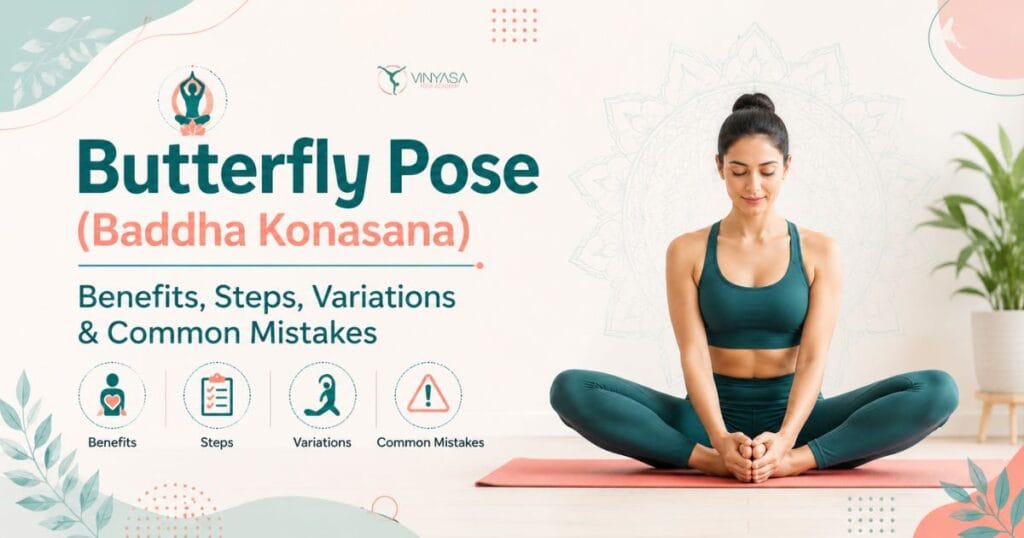
Table of Contents
- History and meaning of the Butterfly pose
- How to Do Butterfly Pose (Baddha Konasana)
- Benefits of Butterfly Pose
- 1. Opens Tight Hips
- 2. Helps Improve Posture
- 3. Supports Mind-Body Connection
- 4. Supports Relaxation Before Sleep
- 5. Supports Better Blood Circulation
- 6. Helps Ease Menstrual Discomfort
- 7. Pregnancy Preparation
- 8. Knee and Ankle Mobility
- Variations of Butterfly Pose
- Common Mistakes to Avoid in Butterfly Pose
- 1. Rounding the Back
- 2. Pulling the Feet Too Close Too Quickly
- 3. Forcing the Knees Toward the Floor
- 4. Holding the Breath
- Who Should Practise Butterfly Pose?
- Final Thought
- Frequently Asked Questions
- 1. Can beginners do the Butterfly Pose?
- 2. Can Butterfly Pose reduce hip tightness?
- 3. Is Butterfly Pose good before sleep?
- 4. Can Butterfly Pose improve flexibility?
- 5. Is Butterfly Pose safe during pregnancy?
Just like a butterfly spreads its wings effortlessly and freely, your body too can release years of tension, rediscover its natural flexibility, and finally feel the way it was always meant to feel: light, open and at ease. That is the quiet, beautiful promise of Butterfly Pose (Baddha Konasana).
This is one of yoga’s most gentle, grounding, and accessible postures, loved equally by beginners and experienced yoga practitioners for the quiet but powerful benefits it delivers every single time.
In this guide, you will find everything you need the history and meaning, correct step-by-step practice, key benefits, helpful variations, common mistakes to avoid and practical tips to make the most of this beautiful pose.
History and meaning of the Butterfly pose
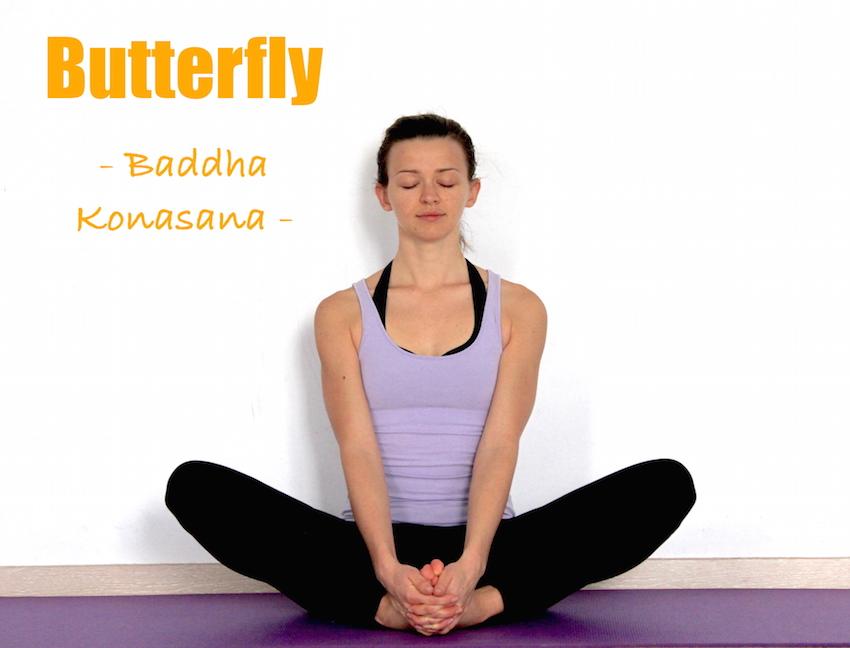
Baddha Konasana (Butterfly Pose) is a simple seated yoga posture that has been practised in Hatha Yoga for many years. In Sanskrit, Baddha means “bound”, “Kona” means “angle”, and “Asana” means “pose”. The name describes the shape of the posture, where the soles of the feet come together and the knees open out to the sides.
This pose is also known as Cobbler’s Pose because traditional Indian cobblers often sat in a similar position while working. The name ‘Butterfly Pose’ comes from the movement of the legs, which can look like butterfly wings gently fluttering.
Some traditional yoga teachings also connect Baddha Konasana with Bhadrasana, an ancient seated yoga posture. Today, Butterfly Pose yoga is practised around the world to help improve hip flexibility, support pelvic mobility and encourage relaxation. If you are new to seated yoga postures, you may also enjoy exploring Easy Pose (Sukhasana), another beginner-friendly grounded posture that builds a strong foundation for your practice.
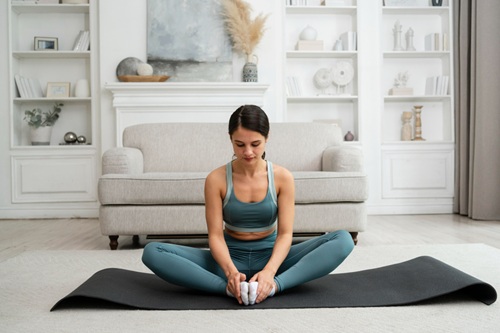
How to Do Butterfly Pose (Baddha Konasana)
- Start by sitting comfortably on your yoga mat with both legs stretched out in front of you. Sit tall, take a gentle breath and let your spine naturally lengthen and your shoulders soften away from your ears.
- Now slowly bend your knees outward and bring the soles of your feet together, drawing your heels gently in toward your body.
- Hold your feet or ankles with both hands to keep yourself steady and comfortable in the posture.
- Let your knees fall open naturally toward the floor.
- Lengthen your spine, lift your chest slightly and keep your back straight throughout the pose.
- Now gently flutter your knees up and down just like the wings of a butterfly to loosen up the hips and groin muscles.
- Stay in the pose for 30 seconds to 2 minutes.
Tip: Move gently and never force your knees toward the floor. Flexibility improves gradually with regular practice.
Benefits of Butterfly Pose
1. Opens Tight Hips
If there is one thing Butterfly Pose benefits are truly famous for, it is this giving your tight hips the deep, lasting relief they have been quietly asking for. If you want to deepen your hip opening practice, Happy Baby Pose is another wonderful posture that targets the same areas with equal gentleness. Baddha Konasana benefits gently stretches the muscles around your inner thighs, slowly breaking down the stiffness that builds up from long hours of sitting, driving, or simply living a modern, desk-bound life. With regular practice, your hips feel looser, lighter and far more comfortable in everything you do.
2. Helps Improve Posture
Most of us do not realise how much our posture has suffered until our back starts aching. Sitting in Baddha Konasana gently guides your body back to its natural spinal alignment, not through force, but through consistent, mindful practice. Over time, your postural awareness grows stronger.
3. Supports Mind-Body Connection
Practising Butterfly Pose with slow, controlled breathing brings you into the present moment, helping you notice how your body actually feels right now. This steady connection between movement and breath builds real mindfulness, sharpens your concentration and creates a sense of inner balance.
4. Supports Relaxation Before Sleep
If your mind is still busy and your body still tense when bedtime arrives, Butterfly Pose can genuinely help. The gentle stretch through the hips and lower body releases the physical tension your body has carried all day, while slow, steady breathing signals your mind to finally settle. Many people quietly make Baddha Konasana part of their evening routine and find that sleep comes much more easily as a result.
5. Supports Better Blood Circulation
The hips and pelvic region are among the first areas to suffer when we sit still for too long. Butterfly Pose gently opens these areas up, inviting fresh, oxygen-rich blood to flow freely through muscles and tissues that have spent the day compressed and neglected. The difference in how your body feels even after just one session can be surprisingly noticeable.
6. Helps Ease Menstrual Discomfort
For many women, that time of the month brings with it a familiar tightness and discomfort that is hard to shake. Baddha Konasana gently stretches the hips, inner thighs and pelvic region, the exact areas that tend to hold the most tension during a menstrual cycle. Paired with slow, calming breathing, this pose helps the body relax from the inside out, making those difficult days feel a little softer and more manageable.
7. Pregnancy Preparation
As the body prepares for childbirth, hip mobility and pelvic flexibility become increasingly important, and Butterfly Pose gently supports both by encouraging openness and mobility in these areas. Its gentle opening of the pelvic region makes it a trusted favourite in prenatal yoga routines around the world. That said, every pregnancy is different. Always practise under the guidance of a qualified yoga instructor or healthcare professional to ensure it is right for you.
8. Knee and Ankle Mobility
Butterfly Pose gently moves your knees and ankles through a comfortable range of motion. As your feet press together and knees relax outward, it gives your joints a soft, soothing stretch that may help improve flexibility and keep them feeling mobile over time.
Variations of Butterfly Pose
| Butterfly Pose Variation | How It Is Practised | Benefit |
| Reclined Butterfly Pose (Supta Baddha Konasana) | Lie on your back and bring the soles of your feet together while allowing your knees to fall open to the sides. Keep your arms relaxed beside your body. | Creates a gentle hip opening, encourages relaxation, and is often used in restorative yoga practices. |
| Supported Butterfly Pose | Practise Butterfly Pose while placing yoga blocks, folded blankets, or cushions under your knees or hips for extra support and comfort. | Reduces strain on the hips and lower body, making the pose more accessible for beginners or people with tight muscles. |
| Wall-Supported Butterfly Pose | Sit with your back resting against a wall while holding Butterfly Pose. Keep your spine tall and shoulders relaxed. | Supports spinal alignment, improves posture awareness, and helps beginners maintain proper form comfortably. |
Common Mistakes to Avoid in Butterfly Pose
Here are the most common mistakes beginners make and how to avoid them:
1. Rounding the Back
This is the most common mistake of all. When the spine collapses and the back rounds forward, the pose loses much of its value and your lower back ends up carrying unnecessary pressure it was never meant to handle. Keep your chest lifted, your spine long, and your posture tall. Think of growing taller with every inhale.
2. Pulling the Feet Too Close Too Quickly
There is no prize for getting your heels as close to your body as possible on day one. If your hips are not ready for it, forcing that position will only create discomfort and resistance. Start at a distance that feels genuinely comfortable and let your body gradually open up over time. Flexibility is built slowly and that is perfectly fine.
3. Forcing the Knees Toward the Floor
This one is important. Your knees will drop closer to the floor naturally as your hips become more open with consistent practice but that process cannot be rushed or forced. Pushing your knees down aggressively puts real strain on your hips, groin, and knee joints. Let gravity do the work. Let your breath do the work. Your body will get there in its own time.
4. Holding the Breath
It sounds obvious, but many beginners unconsciously hold their breath the moment they feel a stretch and that completely works against the pose. Breathing is not just important in yoga; it is everything. Slow, steady breathing is what allows your muscles to relax, your hips to soften, and your mind to settle. If you notice you are holding your breath, that is a clear sign you need to ease back a little.
Who Should Practise Butterfly Pose?
The simple answer? Almost everyone. Here is who stands to benefit the most:
- Beginners who are just starting their yoga journey and want a simple, accessible posture to build flexibility and body awareness from the ground up
- Office workers who spend long hours sitting at a desk and regularly deal with tight hips, general stiffness or that heavy, uncomfortable feeling in the lower body by the end of the day
- People with tight hips and inner thighs who want to gradually and safely improve their mobility and release the tension that has built up over months or even years
- People looking for relaxation who simply want a calming, restorative yoga posture to genuinely unwind after a long, demanding, or stressful day
- Those seeking butterfly pose benefits for male health, particularly athletes, runners and men dealing with hip stiffness from prolonged sitting
- Butterfly Pose is a popular choice in prenatal yoga routines, gently supporting hip mobility and comfort during pregnancy. However, always consult your healthcare professional or a qualified yoga instructor before practising during pregnancy, as every pregnancy is different.
Final Thought
Sometimes the most powerful thing you can do for your body is also the simplest: sit down, breathe and give yourself permission to slow down. Baddha Konasana (Butterfly Pose) is a gentle but powerful reminder that real progress in yoga does not come from pushing harder; it comes from showing up consistently, breathing deeply and trusting your body to open up in its time.
Whether you are chasing better flexibility, looser hips, a calmer mind or simply a few quiet minutes that belong entirely to you, this baddha konasana benefits deliver every single time. So roll out your mat, bring your feet together, let your knees fall open like wings and breathe.
Frequently Asked Questions
1. Can beginners do the Butterfly Pose?
Absolutely, this pose is one of the most beginner-friendly poses you can start with, no matter your flexibility level.
2. Can Butterfly Pose reduce hip tightness?
Yes, regular practice gently opens up your hips and inner thighs, helping you move more freely over time.
3. Is Butterfly Pose good before sleep?
Yes, A gentle stretch paired with slow, deep breaths is a wonderful way to relax your body before bed.
4. Can Butterfly Pose improve flexibility?
Definitely, with regular practice, you will notice improved flexibility in your hips and inner thighs.
5. Is Butterfly Pose safe during pregnancy?
Generally, yes, but it is best to check with your healthcare professional or a prenatal yoga instructor first.
This article is for general information and is not medical advice. If you have a respiratory or heart condition, are pregnant, or are unsure whether these practices suit you, please speak to your doctor before beginning.